


National Nutrition Week 2026: 5 Energy-Giving Meals To Support Your Sporty Kid

ClearSee all results for””
Add to Community
- Create Post
- Create Biteclub
- View Drafts
X
Add to Community
- Create Post
- Create Biteclub
- View Drafts
Copy
National Nutrition Week 2026: 5 Energy-Giving Meals To Support Your Sporty Kid
ByKaushiki GangullyUpdated:Aug 30, 2026
If you have an active kid at home, then you must provide them adequate energyes that do their bit in terms of providing nutrient fuel
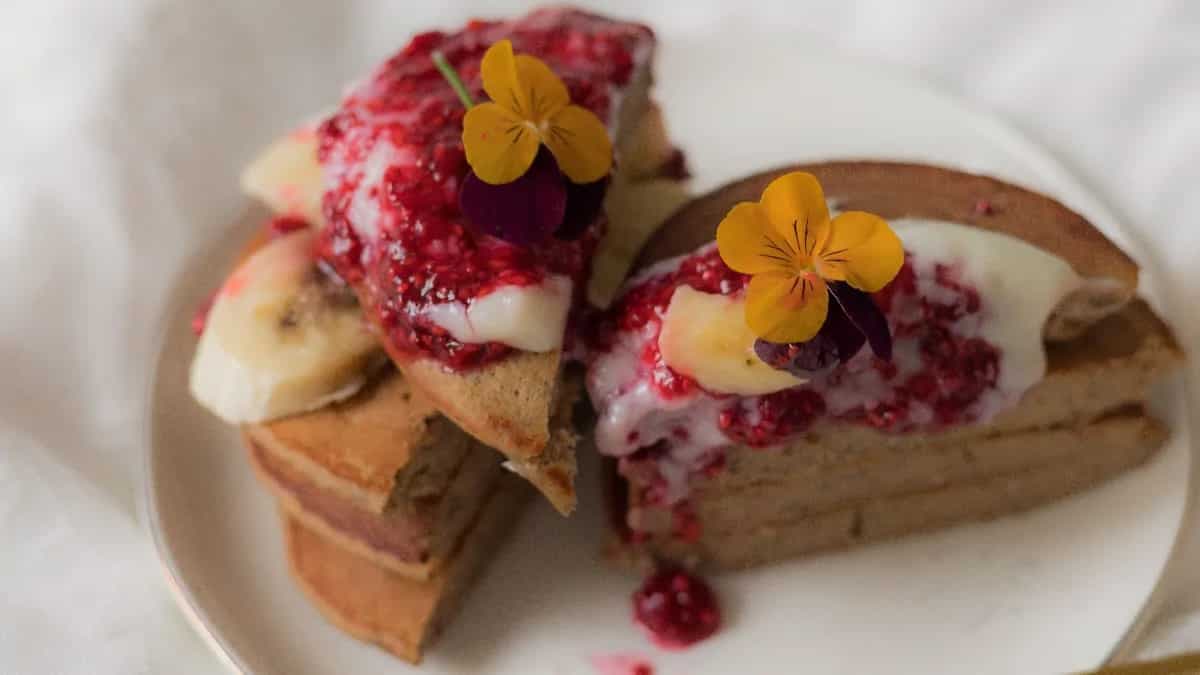
Image Credit: Image credit: Pexels
An active child has a special kind of hunger, of a ravenous variety. For instance, the footballer who comes home from practice and finishes three rotis in a go before asking what else is available, or the swimmer who wants something filling and ‘energy-giving’ before heading to the pool in the evening, but comes home starving for dinner. Or just adequate food for a child who spends an hour at badminton daily, then cycles home, finishes homework, and still has enough energy to run around the house.
For parents, feeding such an appetite can become a daily puzzle. They often wonder what makes a useful pre-practice meal or if children should be given protein shakes. Plus, there is the common worry about whether an ordinary Indian kitchen can provide enough nourishment for a child who is growing and exercising regularly. These queries and ponderings fit neatly into the spirit of National Nutrition Week 2026, observed in India from 1 to 7 September.
The annual observance was launched by the Food and Nutrition Board in 1982 to increase awareness of nutrition as well as its relationship with health and wellbeing. For an active child, nutrition is not simply about eating a lot and then performing athletically. Food has to support growth, development, school, play, recovery, and physical activity at the same time. Research on young athletes stresses the importance of sufficient energy, carbohydrates, protein, fluids, and appropriate meal timing, while also warning parents against simply applying adult sports nutrition advice to children.
So, the good news is that you do not need a cupboard full of sports supplements to feed your sporty child well. Most of what they need can come from familiar and ordinary Indian foods
What Makes A Meal Energy-Giving For A Sporty Child?
An active child uses energy not just during practice but throughout the day. Their entire daily routine is usually demanding and exhausting, not just the sports coaching sessions. Plus, they are also growing, which means food has to cover more than the energy spent kicking a football or swimming laps. It must give their body adequate energy in the right form to use as fuel at a cellular level.
Carbohydrate-containing foods are an important source of fuel for physical activity. Rice, roti, dosa, idli, potatoes, sweet potatoes, fruits, oats, and millet-based foods can all contribute carbohydrates within a varied diet. The Indian Council of Medical Research and National Institute of Nutrition’s (ICMR-NIN) Dietary Guidelines for Indians 2024 specifically provides reference menus for physically active children that combine cereals or whole grains with pulses or meat, vegetables, curd or paneer, nuts, milk, and fruit.
Protein-rich foods such as dal, beans, eggs, milk, curd, paneer, fish, and meat play an important role by supporting growth and tissue maintenance. This diverse combination is crucial. A genuinely useful meal for an active child is rarely about one miraculous ingredient. Usually, it is about combining several foods that provide energy and nutrients in a form the child will actually eat regularly
5 Desi Meals That Give Your Kids Energy Naturally
Vegetable Egg Uttapam With Curd
Uttapam is an excellent breakfast option for an active child because the batter combines rice and lentils, providing carbohydrates alongside some protein. Adding egg further enhances the protein content of the meal, while vegetables bring additional micronutrients and fibre. A side of curd includes another familiarer useful when consumed a few hours before activity, so that the child has enough time to digest a proper meal
Image credit: Pexels
Ingredients (Serves 2)
- 2 cups uttapam batter
- 2 eggs
- ½ cup finely chopped carrot, capsicum and onion
- ¼ tsp cumin powder
- Salt, to taste
- Oil, for cooking
- Plain curd, to serve
Method
- Pour two small portions of uttapam batter on a lightly greased and hot tawa.
- Then scatter your vegetables over each.
- Now, beat the eggs with cumin and salt, and spoon over your uttapams.
- Cook until the base is golden and the egg has set.
- Now, flip briefly if needed, and serve hot with chilled curd.
Also read: National Nutrition Week 2026: 5 Ways To Add Veggies Into Your Picky Eater’s Meals
Paneer And Sweet Potato Chaat Bowl
This tasty bowl is particularly useful as a substantial after-school or post-training snack because it combines a carbohydraten that young athletes need adequate total energy for both training and growth, rather than chasing absurd protein levels
Ingredients (Serves 2)
- 1 large sweet potato, roasted and cubed
- 100g paneer, lightly grilled
- ½ cup plain curd
- 1 tbsp roasted peanuts, crushed
- 1 tbsp chopped coriander
- 1 tsp lemon juice
- Pinch of chaat masala
Method
- Place your roasted sweet potato and grilled paneer in a bowl.
- Then add curd and lemon juice.
- Now, scatter your peanuts and coriander over the mix.
- Finish the bowl with chaat masala and serve.
Chicken Or Paneer Millet Roll
This roll is one of the easiest ways to turn any Indian flatbread into a portable yet filling meal. Millet or wholemeal roti supplies carbohydrate, while chicken or paneer provides protein. As for vegetables, they add variety without making the roll excessively heavy. This food format is also practical for active kids on days when school finishes just before sports training begins.
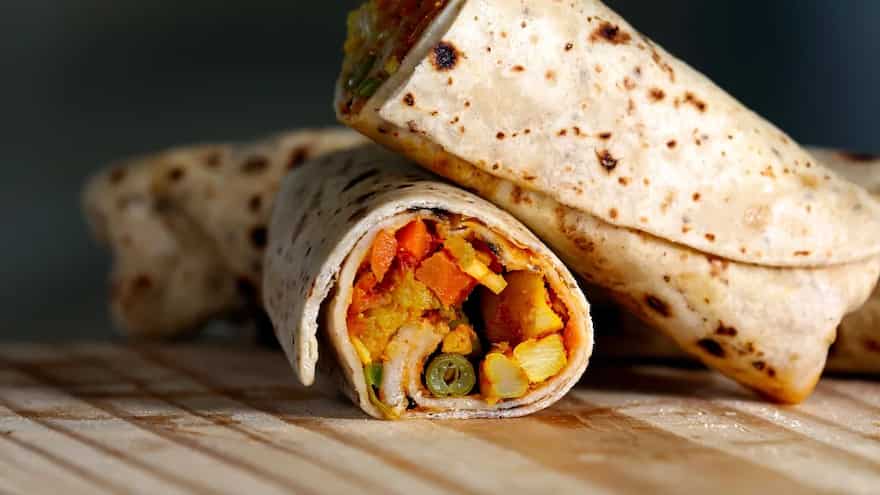
Image credit: Pexels
Ingredients (Makes 2 rolls)
- 2 millet or wholemeal rotis
- 120g cooked shredded chicken or paneer
- ½ cup shredded cabbage and carrot
- 2 tbsp thick curd
- 1 tsp mint chutney
- Lemon juice, to taste
Method
- Mix the curd and mint chutney.
- Toss chicken or paneer with the vegetables and lemon juice.
- Spread the curd mixture over each roti.
- Add the filling and roll tightly.
Also read: National Nutrition Week 2026: 5 Ways To Curb Food Cravings At Odd Hours
Moong Dal Dosa With Paneer Bhurji
Moong dal dosa is a particularly useful option when parents want something different from the familiar roti-sabzi combination. The dal contributes protein as well as carbohydrate, while paneer adds another protein-rich component. This is a useful example of combining complementary foods rather than relying on a single nutrient, as the meal provides energy and supports growth and tissue maintenance at the same time. However, there is no need to deliberately push protein intake to extreme levels, as reviews of paediatric sports nutrition do not support simply giving young athletes unusually high amounts of protein.
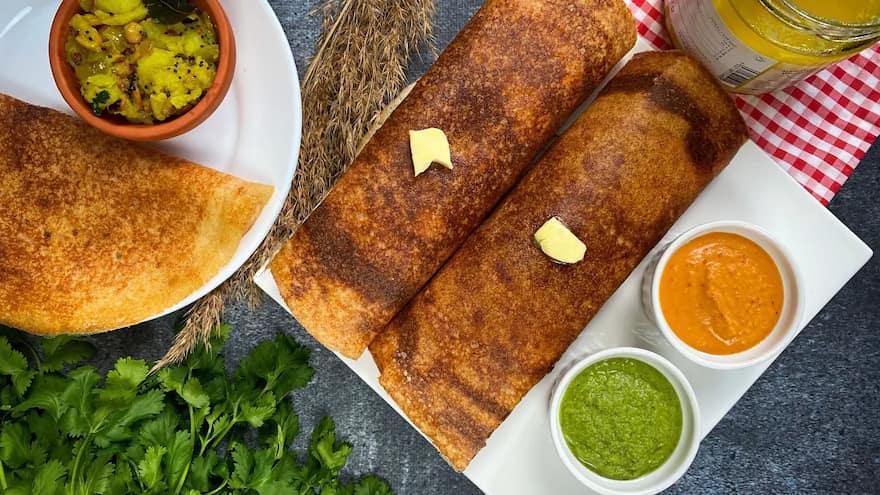
Image credit: Pexels
Ingredients (Serves 2)
- 1 cup soaked moong dal
- 100g crumbled paneer
- 1 small tomato, chopped
- ½ small onion, chopped
- ¼ tsp turmeric
- ½ tsp cumin seeds
- Salt, to taste
- Oil, for cooking
Method
- Blend your soaked moong dal with enough water to make a pourable batter.
- Now, make thin dosas on a hot tawa.
- Separately, sauté your cumin, onion and tomato.
- Now, add turmeric, paneer and salt to the vegetable-spice mix and cook for a few more minutes, until thoroughly cooked and combined.
- Now, fill the dosas with the paneer bhurji and serve hot with chutneys and chilled curd.
Ragi Banana Pancakes With Peanut Curd
Ragi and banana make a naturally appealing combination for breakfast. This works particularly well as a breakfast or snack several hours before physical activity because it combines carbohydrate with protein as well as some fat. Here, the key is timing: a rich or bulky meal immediately before vigorous activity can feel uncomfortable, so ensure that the portion size suits your child’s overall schedule
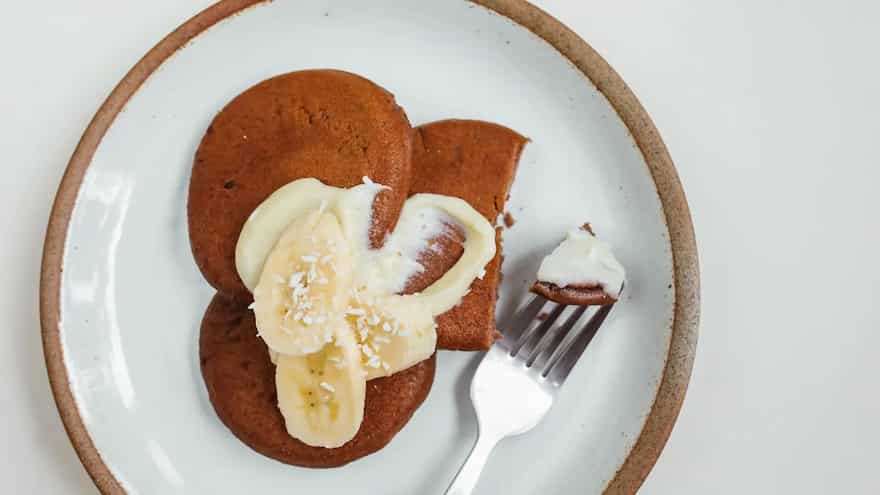
Image credit: Pexels
Ingredients (Makes 6–8 small pancakes)
- 1 cup ragi flour
- 1 ripe banana, mashed
- ½ cup milk
- 1 egg
- 1 tbsp peanut butter
- Pinch of cardamom
Method
- Mix ragi flour, banana, milk, egg, and cardamom into a smooth batter.
- Then cook small pancakes in a lightly greased pan.
- Time to stir the peanut butter into the thick, hung curd in an accompanying katori.
- Finally, serve the pancakes warm with the peanut curd topping, or use it as a dip on the side.
Feed The Growing Child, Not Just The Sport
The World Health Organisation, or WHO, recommends that children and adolescents aged 5–17 get an average of at least 60 minutes of moderate-to-vigorous physical activity each day across the week, including activities that strengthen muscles and bones. But you must remember that the child doing those 60 minutes is still growing. Young athletes need enough food to support them throughout the day, not just a carefully timed snack around practice.
Recent reviews emphasise individual differences in energy requirements as well as the importance of considering both the content and timing of meals, while mostly favouring a food-first approach over supplements. So, instead of building a complicated “athlete diet”, build a dependable household menu. And remember to adjust portions and timing according to your child’s appetite, activity and schedule.
Looking for more slurrpystories?
Subscribe to our newsletters now and get them delivered into your mailbox daily
or Read our newslettershere
