



Medical news update August 31st: Autoimmune diseases and the risk of multi-organ damage
Starting with a high fever and shortness of breath, the 25-year-old male patient with systemic lupus erythematosus rapidly developed severe respiratory failure, alveolar hemorrhage, acute renal failure, and multiple organ failure. Ten days of ECMO support along with a series of intensive resuscitation techniques helped the patient overcome the brink of death

Báo Đầu tư•31/08/2026
The race to save the life of a 25-year-old patient with multiple organ failure due to lupus
A 25-year-old male patient with a history of systemic lupus erythematosus (SLE) was recently saved by doctors at Duc Giang General Hospital after his condition worsened significantly, causing damage to multiple organs and requiring 10 days of VV-ECMO support
Upon admission, the patient had a high fever of 40 degrees Celsius, a sore throat, and severe shortness of breath. Examination revealed severe edema in the hypopharynx, obstructing the larynx and putting the patient at risk of acute airway obstruction
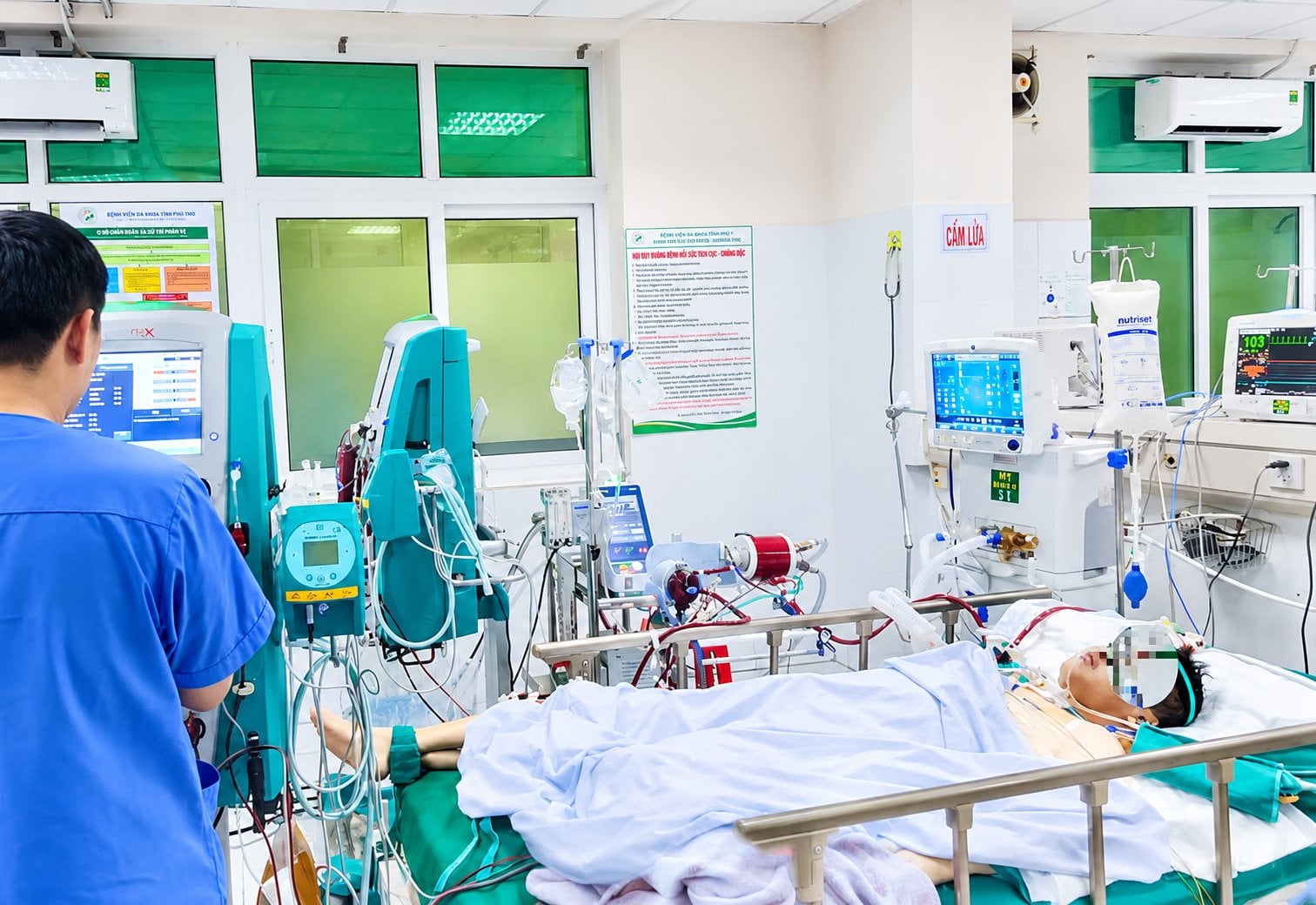 |
| The patient is currently receiving treatment at a medical facility. |
Faced with a life-threatening situation, the patient underwent emergency tracheostomy at the bedside and received respiratory support with a ventilator. However, this was only the beginning of a highly complex medical condition
The respiratory failure continued to progress rapidly, lung damage worsened, and the patient developed acute respiratory distress syndrome (ARDS) with diffuse alveolar hemorrhage. Simultaneously, kidney function deteriorated severely, leading to acute renal failure with anuria, and multiple organ function began to decline
Despite raising the ventilator support parameters to high levels, lung gas exchange did not improve. When conventional respiratory support methods were no longer sufficient to maintain effective gas exchange, the treatment team held an emergency consultation and decided to implement VV-ECMO
This technique helps support gas exchange outside the body, thereby reducing pressure on severely damaged lungs, limiting further damage associated with mechanical ventilation, and creating the necessary time for the lungs to recover
However, ECMO is only one part of a comprehensive resuscitation strategy for this patient. This case is particularly complicated because the patient suffers from both systemic lupus erythematosus and severe infection, lung damage, kidney failure, and multiple organ dysfunction
In parallel with VV-ECMO, the doctors simultaneously implemented many intensive resuscitation measures including plasma exchange, continuous hemodialysis, blood product transfusion, resting pulmonary ventilation, treatment of infections, control of immune response, and support of organ function
Each problem presents a different but closely related treatment requirement. Severe lung damage impairs gas exchange, alveolar hemorrhage exacerbates respiratory distress, while acute renal failure and autoimmune disorders continue to impact the patient’s overall condition. Therefore, treatment must be closely monitored and continuously adjusted according to each development
For 10 days, ECMO plays a supporting role in gas exchange during the period when the lungs are unable to meet the body’s needs. This timeframe also allows other treatments for the underlying cause and resuscitation methods to take effect, gradually bringing the patient out of critical condition
After 10 days of intensive treatment and VV-ECMO support, the alveolar hemorrhage was controlled, lung function gradually improved, and other organs also recovered progressively. When the lung’s gas exchange capacity met the requirements, the patient was successfully weaned off VV-ECMO
Subsequently, the level of respiratory support was gradually reduced, and the patient was weaned off the ventilator. The patient is now able to breathe independently through a tracheostomy, organ function is stable, and the patient continues to be monitored and recover in the hospital
From a young patient who rapidly developed severe respiratory failure, acute renal failure, and multiple organ failure, the recovery after 10 days on ECMO demonstrates the importance of promptly identifying the point at which to transition to intensive care measures
Chronic pneumonia and the risk of life-threatening complications
Mr. Truong, 67 years old, was previously diagnosed with left pleural effusion and received outpatient treatment at a medical facility in Thai Nguyen . However, after a period of treatment, his condition did not improve, and the chest pain worsened, prompting him to return to the hospital for a check-up
The chest CT scan revealed a significant amount of fluid in the pleural cavity, with the thickest layer measuring approximately 65 mm. The fluid accumulation compressed the left lung, reducing its volume and causing partial collapse of the lung parenchyma. The accompanying lung parenchyma inflammation also led to decreased blood oxygen levels, indicating a significant impairment of the patient’s respiratory function
Upon performing a pleural fluid aspiration, the doctors discovered purulent inflammatory fluid. A significant amount of white pus was also found within the patient’s bronchi
Dr. Phung Thi Thom, a respiratory specialist, diagnosed the patient with pneumonia complicated by pleural effusion. This is a severe infection that occurs when inflammation in the lungs spreads to the pleural cavity, causing fluid secretion, infection, and pus formation
You may also like
Under normal conditions, the pleural cavity contains only a small amount of fluid that allows the two pleural membranes to slide against each other during respiration. When an infection spreads from the lungs to this area, fluid can accumulate and turn into pus. If not detected and treated promptly, the abscess continues to spread, compressing the lung parenchyma and preventing normal lung expansion, thereby reducing gas exchange capacity and potentially leading to respiratory failure
More dangerously, prolonged infection can spread beyond the lungs and pleura, entering the bloodstream and causing systemic infection. As the condition worsens, patients risk septic shock, multiple organ failure, and life-threatening complications
Even after overcoming the acute phase, patients may still face long-term consequences if the inflammation persists. The inflammatory process can cause the pleura to fibrose, thicken, and scar, restricting the lung’s ability to expand and affecting respiratory function later on
To control the infection in the patient, the doctors inserted a pleural drainage tube. Approximately 500 ml of cloudy yellow pus was drained out in the first procedure
However, cleaning the pleural cavity is not simple because the patient has developed multiple walled abscesses. The inflammatory reaction forms fibrin septa that divide the fluid cavity into many small pockets, causing the pus to be localized and making it difficult for the drainage tube to access the entire volume of fluid
In this situation, doctors use thrombolytic drugs, administered directly into the pleural cavity, to break down the fibrin walls, release the trapped pus, and allow the fluid to drain through a drainage tube. This intervention helps to clean the pleural cavity without the patient having to undergo surgery
After a week of treatment, the patient’s condition improved, the drainage tube was removed, and antibiotic treatment continued. Subsequent scans showed a gradual reduction in pleural effusion. At the follow-up examination, the lungs had expanded well and respiratory function had returned to normal
This patient’s case illustrates how a seemingly common episode of pneumonia can progress to complex complications if the infection is prolonged or not effectively controlled. When pleural fluid turns purulent and multiple septa form, treatment becomes more difficult, the treatment time is prolonged, and the risk of surgical intervention increases
In particular, the elderly are a group that needs to be more cautious about respiratory infections. Their immunity declines with age, and the presence of underlying conditions can complicate pneumonia and increase the risk of complications
Doctors advise that people experiencing persistent fever, chest pain, coughing up phlegm, or shortness of breath should not self-treat or delay seeking medical attention. If symptoms do not improve or worsen, patients should be re-evaluated at a medical facility to determine the cause and detect complications early
Delaying treatment can cause pneumonia to progress to pleural effusion, lung abscess, or pleural effusion to the walled-up stage. At that point, treatment becomes more complicated, and the risk of respiratory failure, severe infection, and long-term consequences for lung function also increases
Warning signs of surgical emergencies in children
Abdominal pain, fussiness, and vomiting can easily lead parents to believe their child has a digestive disorder. However, these seemingly familiar symptoms could be signs of intussusception – a surgical emergency that can lead to necrosis, bowel perforation, and severe infection if detected late
Nighttime stomach pains caused 18-month-old LHĐ. from Phu Tho to cry incessantly. Each time the pain struck, the child would scream, arch his back, and vomit, expelling fluids and food after eating
Believing their child only had a common digestive disorder, the family bought digestive enzymes for the child to take on their own. However, the condition did not improve. By noon the next day, when they noticed their child was more tired and the pain was becoming more frequent, the family took the child to a medical facility for examination
Upon examining the abdomen, doctors discovered an abnormal mass in the right hypochondrium, although the child’s abdomen was still soft and showed no signs of abdominal tenderness. The child was ordered to undergo an ultrasound and abdominal X-ray to determine the cause
Notably, the X-ray results at this time did not reveal any obvious abnormalities. The bowel loops were not dilated, and there were no air-fluid levels or crescent-shaped air pockets under the diaphragm. However, abdominal ultrasound revealed an intussusception mass in the right hypochondrium, approximately 29 mm in diameter and extending over 43 mm. Inside the mass, there was a mesenteric lymph node measuring 7.5 x 4 mm, and no free fluid was present within the mass or the abdominal cavity
Combining clinical manifestations and ultrasound images, the doctors determined that the child had acute intussusception, without complications, and was approximately 15 hours into the onset of the disease
The child was quickly transferred to the hospital for insufflation to reduce the intussusception. Because the condition was detected early, the procedure went smoothly. After 24 hours, examinations showed that the intussusception had completely disappeared, digestive function had been restored, and the child was discharged
This case illustrates one of the difficulties in identifying intussusception in young children: the initial symptoms can be very similar to common digestive disorders. Children are unable to articulate the location and nature of the pain, while abdominal pain, fussiness, and vomiting also occur in many other digestive conditions. This confusion can lead families to self-treat and miss a crucial period for intervention
You may also like
Intussusception occurs when a segment of the intestine telescopes into an adjacent segment, compressing the blood vessels supplying the intestine and obstructing gastrointestinal flow. The condition is common in young children, especially those under 2 years old, with a higher incidence in boys than girls
Approximately 90-95% of cases of intussusception in children have no identifiable physical cause, often related to abnormal bowel motility. About 5-10% of cases may be related to underlying abnormalities or lesions such as Meckel’s diverticulum, duplication cysts, polyps, or intestinal tumors. Ileocolic intussusception is the most common form, accounting for approximately 85% of cases
Of concern is that the extent of intestinal damage increases over time if the intussusception is not reduced promptly. Within the first 24 hours, the intussuscepted segment of the bowel begins to experience compression, the bowel wall becomes edematous, and bleeding may occur. From 24-48 hours, edema, congestion, and bleeding become more severe. When the condition persists for more than 48 hours, circulation in the intussuscepted segment of the bowel may cease, leading to ischemia, infarction, and bowel necrosis.
When the intestines become necrotic or perforated, fluids and bacteria from the digestive tract can spill into the abdominal cavity, causing peritonitis, severe infection, septic shock, and life-threatening conditions. At this point, conservative treatment options are reduced, and the child may require emergency surgery
Therefore, early recognition of characteristic symptoms is very important. The most common symptom is sudden, severe, intermittent abdominal pain in children. Young children may suddenly start screaming, pulling their legs up to their stomachs, or arching their backs. Each episode of pain may last for a few minutes, then temporarily subside, and repeat after about 15-30 minutes. It is this temporary period of calm between episodes that sometimes leads parents to be complacent
Vomiting often occurs soon after the pain subsides. Initially, the child may vomit food, then yellow or green fluid as the bowel obstruction progresses. Bloody, mucous stools are a notable sign but usually appear later. Therefore, parents should not wait until their child has bloody stools before seeking medical attention
According to Dr. Mai Thanh Huyen, a specialist in Diagnostic Imaging at MEDLATEC Vinh Phuc Multi-Specialty Clinic, the clinical symptoms of intussusception in the early stages are easily mistaken for digestive disorders, gastroenteritis, or dysentery. In suspected cases, diagnostic imaging, especially abdominal ultrasound, plays a crucial role in detecting the disease
Doctors advise that for young children who cannot accurately describe pain, parents should carefully observe any unusual changes in their behavior. Children who are previously healthy but suddenly cry hysterically, curl their legs or arch their backs, vomit repeatedly, refuse to feed, become more lethargic, or have unusual bowel movements should be taken to a medical facility for examination as soon as possible
In particular, do not self-medicate your child with medication or digestive enzymes and then wait for the pain to recur and worsen. With intussusception, the timing of detection not only determines the possibility of minimally invasive reduction but can also determine whether the child can avoid intestinal necrosis, surgery, and life-threatening complications
Tag:# surgical emergencypneumonia#Treatment for Multiple Organ Failure Lupus

Peace through the eyes of young people: When love for one’s country begins with real-life experiences
Trending by Category

What foods should you limit after age 50 if you want to maintain your figure?
Báo Sức khỏe và Đời sốngmột giờ trước

Ho Chi Minh City develops three pillars of healthcare, making it a worthy leader nationwide
Báo Thanh niênmột giờ trước

DETEC Dental Lab – from fabrication to research in aesthetic dental restoration technology
VietNamNetmột giờ trước

Unexpected harms from improper ear hygiene habits
Báo Giáo dục và Thời đạimột giờ trước
Warning: Scrub typhus can cause shock and multiple organ failure
Báo Nhân dânmột giờ trước

How to properly clean your ears at home?
Báo Thanh niên2 giờ trước
Most Read

Ho Guom Lake is romantic in the colors of autumn
Việt Nammột giờ trước

Gold prices today, August 31st: SJC gold remains unchanged, global gold prices under pressure from US interest rates
Báo Lào Cai2 giờ trước

Gold prices today, August 31st: Gold under pressure as it awaits US employment data
Hà Nội Mới2 giờ trước

Having missed out on Alvarez, Barca buy Gabriel Jesus at a bargain price
VietNamNet2 giờ trước

School principal rescues 900 students from deadly flash flood in Nepal
VietNamNet2 giờ trước

Coffee prices today, August 31st: Central Highlands prices remain stable, awaiting signals at the beginning of the week
Báo Lào Cai2 giờ trước
Google Trends

The streets were covered in red as people joyfully celebrated National Day on September 2nd
VietNamNet2 giờ trước
Dong Nai searches for remains of fallen soldier: ‘The fence was pressing down on his chest’
Báo Thanh niên2 giờ trước
Google Maps renamed Lake Ontario to “American Lake”
Báo Dân trí3 giờ trước

The US and Iran unexpectedly attacked each other, marking a new escalation
VietNamNet4 giờ trước

Fighting during a boat race on the Kien Giang River: Results annulled and six athletes disqualified
Báo Tuổi Trẻ4 giờ trước

The US attacks Iran for the first time in a month, and Tehran threatens fierce retaliation
Báo Dân trí4 giờ trước
Multimedia

Phu Binh lanterns “change their look,” racing to preserve the craft in the age of industrialization.
