


by Bertie Jacobs
Even the cheapest nutritious foods can cost two to ten times more per calorie than maize meal
Watery porridge may fill a child’s stomach without providing the nutrition needed for growth
Two-thirds of Africa’s population cannot afford a healthy diet, with eggs and meat largely priced out of reach
School meals reached 87 million African children in 2024, but they often arrive too late to address nutritional losses during the first 1 000 days
Nutritional advice cannot fix what families cannot afford – and may simply shift the blame onto the parents with the least power to change it.
Prof. Christine Taljaard-Krugell
Across sub-Saharan Africa, parents are often told what their children should eat. The advice is familiar: provide more protein, fruit, vegetables, dairy products and other nutrient-rich foods. Yet, for millions of households, the problem is not always a lack of nutritional knowledge alone. Even when parents understand what their children need, the recommended foods may simply be unaffordable or inaccessible
According to Prof. Christine Taljaard-Krugell, an associate professor at the North-West University’s (NWU) Centre of Excellence for Nutrition and a registered dietitian, affordability differs from one household to another
“Affordability isn’t a property of a food. It depends on what a household can spend. But some foods do deliver far more nutrients, or more energy, per unit of money than others.”
Children need energy for growth, protein to build tissue and a reliable supply of vitamins and minerals. Iron, zinc, vitamin A and iodine are especially important for brain development and immune health. Staple foods generally provide energy, but obtaining enough protein and micronutrients is where household budgets come under pressure
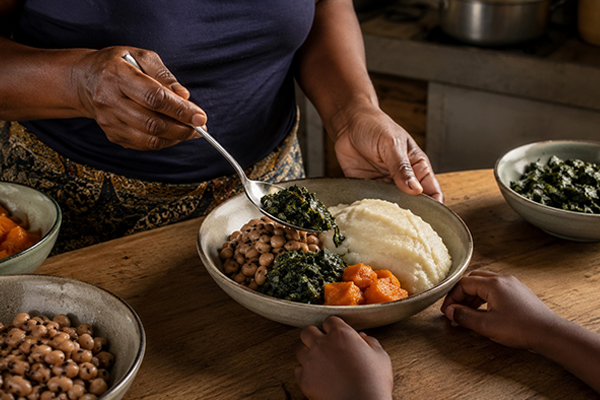
Taljaard-Krugell says dark green leafy vegetables, pumpkin, orange-fleshed sweet potato, mango and papaya can provide vitamin A relatively cheaply. Beans, cowpeas and groundnuts are among the region’s lowest-cost
“In South Africa, where foods have been ranked directly against one another, pulses offer the best nutritional value per rand of anything in the market.”Small, dried fish eaten whole, including the bones, is particularly valuable because it provides protein, iron, calcium and vitamin B12 in one inexpensive food
However, the affordability problem remains severe
“Even the cheapest nutritious foods cost two to ten times more per calorie than maize meal. Eggs, chicken and beef are further out of reach again, and are largely unaffordable to African households.”
This does not mean families should abandon maize, rice, cassava or other familiar staples. These foods remain the backbone of household meals because they are affordable and provide the energy children need. The greatest improvement can come from what is served with them
“Cook a legume with the staple, such as beans, peas or pounded groundnut. Stir in a spoonful of oil, which adds energy and helps the body absorb vitamin A. Add leaves near the end of cooking rather than boiling them down.”
Families should also remove mouldy or discoloured maize and groundnuts before cooking. Mould can contain toxins associated with poor childhood growth.For children under two, breastfeeding remains critical: exclusively during the first six months and then alongside complementary foods until two years and beyond. Mothers, however, need sufficient nutrition, time and workplace protection to make this possible
When porridge is introduced from six months, it should be mixed correctly to provide sufficient nutrition
“Watery porridge fills a small stomach without feeding a growing child,” Taljaard-Krugell warns
Cost remains the biggest obstacle to dietary diversity. Two-thirds of Africa’s population could not afford a healthy diet last year, with animal-s also present different practical barriers
“Pulses are a different problem. They’re cheap to buy and expensive to cook, needing hours of fuel that cost either money or a woman’s time. Fruit and vegetables are cheap in season and gone out of it, and they spoil where there’s no refrigeration.”
Rural communities face longer distances, limited choices and higher prices. Within households, the person controlling the income may also determine whether nutritious food reaches the child
Taljaard-Krugell argues that African governments should concentrate on making existing policies work. Many countries require the fortification of wheat flour or salt, but these rules generally apply to industrial producers. Poorer households often buy food from small local mills that fall outside these systems
Similarly, treatments capable of reducing aflatoxin contamination in maize and groundnuts by more than 90% in field trials exist. Evidence on whether farmers actually adopt them is sparse, and what little exists points to very low uptake
“The technology works and the delivery doesn’t.”
Governments should also develop dietary guidelines. Only 12 African countries have them, although they cost relatively little to introduce. Child grants and cash transfers should be measured against the actual cost of a nutritious diet, rather than “against what the budget can spare”
Zero-rating food for value-added tax, she argues, deserves reconsideration because better-off households capture much of the benefit and the savings do not necessarily reach consumers
School-feeding programmes can make an important contribution. The number of African children receiving school meals increased from 66 million in 2022 to 87 million in 2024. Programmes that buy produce from nearby farmers can simultaneously improve children’s diets and strengthen local economies
However, school meals usually begin when children are five or six, well after the crucial first 1 000 days of life. They cannot recover growth that has already been lost
Ultimately, responsibility cannot rest on parents alone
“Parents are not always short of nutritional knowledge. While we need to ensure that parents are <a href="https://healthylife7.com/new-generation-of-elm-trees-could-be-equipped-to-beat-disease-that-killed-parents/” title=”New generation of elm trees could be equipped to beat disease that killed parents”>equipped with sound nutritional advice, shortfalls such as money, time and agency are barriers that need to be addressed.”
Advice that ignores those realities can cause harm of its own
“Advice given to a household that cannot afford the food does not just fail to help. It quietly shifts the blame onto the person with the least power to change anything.”
