


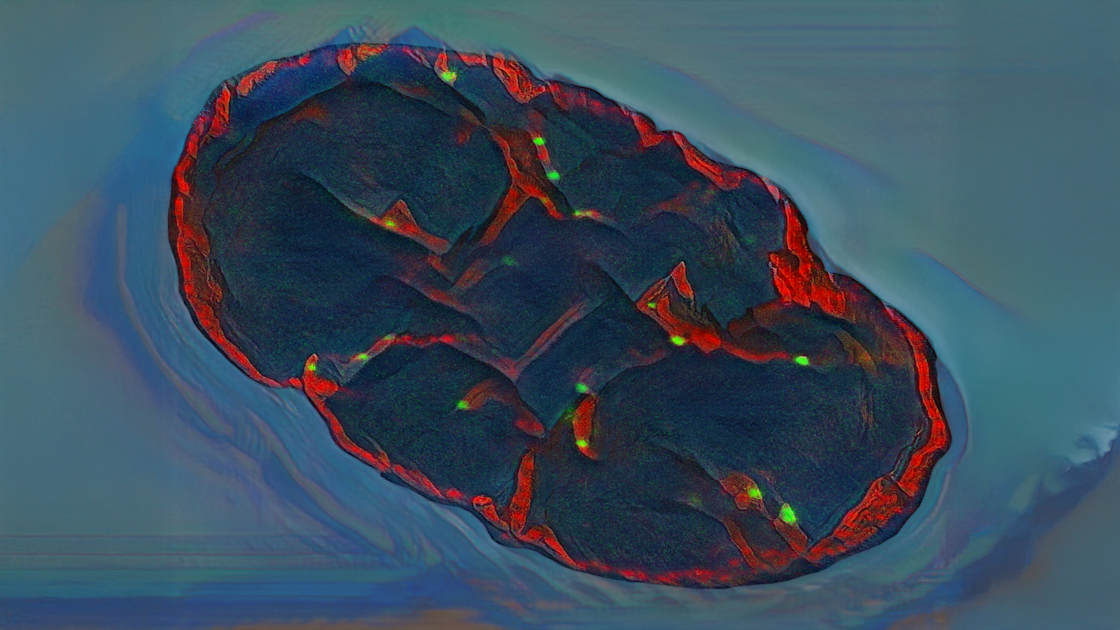
When you add drops of oil to water, the oil and water remain separate. Within cells, biological molecules cluster together in a similar way, separating themselves from the rest of the cell. And while they don’t have a membrane, they are their own distinct compartments
In some cases, these clusters, known as biomolecular condensates, become dysfunctional and abnormally accumulate. These pathological condensates can lead to cell death and have been linked to neurodegenerative diseases including frontotemporal degeneration, Parkinson’s disease, and Alzheimer’s disease
Now, a team of Yale School of Medicine researchers has built a platform, named CondenScreen, that identifies genes associated with the dysfunction of biomolecular condensates. Their analyses, published Aug. 25 in Molecular Biology of the Cell, also reveal for the first time that these pathological condensates are linked to neurodevelopmental disorders such as microcephaly, a rare condition characterized by abnormally small head size
“[I]f biomolecular condensates can be a target themselves, it opens up a whole new avenue for therapeutic applications.”
The researchers also used the platform to screen molecules in search of drug candidates for preventing the buildup of pathological condensates. While it is still unclear whether these condensates drive disease or are simply a bystander of the disease process, the researchers hope this work could lead to new therapies for neurodevelopmental disorders and more
“A lot of the proteins associated with neurological conditions are very difficult to target using traditional pharmacology,” says Dylan Poch, a PhD candidate in the Department of Molecular Biophysics and Biochemistry, and the study’s first author. “But if biomolecular condensates can be a target themselves, it opens up a whole new avenue for therapeutic applications.”
A biomarker for pathological condensates
Poch works in the laboratory of Christian Schlieker, PhD, professor and chair of the Department of Molecular Biophysics and Biochemistry and the study’s principal investigator. The lab studies neurological and movement disorders and primarily the molecular mechanisms underlying a disorder known as DYT1 dystonia, a severe movement disorder that typically arises in childhood and is associated with pathological condensates
One of the lab’s goals is to identify biomarkers associated with the disease. Through this work, they have discovered that a little-understood protein called MLF2 is a biomarker of pathological condensates. Other biomarkers that scientists use to study these condensates are specific to certain diseases. MLF2, on the other hand, is found universally in dysfunctional biomolecular condensates, regardless of disease
The team used MLF2 to develop CondenScreen, as the protein’s universality allowed them to study drivers of pathology across all types of condensates, not just those linked to particular diseases
Pathological condensates and neurodevelopmental disorders
In the recent study, the researchers, in collaboration with the Yale Center for Molecular Discovery, used their platform to screen all 20,000 genes in the human genome in search of those that prevent the aggregation of dysfunctional biomolecular condensates. One by one, they knocked out each gene in the genome of cultured cells, and they imaged the cells to look for pathological condensates
To their surprise, their analyses revealed that several of the top gene candidates were associated with neurodevelopmental disorders
“To our knowledge, neurodevelopmental disorders and pathological condensates have never been connected, so that was a very exciting finding,” says Poch
In the context of neurodegenerative disease, dysfunctional biomolecular condensates accumulate in cells over decades. But neurodevelopmental conditions arise much faster—within months. “It’s very unusual that there is such a rapid change in the condensates,” says Schlieker
More research will be needed to understand the underlying mechanisms driving the rapid buildup of pathological condensates in neurodevelopmental disorders, say the researchers
The findings have inspired a collaboration with the laboratory of Angeliki Louvi, PhD, professor of neurosurgery and of neuroscience at Yale School of Medicine, which uses organoids—tiny, lab-grown 3D models or organs—to study disorders affecting the brain. In future research, the teams will study genes identified by CondenScreen in brain organoids to better understand how neurodevelopmental disorders arise when they become dysfunctional
“For neurodevelopmental diseases, you can’t directly study a child’s brain,” Schlieker says. “These organoids are a very powerful model to study defects.”
Identifying new treatments
The researchers used CondenScreen to evaluate nearly 2,000 small molecules as drug candidates for treating DYT1 dystonia. They tested the molecules in cell models of DYT1 dystonia to see if they reduced the buildup of pathological condensates. These experiments uncovered several promising compounds that are already approved by the U.S. Food and Drug Administration
In ongoing work with the Yale Center for Molecular Discovery, the researchers are now screening tens of thousands of compounds to identify more drug candidates
“We’re trying to set ourselves up for finding a drug that could one day hopefully go into the clinic,” Poch says. “That’s the long-term goal.”
The Schlieker Laboratory has made CondenScreen publicly available online
Article outro
Author
The research reported in this news article was supported by the National Institutes of Health (award T32GM145469), the U.S Department of Defense (award PR200788), and Yale University. The content is solely the responsibility of the authors and does not necessarily represent the official views of the National Institutes of Health or the U.S. Department of Defense. Additional support was provided by the Dystonia Medical Research Foundation, the European Molecular Biology Organization, and the Dutch Research Council.
