


From mouthwash to hair dye: How weight-loss jabs are changing shopping habits
28 minutes ago

BBC
Weight-loss medications have surged in popularity over the last few years, with more than two million people in the UK now using them
But while drugs like Wegovy and Mounjaro have helped people reduce their weight, they also seem to be reshaping some users’ spending habits
Below, the BBC looks at some of the latest research on the trend, using graphics to illustrate the findings
Mounjaro and Wegovy – the UK’s most popular weight-loss medications – work by mimicking a natural hormone, GLP-1, which regulates hunger, and those who use then say they find their appetite is reduced
In June, market research company Worldpanel by Numerator published a study looking at how this affects grocery spending among UK users. The research was based on survey responses and observed purchase data from more than 11,000 households in February
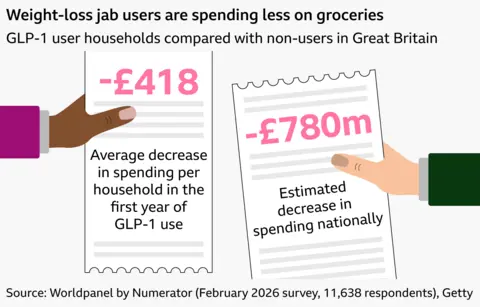
A key finding was that households with at least one GLP-1 user spent on average £418 less on groceries in the year after they began their medication, compared with non-users
This amounted to a fall of £780m in grocery spending nationally, it estimated
It chimes with a peer-reviewed study from Cornell University published last year, which found that US households with at least one member using weight-loss drugs spent 5% less on groceries within six months of starting the medication, with that rising to 8% among higher income families
People also cut back on buying some items and started spending more on others when taking weight-loss medications, Worldpanel found
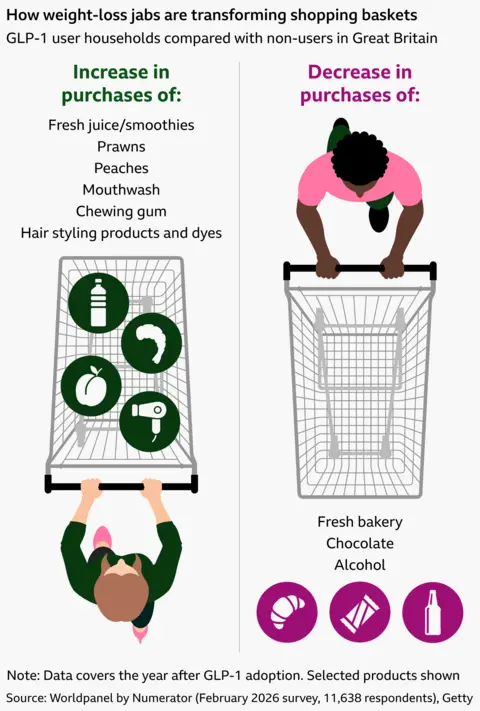
As the chart above shows, the control group reported spending less on chocolate and pastries and more on fruit and protein-rich foods like prawns – a likely result of feeling fuller for longer and being less prone to eat out of boredom. They also consumed less alcohol
But they bought more chewing gum, mouthwash and hair dyes – products that counter common GLP-1 side effects like thinning hair and bad breath
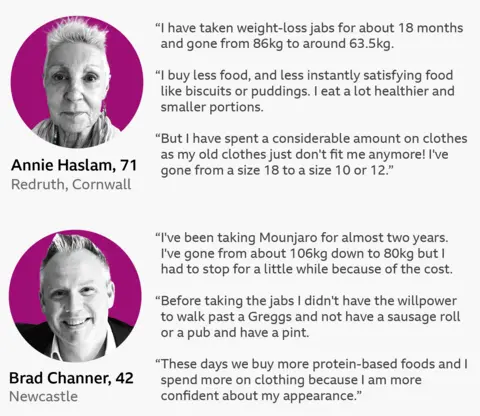
Nishita Pattni, a senior consultant at Worldpanel by Numerator, told the BBC that weight-loss jabs weren’t “simply reducing spending” but “reshaping it”
“This isn’t simply a story of shrinking demand. It’s also a story of shifting demand.”
Cornell’s research found users cut back most on calorie-dense, processed foods, spending 10% less on savoury snacks, for example
They also bought less cheese, butter, soft drinks and eggs but more yoghurt
However, it found households “revert to their pre-adoption grocery spending patterns” when they stop taking their medication, and even shift toward slightly less healthy grocery baskets

Weight-loss jabs also appear to be affecting how much people spend on eating out
Nearly two-thirds of those surveyed by Worldpanel reported cutting out or trying to reduce meals out since starting their jabs
According to Worldpanel, over half of weight-loss jab users surveyed describe their approach to eating as “mindful”, meaning they are guided by hunger cues rather than habit or routine
Cornell’s research, meanwhile, found an 8% decline in spending at fast-food chains and coffee shops
Despite potential savings for weight-loss jab users in some areas, the cost of the drugs is a concern for some
The vast majority of UK patients pay for their medications privately and prescriptions can cost more than £300 a month
A survey of 167 users by Zava, an online doctor and pharmacy service that sells weight-loss drugs, found the number one reason people stopped taking their medication was cost
Meanwhile, the Health Foundation, a charity, has said affluent areas of the UK see higher rates of prescriptions on average, despite lower obesity prevalence, based on data from one private provider
Wegovy weight loss pill now available in UK – here’s what you need to know
New light shed on who benefits most from weight-loss jabs
Consumer behaviour
Shopping
