


By
- Kristine de Leon | The Oregonian/OregonLive
When Matthew Johnson took over a small electrical contracting business in Portland this spring, one expense quickly caught his attention: healthcare
Johnson, who now heads Precision NW Electric, quickly learned that the cost of the company’s health plan through Providence had been going up roughly 20% a year. The latest increase would have raised themonthly cost for one employee from about $440 to $541 in 2026
The coverage wasn’t getting any better either
“It was a really high deductible and really high out-of-pocket maximum,” Johnson said
Johnson’s experience is one version of a problem playing out across the country:Employers are spending more on healthcare. They’re looking harder for ways to bring those costs down. And employees are feeling the pinch
A newsurvey from Business Group on Health, a nonprofit that represents large employers on healthcare and benefits issues, projects that in 2027, employers will face the steepest increase in costs in more than a decade
Without making changes to their health plans, employers expect healthcare costs to rise just over 9% next year. Even after adjusting benefits and taking other steps to rein in spending, they still expect an 8% increase
Workers can feel those increases in higher costs or changes to their benefits. And as healthcare eats up more of a company’s budget, it can leave less money for raises and other expenses
“It makes it harder to increase wages because it’s just another cost of human labor,” Johnson said
At his electrical contracting business, which employs about 10 electricians, health insurance also factors into what customers pay. Johnson said rising costs leave less room for raises while pushing up what he needs to charge for his electricians’ time
“I need to charge more for billable hours in order to cover the fixed cost of health insurance,” he said
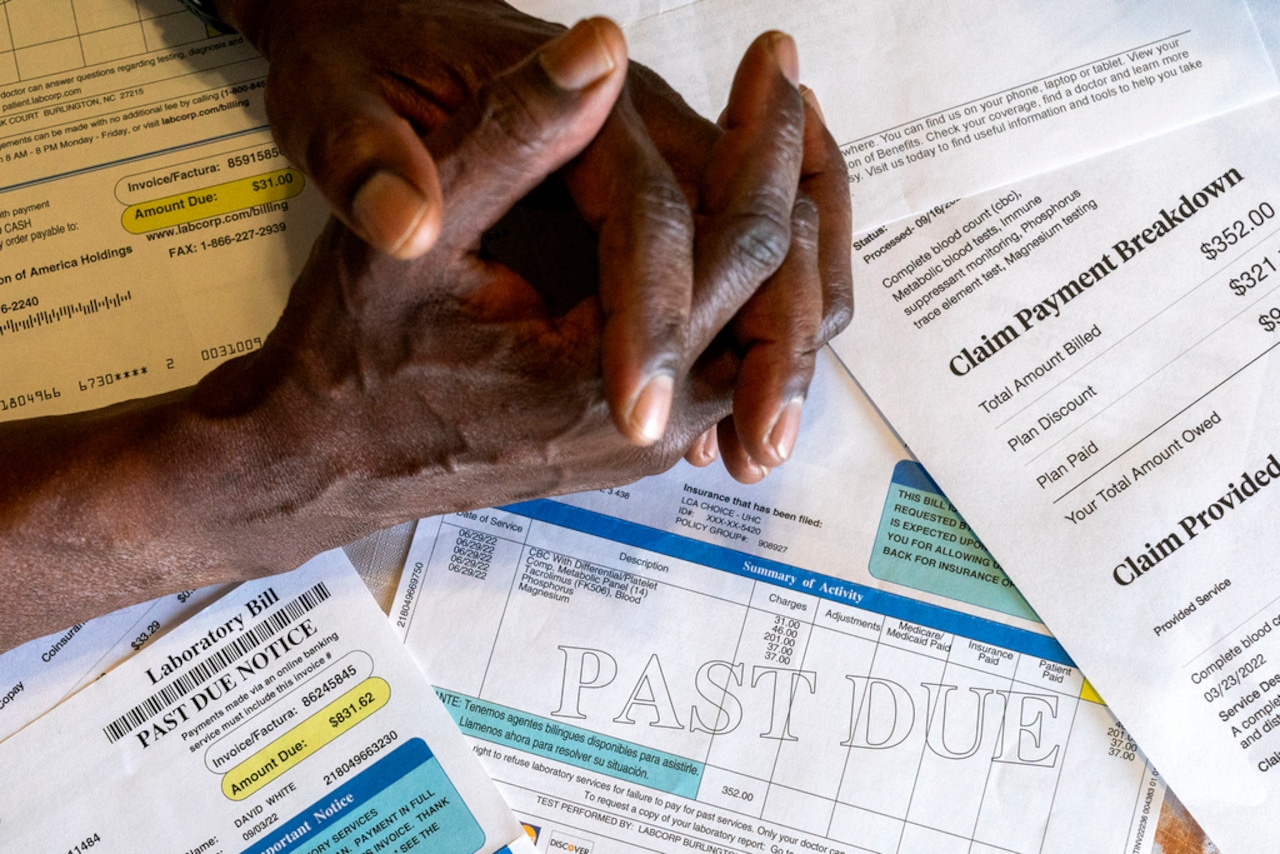
Many households are already struggling with healthcare expenses. One-third of U.S. adults said they had cut other spending to cover healthcare or medicine, according to a recentWest Health-Gallup survey. Some borrowed money, while others skipped meals or cut back on utilities. Even among people with health insurance, nearly 30% said healthcare costs had forced some kind of financial trade-off
And it’s not just day-to-day spending. Healthcare costs are shaping bigger decisions, too. In aseparate Gallup survey, 18% of adults said they had put off changing jobs because of healthcare costs; 14% delayed buying a home, and nearly one in 10 postponed retirement. Others delayed medical care or put off having a child
Employers rethink their health plans
For three straight years, employers have spent more on healthcare than they forecast If current projections hold, costs will have risen 76% from 2018 through 2027, roughly twice as fast as overall inflation
Oregon has seen the same long-term squeeze. The average premium for family coverage through an employer nearly doubled between 2010 and 2025, while single coverage rose 78%, according to federal data. Consumer prices rose about 48% over the same period
The repeated cost increases have drawn more attention from chief financial officers and other senior executives, said Jim Winkler, the group’s chief strategy officer. He compared it to repeatedly missing a sales forecast: Eventually, finance executives want to know why spending keeps exceeding expectations and what the company plans to do differently
Workers could see the results as employers rethink their health plans
Nearly all employers surveyed sought new bids for at least one healthcare vendor, such as an insurer or pharmacy benefit manager. More than half plan to eliminate vendors that aren’t performing well
Employers are also steering workers toward hospitals and other providers they believe offer better care for the money. By 2027, 84% expect to offer at least one “center of excellence,” typically a hospital or medical center selected for certain types of care, such as cancer treatment or surgery
Workers won’t necessarily have to use those providers. Employers can encourage them with lower out-of-pocket costs or other incentives, Winkler said, though some are considering stronger requirements
Then there are prescription drugs, which now eat up about a quarter of employers’ healthcare spending, the survey found. Winkler said companies are trying to curb those costs by encouraging workers to use lower-cost alternatives to expensive brand-name drugs, tightening coverage rules for some expensive medications and experimenting with different ways to buy drugs
Some employers are going further, looking outside the traditional insurance system
Paul Pruitt of SHARx, which works with self-insured employers, said companies have tried to control healthcare costs by raising deductibles, asking workers to pay more and switching health plan administrators. But those moves haven’t stopped costs from climbing
Part of the challenge, he said, is that employers are trying to spend less on healthcare while insurers, pharmacy benefit managers, hospitals and others make money from that spending
“One person’s cost containment is another person’s revenue loss,” Pruitt said
SHARx works by taking certain expensive drugs out of an employer’s traditional pharmacy benefit, then helping workers find other ways to obtain them
He said SHARx makes money providing those services to employers, and the savings depend on the drug and health plan
What it means for workers
Cost containment doesn’t mean employers plan to simply hand workers the entire increase
Some are tying employee contributions to salaries so lower-paid workers pay less, Winkler said. Overall, employers expect to keep picking up about 80% of the bill
But even if employers keep covering the same share, workers can still end up paying more, Winkler said. An 80-20 split on a bigger healthcare bill means a bigger bill for both sides
“Your 20% is a bigger number,” he said
Oregon workers are paying more for job-based health insurance than they were 15 years ago. The average worker with family coverage paid about $3,900 toward annual premiums in 2010. By 2025, that had climbed to nearly $9,400. For single coverage, the average rose from about $850 to $1,500
And that’s just the premium. Workers can also face deductibles, copays and other costs when they need care. In 2024, more than half of workers with employer coverage were enrolled in a high-deductible health plan, according to an analysis of federal data by the State Health Access Data Assistance Center
After learning the company’s health plan had faced years of steep increases, Johnson of Precision NW Electric decided to shop around
He moved the company to a level-funded plan, which places more financial risk on the business for employees’ medical bills in exchange for the possibility of lower costs. He estimates comparable medical coverage costs about 11% less than the company’s previous health plan, though his costs could rise if workers incur higher healthcare expenses
He used the savings to expand benefits. The company now contributes toward family coverage and, for the first time, offers dental and vision insurance
Workers quickly put those benefits to use. Johnson said one employee got a root canal he had put off, while another went to the dentist for the first time in eight years
Johnson said he’s spending slightly more overall because of the added benefit but sees them as a way to attract and keep workers. The challenge is figuring out how long he can keep improving coverage as healthcare costs continue to climb
“If we have an unhealthy year and a bunch of my employees get sick, then premiums could go up next year,” he said. “That’s a calculated risk.”
