


Close Menu
healthylife7.comhealthylife7.com

    Subscribe to Updates

    Get the latest creative news from FooBar about art, design and business.

    What's Hot

    Wellbeing Project Expands To ADF Members

    July 10, 2026

    First ever guidelines released to screen for condition that impacts 9 in 10 Americans

    July 10, 2026

    From Training to Testing: Why Modern Fitness Needs a Scoreboard

    July 10, 2026
    Facebook X (Twitter) Instagram
    Trending
    • Wellbeing Project Expands To ADF Members
    • First ever guidelines released to screen for condition that impacts 9 in 10 Americans
    • From Training to Testing: Why Modern Fitness Needs a Scoreboard
    • Study examines nutrition’s affect on pregnant women
    • Medical identity theft follows you into the doctor’s office
    • Fashion’s mystery man Margiela sells off his archives | ABS
    • Comedian Nam Hyo-na loses nearly 30kg with obesity treatment drug… “It must never be used for cosmetic purposes” [New Story]
    • St. Mary’s Residential Community opens wellness gym for residents with developmental disabilities
    Facebook X (Twitter) Instagram
    healthylife7.comhealthylife7.com
    • Home
    • Fitness
    • Health
    • Nutrition
    • Lifestyle
    • Conditions
    • Mental Health
    • Weight Loss
    • Wellness Tips
    Friday, July 10
    healthylife7.comhealthylife7.com
    Home»Fitness»Could endless scrolling really rot your brain? A new study suggests it might, but also says exercise could fight back
    Fitness

    Could endless scrolling really rot your brain? A new study suggests it might, but also says exercise could fight back

    stamilhstgr0518@gmail.comBy stamilhstgr0518@gmail.comJuly 8, 2026No Comments5 Mins Read
    Facebook Twitter Pinterest LinkedIn Tumblr Reddit WhatsApp Email
    Could endless scrolling really rot your brain? A new study suggests it might, but also says exercise could fight back
    Share
    Facebook Twitter LinkedIn Pinterest WhatsApp Email

    Editors’ notes
    Add as preferred source

    Woman scrolling phone.
    Credit: Mikhail Nilov from Pexels

    Consider flipping through numerous videos on TikTok within mere minutes—some news item, some dancing fad, some culinary trick and some comedy sketch. The content might grab your attention momentarily, but it’s gone just like that. This pattern of consuming information so rapidly puts pressure on our working memory—a short-term memory system in which the brain temporarily stores the information required to think. Each time you flip from one piece of content to the next, you change the context of your thinking, which has led psychologists to wonder whether the brain’s scratchpad gets tired from all the switching.

    Is this endless digital churn truly shredding our memory? A new study delves into this question, exploring the impact of excessive short-video use on working memory performance and how physical activity might offer a surprising countermeasure. The study is published in the journal Frontiers in Psychology

    Is endless scrolling shredding your memory?

    The concern isn’t new. By 2025, TikTok alone had more than 1.6 billion active users, and the cultural impact was so profound that Oxford even selected “brain rot” as its 2024 Word of the Year. For years, parents and teachers have worried that the “thumbs-on-tech” habit shortens attention spans and impairs cognition. In fact, prior research has already associated heavy short-video use with major declines in focus and memory. But how precisely does this manifest in our brains?

    Could endless scrolling really rot your brain? A new study suggests it might, but also says exercise could fight back.
    The laboratory setup used to measure working memory, with participants wearing a functional near-infrared spectroscopy (fNIRS) cap that tracked blood flow in the prefrontal cortex while they completed a 2-back memory task. Credit: Frontiers in Psychology (2026). DOI: 10.3389/fpsyg.2026.1875248

    To investigate this, a new experiment put participants through a classic “2-back” working-memory test, a task designed to measure how well individuals can hold and manipulate information in their minds (checking whether each presented item matched the one from two steps back). The results were eye-opening: those identified as the heaviest video watchers consistently performed the worst on this critical cognitive assessment

    As the researchers reported, their findings indicated that “excessive short video use was associated with poorer working memory performance, whereas regular exercise habits were associated with better behavioral performance.” This direct link between high video consumption and diminished memory function provides compelling evidence for the growing concerns

    Working memory hits the gym

    Then came a significant twist in the findings: Exercise changed everything. Not only did the researchers divide the subjects into those who viewed videos frequently, but they also classified them according to the amount of exercise done in a day: high, low or none. Their findings were striking: The level of fitness counted for a lot. The regular exercisers performed better on the memory test and showed better working-memory functioning regardless of the number of videos consumed

    Could endless scrolling really rot your brain? A new study suggests it might, but also says exercise could fight back.
    The placement of the functional near-infrared spectroscopy (fNIRS) sensors used during the experiment and the prefrontal brain regions they monitored. Credit: Frontiers in Psychology (2026). DOI: 10.3389/fpsyg.2026.1875248

    This strong protective effect of exercise is supported by decades of research showing that exercise literally “builds up” the brain, improving cognitive functioning. For example, research conducted at Harvard University indicates that people with moderate levels of physical activity tend to have larger brain areas responsible for memory, including the hippocampus and prefrontal cortex, than those who lead sedentary lifestyles

    The benefits of exercise were evident in concrete cognitive gains: the most active students significantly outperformed their sedentary peers on the working-memory tasks. Brain scans using functional near-infrared spectroscopy (fNIRS) confirmed these behavioral differences at a neural level and helped researchers further understand the underlying mechanisms. For instance, in physically fit students, the prefrontal cortex, an important area for cognitive control and decision-making, showed steadier and more efficient blood flow during the difficult memory task.

    In contrast, the brains of less active students had to work much harder and showed different patterns of activation to get similar—or often worse—results. Basically, it seemed that regular exercise created a buffer that shielded the brain from the cognitive scramble of watching too many short videos

    Should you lace up or log off?
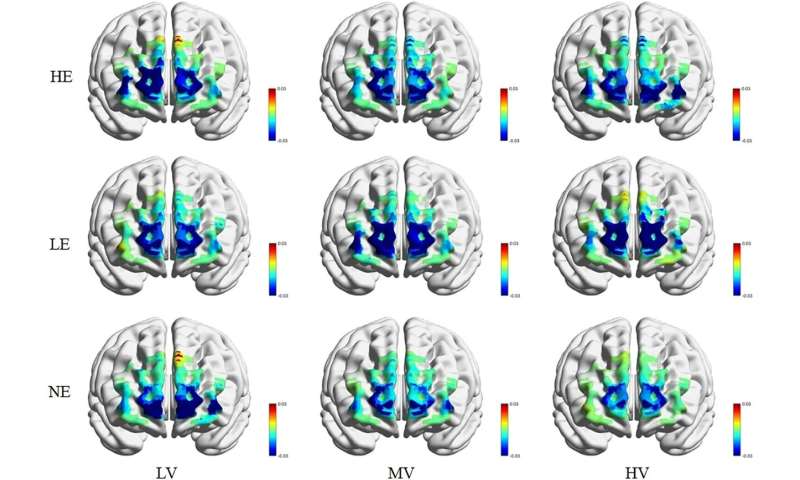
    Could endless scrolling really rot your brain? A new study suggests it might, but also says exercise could fight back.
    These color-coded brain maps compare activity across the prefrontal cortex during the working-memory task in participants with different short-video viewing and exercise habits. Credit: Frontiers in Psychology (2026). DOI: 10.3389/fpsyg.2026.1875248

    Of course, this study was correlational, not direct proof that TikTok causes memory loss or that a jog cures it. Still, the takeaway is hard to ignore. As the authors conclude, “These findings suggest that promoting regular physical exercise may help counteract the negative cognitive effects of excessive short video consumption.” If endless scrolling leaves you forgetful, lacing up your sneakers might help keep you sharp

    This echoes decades of brain-health advice: Even modest routines (say, 30 minutes of brisk activity most days) improve memory and thinking skills. So for busy students and workers, the message is clear: Don’t just scroll—move. Try breaking up your study or work sessions with a quick run, a bike ride or even a few jumping jacks. The data suggest that mixing screen time with sweat sessions could help keep your mind sharp in our fast-paced media age

    Follow us on Google NewsAdd as preferred source

    Science X news — your Follow us on Google News for updates, or set sciencex.com as your preferred

    could endless really scrolling Your
    stamilhstgr0518@gmail.com
    • Website

    Related Posts

    From Training to Testing: Why Modern Fitness Needs a Scoreboard

    July 10, 2026

    St. Mary’s Residential Community opens wellness gym for residents with developmental disabilities

    July 10, 2026

    /C O R R E C T I O N –

    July 10, 2026
    Leave A Reply Cancel Reply

    Health

    Wellbeing Project Expands To ADF Members

    By stamilhstgr0518@gmail.comJuly 10, 20260

    Mirage News Mirage News Mirage NewsNational10 Jul 2026 11:28 am AESTDate Time RAAF

    First ever guidelines released to screen for condition that impacts 9 in 10 Americans

    July 10, 2026

    From Training to Testing: Why Modern Fitness Needs a Scoreboard

    July 10, 2026

    Study examines nutrition’s affect on pregnant women

    July 10, 2026
    Stay In Touch
    • Facebook
    • Twitter
    • Pinterest
    • Instagram
    • YouTube
    • Vimeo
    Fitness

    Opinion: The FDA must put biotech at its center or continue to cede early research to China

    July 6, 2026

    Inside Elevance’s digital chronic disease management strategy

    July 6, 2026

    Best, Worst States For Well

    July 6, 2026

    What do the Middle Ages tell us about mental health then and now? VCU historian Leigh Ann Craig has answers

    July 6, 2026

    Subscribe to Updates

    Get the latest creative news from SmartMag about art & design.

    About Us

    Welcome to HealthyLife7.com, your trusted source for reliable health, wellness, fitness, and lifestyle information. Our mission is to help people make informed decisions about their health by providing clear, practical, and easy-to-understand content.

    At HealthyLife7.com, we believe that good health starts with the right knowledge. Whether you're looking for healthy eating tips, fitness advice, mental wellness strategies, weight management guidance, or information about common health conditions, our goal is to deliver valuable content that supports a healthier lifestyle.

    Fitness

    Wellbeing Project Expands To ADF Members

    July 10, 2026

    First ever guidelines released to screen for condition that impacts 9 in 10 Americans

    July 10, 2026

    From Training to Testing: Why Modern Fitness Needs a Scoreboard

    July 10, 2026
    Health

    Opinion: The FDA must put biotech at its center or continue to cede early research to China

    July 6, 2026

    Inside Elevance’s digital chronic disease management strategy

    July 6, 2026

    Best, Worst States For Well

    July 6, 2026
    Facebook X (Twitter) Instagram Pinterest
    • About Us
    • Contact us
    • Disclaimer
    • Privacy Policy
    • Terms and Conditions
    © 2026 healthylife7.com. Designed by Pro.

    Type above and press Enter to search. Press Esc to cancel.