


Burger King Vs Whataburger: The Fast Food Chain With A Healthier Cheeseburger
By Cami CoxAug. 24, 2026 10:17 am EST
When you’re hungry for hearty comfort food, there’s nothing like a good, solid, all-American cheeseburger. Every fast-food chain has its signature version. At Burger King, the house cheeseburger — simply called “Cheeseburger” on the menu with no clever, BK-branded name — features a flame-grilled beef patty, American cheese, pickles, mustard, and ketchup on a sesame seed bun. The equivalent at rival chain Whataburger is a classic Whataburger with cheese, which includes a 5-inch beef patty, tomato, lettuce, pickles, onions, mustard, American or Monterey Jack cheese, and the diner’s choice of a 5-inch bun, a 4-inch bun, a potato bun, or Texas toast.
A glance at the nutrition info and topping options for each sandwich can help a consumer decide which brand’s burger to opt for. What’s considered “healthy” differs from person to person, but in terms of nutrition, one chain’s cheeseburger is the clear standout: Whataburger. So, if you want to fuel up with a nutritious burger, opting for Whataburger’s cheesy sammie is an easy decision
In fact, in a 2023 study conducted by Gambling.com, the Whataburger with cheese was named the healthiest fast-food cheeseburger in America (via My San Antonio). In compiling data for the study, researchers examined the sugar, fat, sodium, and calorie content of cheeseburgers from various popular chains. The composite score earned by Whataburger’s sando ranked it highest. At the opposite end of the quick-bite spectrum, that same study ranked Burger King’s sammie as America’s unhealthiest cheeseburger. Our own conclusion is the same: Whataburger has the more nutritious offering.
Whataburger for the win: You can even add fiber and healthy fats
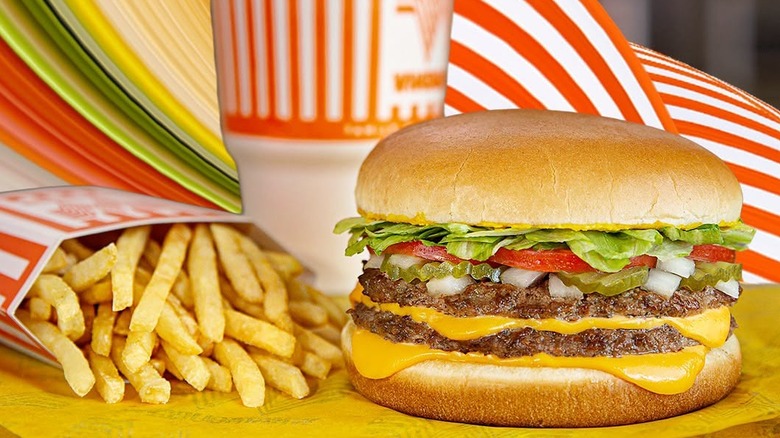
Fitted with the standard 5-inch bun and a slice of American cheese, the Whataburger with cheese delivers 34 grams of protein, so it’s a good choice if you’re protein maxxing. The federally recommended daily protein intake for a 150-pound person is 80 to 110 grams, as of 2026. Previous dietary guidance was 55 grams. So, whichever guideline you’re following, this protein-hefty sammie will have you well on your way to logging that RDA (Recommended Dietary Allowance)
The burger has 680 calories, which fits pretty well into the FDA’s 2,000-calories-per-day benchmark, as fast food goes. It additionally delivers 4 grams of fiber and 19 grams of unsaturated fat (aka “healthy fat”). If you add avocado, which Whataburger offers for an upcharge, you will further bump up the unsaturated fat content to 26 grams and add 2 more grams of fiber
The World Health Organization recommends consuming at least 14 ounces of fruits and vegetables daily for those over age 10, so getting plentiful veggies on your burger helps achieve that goal. A classic Whataburger comes standard with tomatoes, lettuce, pickles, and onions — with the option to add extra portions of each — while Burger King’s cheeseburger only includes pickles (unless you customize it to add more veg). In addition to avocado, you can add jalapeños, which are very nutrient-dense and chockful of vitamins.
If you’re watching your sodium intake, the Whataburger has 1,650 milligrams, which is something to consider. The FDA recommends consuming less than 2,300 milligrams per day, so eating the burger puts you more than halfway there. Burger King’s cheeseburger only has 810 milligrams of sodium, but Whataburger’s sammie is more than twice as large
Burger King has minimal options for increasing your cheeseburger’s nutrition
Umut21/Shutterstock
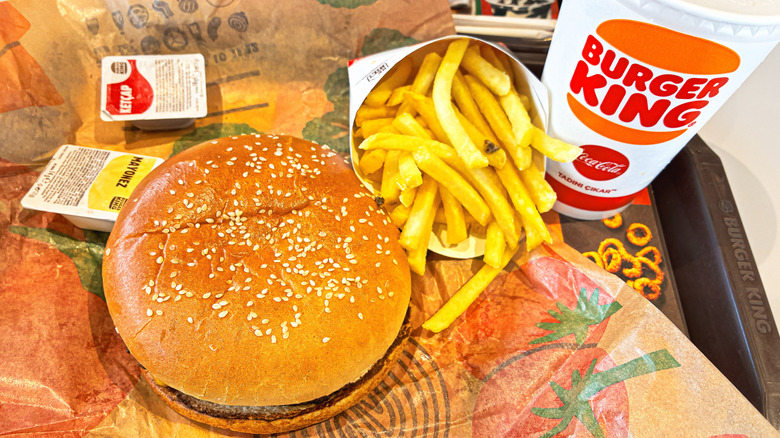
Burger King’s Cheeseburger serves up 16 grams of protein, along with 2 grams of fiber and 8 grams of unsaturated fat. Again, the only standard veggie on the burger is pickles. While BK is known for the astounding number of ways its burgers can be customized, the vegetable options are a bit minimal. Your add-on veg choices are tomatoes, onions, lettuce, and jalapeños, but adding all the plant goodness will help improve the nutrition of your cheeseburger. Burger King’s online ordering interface also has an “extra” button, letting you double up on toppings, like vegetables, to further bolster the sandwich.
The BK burger is comparatively low in calories — just 300. But, again, it’s a much smaller sandwich than Whataburger’s, so take into account that just one might not fully satisfy your hunger, especially if you’re consuming it as a meal versus just a snack
Burger King doesn’t offer a lot of choices in terms of sides that are on the more nutritious side, so there’s not a lot of help there to turn up the nutrients in your meal. The chain doesn’t offer any salads, for instance, but you can increase your fruit intake by adding a cup of Mott’s Applesauce, which contains just apples, water, and added vitamin C. An eight-piece order of Crown Nuggets will contribute 18 additional grams of protein and 2 grams of fiber, so it’s a pretty solid choice for a side accompaniment.
