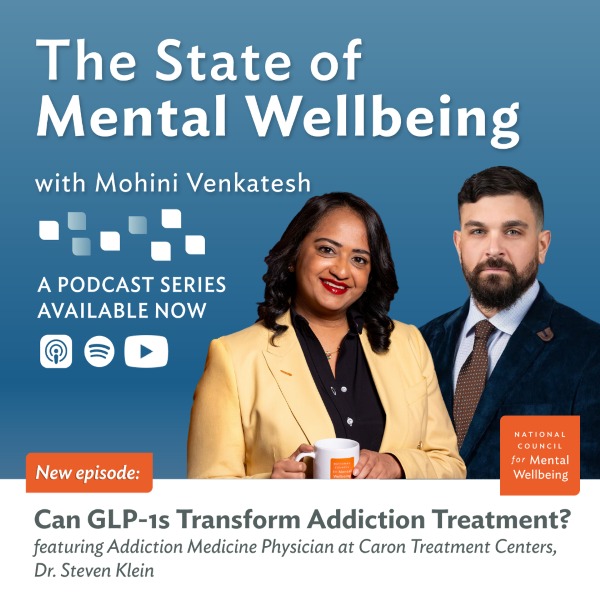
Can GLP-1s Transform Addiction Treatment?
Published:August 26, 2026




On this episode of The State of Mental Wellbeing: A Podcast on Mental Health & Substance Use, host Mohini Venkatesh speaks with Dr. Steven Klein, an addiction medicine physician and researcher, about a new development in behavioral health: the potential role of GLP-1 medications in treating substance use disorders (SUDs)
Known primarily for diabetes and weight management, medications such as semaglutide and tirzepatide are generating growing interest among researchers and clinicians for a different reason. Emerging evidence suggests they may help quiet cravings, reduce alcohol consumption and weaken the compulsive urges that can drive SUDs. Throughout the conversation, Dr. Klein explores the science, the clinical experience and the broader implications for recovery and behavioral health care
What You’ll Learn
Listeners will come away with a clearer understanding of:
- How GLP-1 medications may reduce cravings and substance use by acting on the brain’s reward pathways.
- What current research reveals about GLP-1s and alcohol use disorder, as well as emerging evidence across other substances.
- Why concepts like agency, impulse control and dopamine regulation are becoming increasingly important in addiction treatment.
- How GLP-1s could complement comprehensive recovery services while helping reduce stigma surrounding SUDs.
From Weight Loss to Addiction Research
The connection between GLP-1s and addiction did not emerge from SUD treatment settings. Instead, researchers began exploring the link after patients receiving the medications for weight loss and diabetes began reporting unexpected reductions in alcohol use and other compulsive urges. Many described drinking less, smoking less or experiencing fewer urges to engage in activities that had previously felt difficult to control
Those reports prompted further investigation, leading to a growing body of research examining whether GLP-1s may have broader effects on the brain’s reward system. Today, researchers are studying their potential role not only in alcohol use disorder, but also in nicotine, opioid and stimulant use disorders
What the Science Is Showing So Far
Dr. Klein discusses several studies that have helped fuel enthusiasm about GLP-1s in addiction medicine. Randomized controlled trials examining alcohol use disorder have shown meaningful reductions in drinking among participants receiving GLP-1 medications compared with placebo. Larger retrospective studies have identified associations between GLP-1 use and decreases in various SUD diagnoses, including those related to alcohol, nicotine and opioids
At the same time, he emphasizes that the science is still evolving. While alcohol use disorder currently has the strongest body of evidence, additional research is needed to understand how these medications work across different substances, which patients may benefit most and how GLP-1s should be integrated into existing treatment approaches
Understanding the Brain’s Reward System
A central theme of the episode is dopamine and reward. Dr. Klein explains that addiction can involve a powerful cycle in which the brain becomes increasingly focused on seeking substances or behaviors that produce reward. Over time, that cycle can narrow a person’s sense of choice and control
GLP-1s appear to influence this process by increasing feelings of satiety and reducing the intensity of reward-driven urges. According to Dr. Klein, the result may not be a loss of motivation or enjoyment, but rather a greater ability to create space between impulse and action. That space, he argues, is where recovery, decision-making and personal agency can grow
One patient described the experience in remarkably simple terms: “My brain listens to me now.” For Dr. Klein, that statement captures the promise of these medications better than any clinical measure
Recovery Is About More Than Medication
Despite the excitement surrounding GLP-1s, Dr. Klein repeatedly notes that medication is only one part of recovery. SUDs are complex conditions shaped by biology, environment, relationships and lived experience. Effective treatment requires addressing those factors together
At Caron Treatment Centers, where Dr. Klein practices, GLP-1s are used alongside therapy, family support, peer recovery reas helping reduce cravings while patients build what recovery professionals often call “recovery capital,” including the skills, relationships and supports that sustain long-term wellbeing
Expanding Access and Reducing Stigma
The conversation also explores larger questions about stigma and access. Conditions such as obesity and SUDs have long been accompanied by judgments that people simply need more willpower or better choices. Dr. Klein argues that new research into the biology of addiction may help shift those narratives toward a more compassionate and evidence-based understanding
At the same time, significant barriers remain. Access to GLP-1 medications can be limited by cost, insurance coverage and prescribing restrictions. Because the FDA has not yet approved the use of these medications to treat SUDs, many patients face additional hurdles when seeking treatment
Looking Ahead
When asked what he hopes to see over the next decade, Dr. Klein points beyond any single medication. He envisions a future in which addiction is understood less as a personal failure and more as a condition shaped by biology, environment and systems. He also hopes the growing conversation around dopamine, reward and agency encourages society to think differently about how people become vulnerable to addiction in the first place
While important questions remain unanswered, Dr. Klein’s outlook remains optimistic. The emerging research around GLP-1s offers new possibilities for how we support recovery, reduce stigma and empower people to take an active role in their own wellbeing
Meet the Guest
Dr. Steven Klein is a compassionate and highly accomplished physician-scientist specializing in addiction medicine. Dr. Klein is dedicated to advancing innovative, evidence-based approaches to support recovery for teens, young adults and individuals facing relapse challenges
Listen to the Full Conversation
This post highlights the main themes of the discussion, but the full episode offers deeper insight into the science of GLP-1s, the realities of addiction treatment and the future of recovery care
Stream the latest episode right here, or listen on your favorite platform.
All Posts

Safe, Supported, Expected, Rewarded: A Road Map for AI AdoptionAug 20, 2026
Read more
Mental Health First Aid: A Global MovementAug 12, 2026
Read more
Transforming Rural Mental Health Care: The Promise of CCBHCsAug 6, 2026
Read more