


China’s rising obesity fuels demand for weight-loss camps, drawing overseas interest
With weeks of supervised training and controlled meals, stay-in fitness programmes in China are attracting overseas participants looking to build healthier habits
This audio is generated by an AI tool
Read a summary of this article on FAST.
Get bite-sized news via a newcards interface. Give it a try.
Click here to return to FASTTap here to return to FAST
FAST
BEIJING: When Singaporean Alexis Tan booked a trip to China earlier this year, it was not for sightseeing
The 32-year-old interior designer travelled to Guangdong province in May to spend two weeks at a residential weight-loss camp after coming across videos about similar programmes on social media
Positive reviews from Malaysian participants on Chinese lifestyle platform RedNote convinced her to sign up for one in Dongguan.
By the time she joined the camp, Tan had already lost about 12kg on her own and reached what she described as a “plateau” at 78kg.
She wanted to lose a little more, but more importantly, hoped the experience would reshape her approach to health
“If I can have a change of mindset, have a healthier … control towards my weight, towards my well-being, and towards my eating and exercise habits, I think that would be my best takeaway,” she told CNA
After the two weeks, Tan had lost another 4kg
She was one of only four foreigners among about 60 participants at the camp, but operators say overseas interest is growing
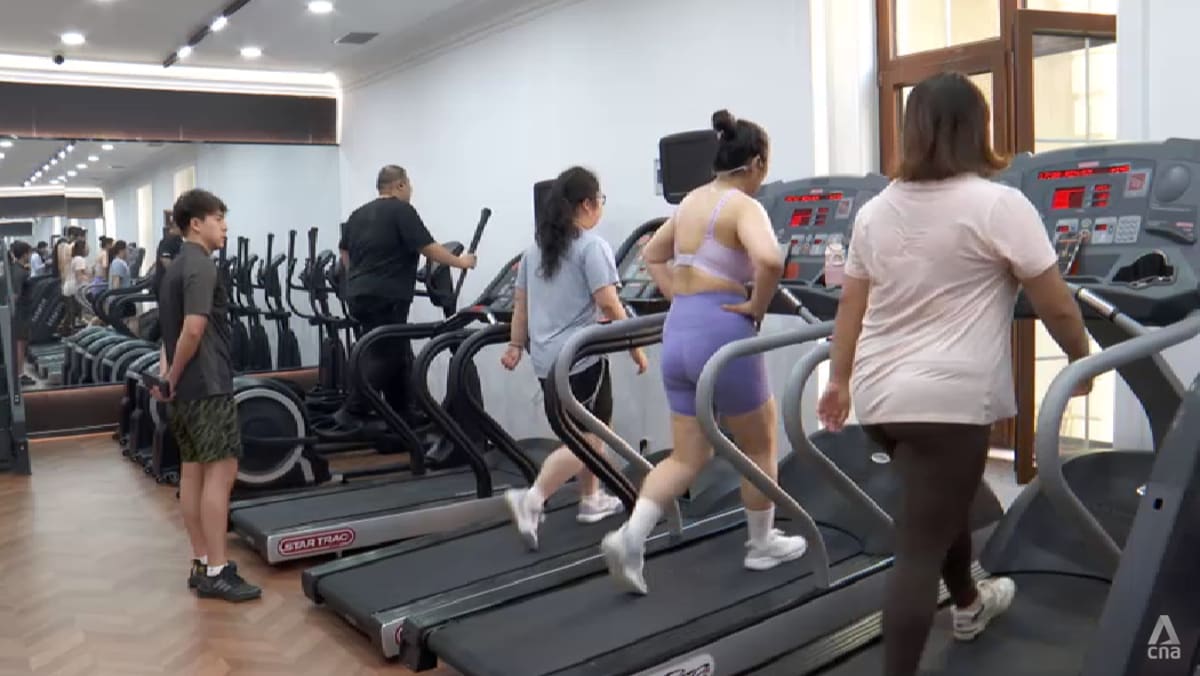
To find out what draws people there, CNA visited a weight-loss camp in Beijing’s Miyun district, where participants follow a tightly structured routine of exercise, meals and rest
Guess Word
Crack the word, one row at a time
Buzzword
Create words using the given lettersMini Sudoku
Tiny puzzle, mighty brain teaserMini Crossword
Small grid, big challengeWord Search
Spot as many words as you can
Show More
Show Less
FIVE WORKOUTS A DAY
The day begins with a knock on the door as coaches make their rounds to wake participants
Minutes later, participants are on treadmills for 40 minutes of cardio before breakfast
From 7.45am until 8pm, they go through five exercise sessions ranging from step aerobics and spin classes to circuit training and strength workouts
Most stay for at least 28 days, although some remain longer until they reach their target weight
Participants can also pay extra for one-on-one coaching sessions, where trainers tailor workouts to individual fitness levels and teach them how to use strength-training equipment safely
For participants Wang Yan and Kang Jingru, both in their early 20s, the demanding routine has already begun to pay off. Each had lost between 2kg and 5kg after about two weeks
For Wang, the motivation went beyond improving her health
“Besides affecting my health, I was also struggling to find a job because I was overweight,” she said
Kang, a make-up artist, said losing weight had also changed how others perceived her
“After losing weight, I think my image has improved. People trust me more now and see me as being more professional.”
STRICT ROUTINES, SIMPLE MEALS
Exercise is only one part of the schedule
Participants eat carefully planned meals centred on lean protein, vegetables, fruit and whole grains
Sauces are largely off the menu, with vinegar and black pepper among the few condiments allowed
At the Beijing camp, food deliveries are banned, and coaches enforce the rules with surprise room inspections
Senior personal trainer Wu Hao said maintaining a healthy weight is driven largely by diet
“Diet accounts for about 60 to 70 per cent of it, with exercise making up the rest,” he said.
“In fact, most people become overweight because of their eating habits. You can lose weight without exercising if you first improve your diet. But combining a healthy diet with exercise is far more effective than relying on diet alone.”

A GROWING TREND
Although overseas participants remain a minority, camp operators say interest from abroad has been growing, particularly from Singapore and Malaysia
After Tan shared her experience on social media, the operator said it received about 40 enquiries in a short period
Affordability is another draw. At the Beijing camp visited by CNA, a 28-day stay costs between about US$590 and US$890, depending on the room type. The fee includes accommodation, meals and training
To cater to the demand, some camps are upgrading accommodation, improving meal options and looking to hire more English-speaking coaches
Personal trainer Su Peng said language has not been a major obstacle
“Our classes are conducted to music, so they don’t really depend on language,” he said
Coaches translate daily schedules and camp routines for overseas participants, allowing them to follow classes alongside everyone else
TACKLING OBESITY
The camps’ popularity reflects a broader challenge facing China
The country launched a nationwide three-year weight management campaign in 2024 to encourage healthier lifestyles and curb rising obesity rates
More than half of Chinese adults are overweight or obese. Researchers have warned that without effective intervention, nearly two in three Chinese adults could be overweight or obese by 2030
Obesity-related healthcare costs could also account for more than a fifth of the country’s total healthcare spending by then

More than half of China’s adults are overweight or obese. It must now beat the bulge, or else

How a diabetes drug became a weight-loss hack, and why doctors are concerned
Doctors say structured programmes like camps can help people kick-start their weight-loss journey, but they are not suitable for everyone
Charles Poon, medical director of Raffles Clinics China and Raffles Hospital Beijing, said the camps can provide the structure and accountability that many people struggle to maintain on their own
However, he cautioned that programmes should be properly supervised and tailored to individual needs
“All these things can actually be good as perhaps a catalyst in the initial stage … but it has to be done carefully and with proper supervision, otherwise a camp that runs too aggressively can cause harm.”
Older adults and people with conditions such as heart disease, high blood pressure or diabetes should undergo a medical assessment before joining intensive programmes, he warned
Children should also approach such camps with caution because they are still growing and need adequate nutrition

China’s healthcare system races to catch up with rapid ageing

IN FOCUS: New TCM ambassadors? China’s cafes, bars reboot ancient remedies for the modern era
Poon said a healthy rate of weight loss is generally about 0.5kg to 1kg a week, although people with obesity may lose weight more quickly during the initial stages
The routine is as much about building discipline as it is about losing weight
Ultimately, he said, long-term success depends not on how much weight participants lose at camp, but whether they maintain those habits after returning home
“Beyond that two weeks or four weeks … they must have some kind of support and some kind of peer group to support each other to continue on this journey of maintaining a good weight.”
Back in Singapore, Tan said she does not expect to return to another weight-loss camp because she believes she can continue her fitness journey on her own.
While the intensive routine may not be sustainable, she said the habits she picked up are
“The mindset is definitely sustainable: to eat healthily, (remind) yourself to try to work out a bit more and try to not always be sitting down.”

Commentary: Obesity is a disease – treating it like one could be a game changer for healthcare

Singapore-linked companies going big in China’s medical sector
Source: CNA/mp(ca)
Get the CNA app
Stay updated with notifications for breaking news and our best stories
Get WhatsApp alerts
Join our channel for the top reads for the day on your preferred chat app
Get bite-sized news via a newcards interface. Give it a try.
Click here to return to FASTTap here to return to FAST
FAST
