


This is a paid press release. Contact the press release distributor directly with any enquiries.
Chula Researchers Develop Synthetic Boar Scent Mimicking Natural Pheromones to Reduce Disease Outbreak Risks in Pig Farms
PR Newswire
Mon, 31 August 2026 at 7:30 am GMT+5:30
2 min read
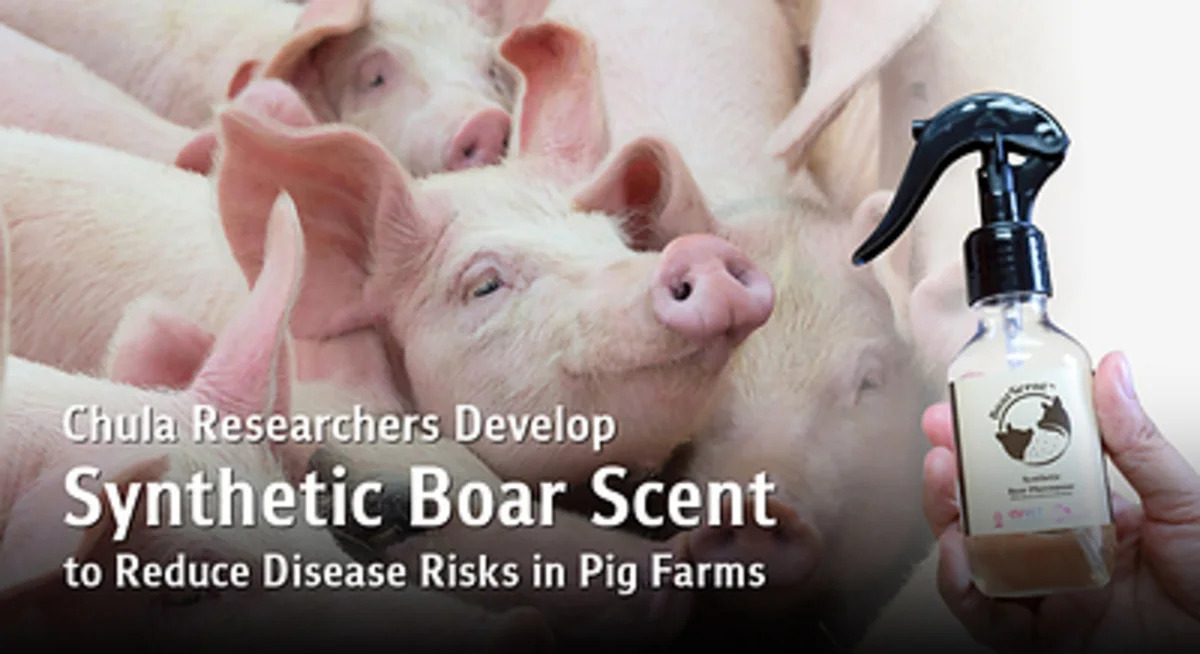
BANGKOK, Aug. 31, 2026 /PRNewswire/ — Researchers from Chulalongkorn University’s Faculty of Veterinary Science have developedsynthetic boar scent mimicking natural pheromones, providing a safer way to stimulate reproduction while reducing the risk of disease transmission associated with direct contact between breeding animals
Preparing young female pigs (gilts) for breeding is a critical step in pig production. Gilts that fail to enter estrus within the appropriate age range are typically removed from the breeding herd and diverted to meat production, resulting in economic losses for farmers
The standard method used worldwide to stimulate estrus is boar contact, in which a mature boar is introduced to gilts. While effective, the practice requires handling large animals and carries the risk of spreading diseases such as African swine fever (ASF), for which no vaccine or treatment currently exists
Seeking a safer alternative, the Chulalongkorn research team investigated the chemical signals responsible for stimulating estrus. Led by Prof. Dr. Padet Tummaruk, D.V.M., with Dr. Isaya Thaveesangsakulthai, Ph.D., an expert in chemical communication, the team analyzed scent samples collected from mature boars using gas chromatography (GC). They identified 23 key odor compounds and used them to formulate the synthetic boar scent
In comparative trials, exposure to a live boar induced estrus behavior in approximately 75% of gilts, while the synthetic scent achieved a response rate of about 50%, compared with only 18% in the unstimulated control group. Although live boars remain more effective, the synthetic scent offers important advantages in safety, ease of use, and reducing disease risks
The plant-based formulation is non-irritating, safe for people to handle, and designed for practical farm use. Farmers simply spray the scent onto a pad attached to a rod and present it to the gilt to sniff. Several large pig farms have already expressed interest in testing the prototype
The research, published in a Tier 1 international scientific journal in early 2026, has also led to a petty patent application. Looking ahead, the team plans to study the scent of gilts in hopes of developing scent-based diagnostic tools that could further improve reproductive management in pig farming
“Our goal is to develop a product made in Thailand, affordable for Thai farmers, and free from reliance on imported products,” Prof. Dr. Padet concluded
Read the full article at https://www.chula.ac.th/en/highlight/418665/
