


ByMelissa Fleur Afshar
Newsweek is a Trust Project member
See more of our trusted coverage when you search.to see more of our trusted coverage when you search.
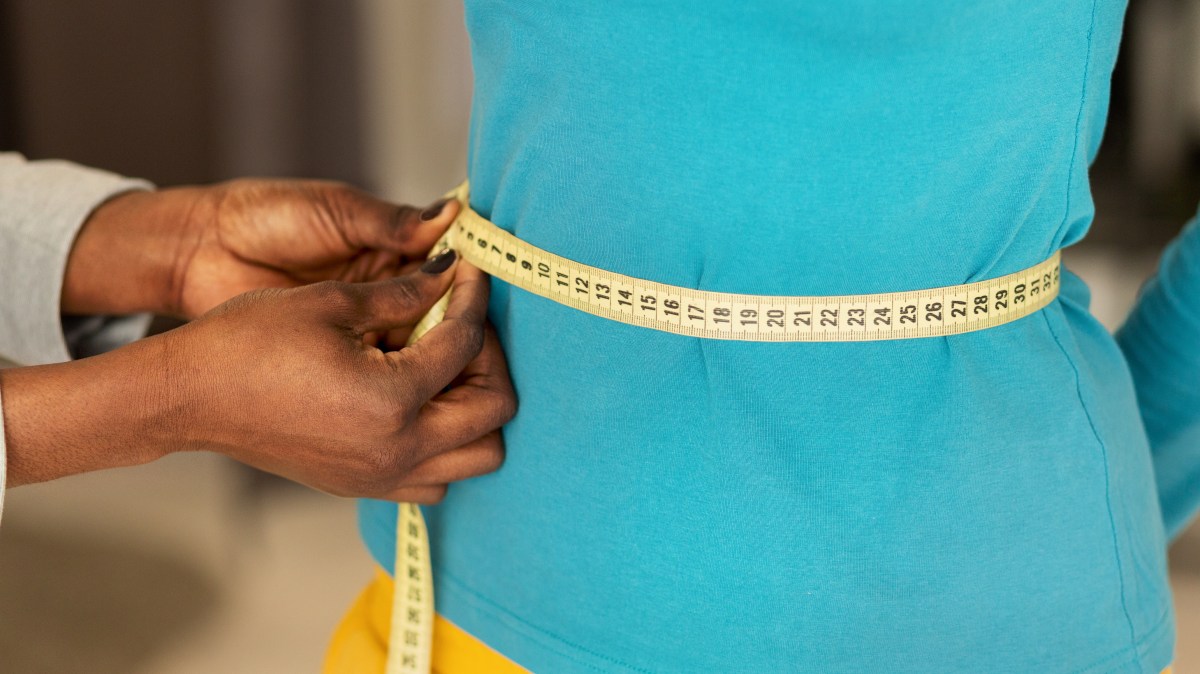
Waist circumference, when considered alongside body mass index (BMI), may provide important additional information about death risk in adults aged 65 and older, according to new research that challenges reliance on BMI alone
BMI, which measures weight relative to height, has long been used by researchers and clinicians as a tool for estimating obesity-related health risks, including the risk of premature death. But the new study suggests that waist circumference, a measure of abdominal fat, may help identify mortality risks that BMI alone can miss
“BMI should not be interpreted in isolation when evaluating older adults,” study co-author Bryan Blissmer, a professor at the University of Rhode Island, told Newsweek. “Our data demonstrates that waist circumference provides critical, additional information about mortality risk that BMI systematically misses.”
“BMI and waist circumference provide complementary information about health risk in older adults, and our findings suggest that considering both measures together, rather than relying on BMI alone, may improve mortality risk assessment and support more informed clinical decision-making,” he had said in a previous statement
Milica McDowell, a doctor of physical therapy, author and healthcare leader, who was not involved in the study, told Newsweekthe findings may help shed light on what is often called the “obesity paradox”—that overweight or mildly obese patients diagnosed with certain chronic conditions—such as heart failure, stroke, kidney disease, or cancer—can have lower short-term mortality rates and better survival outcomes than normal-weight patients with the same illnesses
What the Study Found
The research, published in the Journal of the American Geriatrics Society, analyzed nationally representative data from 6,905 U.S. adults aged 65 and older, tracked from 2011 to 2024
It found that a higher BMI was linked to a lower risk of death, while a higher waist circumference—a measure of abdominal fat—was tied to a higher risk of death, even after accounting for BMI
Compared with adults of normal weight, overweight men and men with class I and II obesity had 46 percent and 51 percent lower mortality risks, respectively. However, men with a high waist circumference had a 24 percent higher mortality risk, independent of BMI
Researchers observed similar patterns among the women studied. Again, all were 65 and older
…
When the two forms of measurement were considered together, being overweight was linked to a lower mortality risk in men regardless of waist size. Interestingly, class I and II obesity was also linked to lower mortality risk, but only in men who also had a larger waist circumference
In contrast, being underweight—regardless of waist size—and having a normal BMI paired with a large waist circumference were both linked to a higher risk of death in men and women alike
“Clinicians should pay close attention to unintentional weight loss or a low or declining BMI, which often reflects a loss of muscle mass, frailty, underlying illness, or poor nutritional status,” Blissmer said. “Ultimately, we hope this research encourages practitioners to evaluate these anthropometric metrics alongside functional status, medical history, and trends over time, rather than treating them as stand-alone diagnostic thresholds
“We consider our sample size a major strength of our study. Our analysis utilized the National Health Aging Trends Study (NHATS) cohort, which provides a nationally representative sample of the U.S. Medicare population,” he added
The research was observational and identified associations between body composition and mortality but could not determine causality
Using Waist Circumference and BMI Together
McDowell said excess abdominal fat often corresponds with both a higher BMI and a larger waist circumference. However, the study also found elevated mortality risk among people whose BMI fell within the normal range but who had a large waist circumference
McDowell pointed to the study’s finding that being underweight carries risks comparable to those associated with high body and abdominal fat leading to an elevated waist, a point she said is especially relevant given the growing use of GLP-1 weight-loss drugs among older adults
Chronically undernourished or underweight seniors, she said, should take note that their condition carries similar risk
McDowell said the two measurements together give patients and health care providers a more precise tool to guide weight and health management. She added that including a simple waist measurement to routine clinical exams could sharpen doctors’ understanding of disease and death risk in their most senior patients
Reference
Xu, J. E. Earp, B. J. Blissmer, J. Coiro, S. A. Cohen, and G. W. Greene. (2026). Time-Varying Body Mass Index, Waist Circumference and All-Cause Mortality in US Adults Aged 65 or Older. Journal of the American Geriatrics Society. 1–8. https://doi.org/10.1111/jgs.70600
Request Reprint & Licensing
View Editorial & AI Guidelines
