



- Safety concerns generate attention, but uptake drivers remain stronger
- European adoption is constrained mainly by access, cost and supply
- Safety fears appear less influential than efficacy and accessibility
- Existing GLP-1 users continue reshaping food purchasing and consumption
- Food companies should adapt products rather than expect slowing demand
1 weight-loss drugs could be the most transformative force to hit the food industry in its long history
But they have not been without their controversies. They have consistently been linked to adverse side-effects, including gastrointestinal issues, hair loss and even blindness
More recently, data from the UK’s Medicines and Healthcare Products Regulatory Agency (MHRA), specifically its Yellow Card Biobank, has suggested that GLP-1 use may be linked to more than 150 deaths. These deaths have not been proven to be a result of the drugs, and they may have other causes
Could such stories complicate the otherwise relentless success of the blockbuster weight-loss drugs? Do the stories even cut through?
MHRA’s data was widely reported by a number of publications, ranging from mainstream news channels and newspapers to FoodNavigator itself
On 7 August, soon after the news had been reported, interest in the phrase ‘GLP-1 deaths’ increased by 100% on Google Trends
Nevertheless, in Europe, safety is not the main concern for consumers around GLP-1s CEO and co-founder of consultancy S2B Group
In Europe, access to GLP-1s is predominantly prescription-based, with the exception of the UK where a large private market exists
Therefore, in Europe, consumer conversation has focused not on risk but efficacy and accessibility. In Germany, France and the Nordic markets, the safety narrative has not had as much cut through as elsewhere
It is too early to tell whether the story on MHRA data will affect uptake of GLP-1s in any tangible way, explains Tahiri. Yet existing data shows that uptake is limited in Europe by cost, supply and prescription access, rather than safety fears
Nevertheless, Tahiri does not rule out that such stories may contribute to hesitancy among those already cautious about taking the drugs. Healthcare professionals could also see the coverage “as an opportunity to strengthen informed consent discussions” with patients, she says
There is a limit to how much this will affect uptake, however. Tahiri does not expect demand to collapse. “The structural drivers of GLP-1 adoption, the obesity epidemic, the limitations of lifestyle interventions alone, and the demonstrable efficacy of these drugs at the population level are not undone by unconfirmed adverse event reports.”
Perhaps more impactful, she suggests, would be how such stories could influence regulation. This will have far more significant impact on the market than hesitancy “at the margins” by some consumers
Could coverage around GLP-1 side-effects and fatalities reduce the pressure that the weight-loss drugs are exerting on the food industry?
Tahiri is sceptical. Even if such coverage caused new uptake to grind to a halt, existing users are already exerting a substantial influence on the market that the food industry must pay attention to
“Even if GLP-1 adoption were to plateau tomorrow, which I do not expect, the consumers who have already used these drugs have already changed,” she says. “Their taste preferences, appetite patterns and nutritional expectations are measurably different. They eat smaller portions. They gravitate toward higher protein density and micronutrient-rich foods. They are among the most label-conscious, health-engaged consumers in any category.”
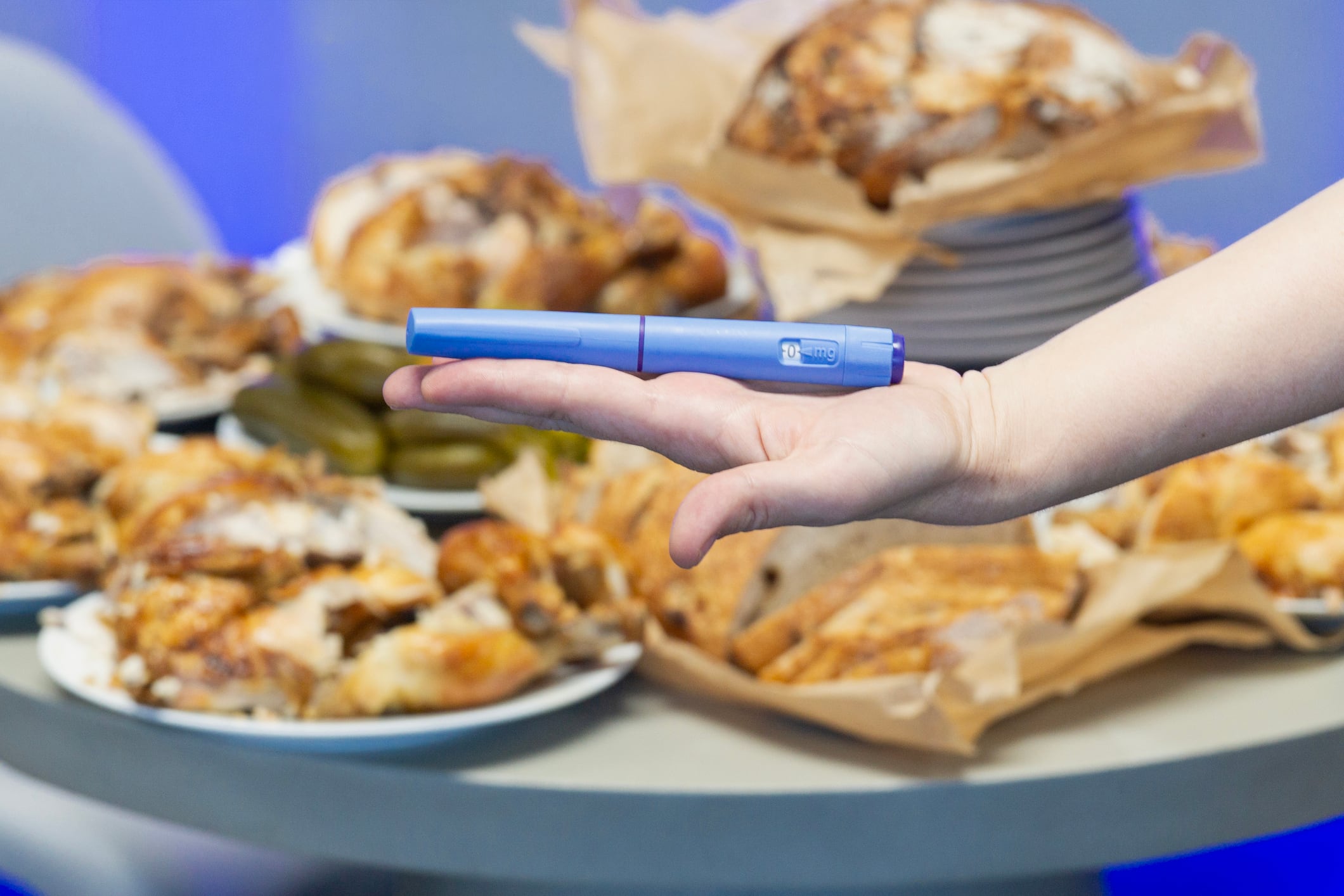
Furthermore, the preferences and habits of GLP-1 users are beginning to spill over to those who do not use the drugs, a phenomenon called the ‘GLP-1 halo effect’. Many habits of GLP-1 users are also practiced by health-conscious consumers who do not use the drugs, explains Tahiri
In February this year, investment bank JP Morgan predicted that GLP-1s would lead to an annual revenue drop of $30-55bn (€25-47bn) for the food industry by 2030–2034, with people consuming 21% fewer calories and spending 31% less on groceries. Safety concerns, Tahiri suggests, are unlikely to stop this transformation entirely
Rather than waiting for coverage around GLP-1 side-effects and even deaths to quell demand, Tahiri suggests, the food industry must continue doing what it is already doing; giving GLP-1 users what they want
This involves the development of smaller, more nutrient-dense portions for those who have smaller appetites but the same nutritional needs
“The reformulation work, the high-protein innovation pipelines, the nutritional density strategies: this is not speculative positioning,” says Tahiri. “It is responsive to a consumer cohort that exists today and is growing.”
In short, while scepticism around safety could influence GLP-1 uptake at the margins, it would be a big mistake for the food industry to put its hopes in such scepticism dampening the speed and scale of GLP-1 adoption, and its transformative effects
GLP-1s are here to stay
