


ByBillal Rahman
Newsweek is a Trust Project member
See more of our trusted coverage when you search.to see more of our trusted coverage when you search.
A federal appeals court has ordered the release of a Jamaican man with end-stage kidney disease from immigration detention, finding that his life-threatening medical condition and unresolved legal claims warrant bail while judges consider his appeal
In a 2-1 ruling issued Monday, the U.S. Court of Appeals for the Second Circuit granted bail to Raheem Fulton, a Jamaican national in Immigration and Customs Enforcement (ICE) custody who is subject to a final order of removal following a burglary conviction
Newsweek has contacted the Department of Homeland Security (DHS) and the man’s legal team for comment
It comes amid growing scrutiny of medical care in ICE custody, including concerns over access to adequate treatment, continuity of care and the handling of medically vulnerable people facing deportation. DHS has maintained that all detainees have access to appropriate medical care and that the agency follows established protocols to address their health needs
Earlier this year, a Costa Ricanman who was deported from the United States in a vegetative state after months in ICE detention died weeks after being returned home, prompting an investigation by Costa Rican authorities into the circumstances surrounding his detention, medical treatment and removal. The man’s family alleged he was overmedicated and inadequately cared for, while DHS said he received appropriate treatment and noted he did not die in ICE custody
Why The Court Ordered Fulton’s Release
The court found that Fulton had met the demanding standard for bail pending resolution of a habeas corpus appeal by demonstrating both that his case raises substantial legal questions and that extraordinary circumstances make release necessary. Habeas corpus is a legal procedure that allows detained individuals to ask a court to review whether their custody is lawful and, in some cases, seek relief while their claims are considered
“We conclude that Fulton has demonstrated that (1) his petition raises substantial claims, and (2) extraordinary circumstances exist that make the grant of bail necessary to make the habeas remedy effective,” the majority wrote
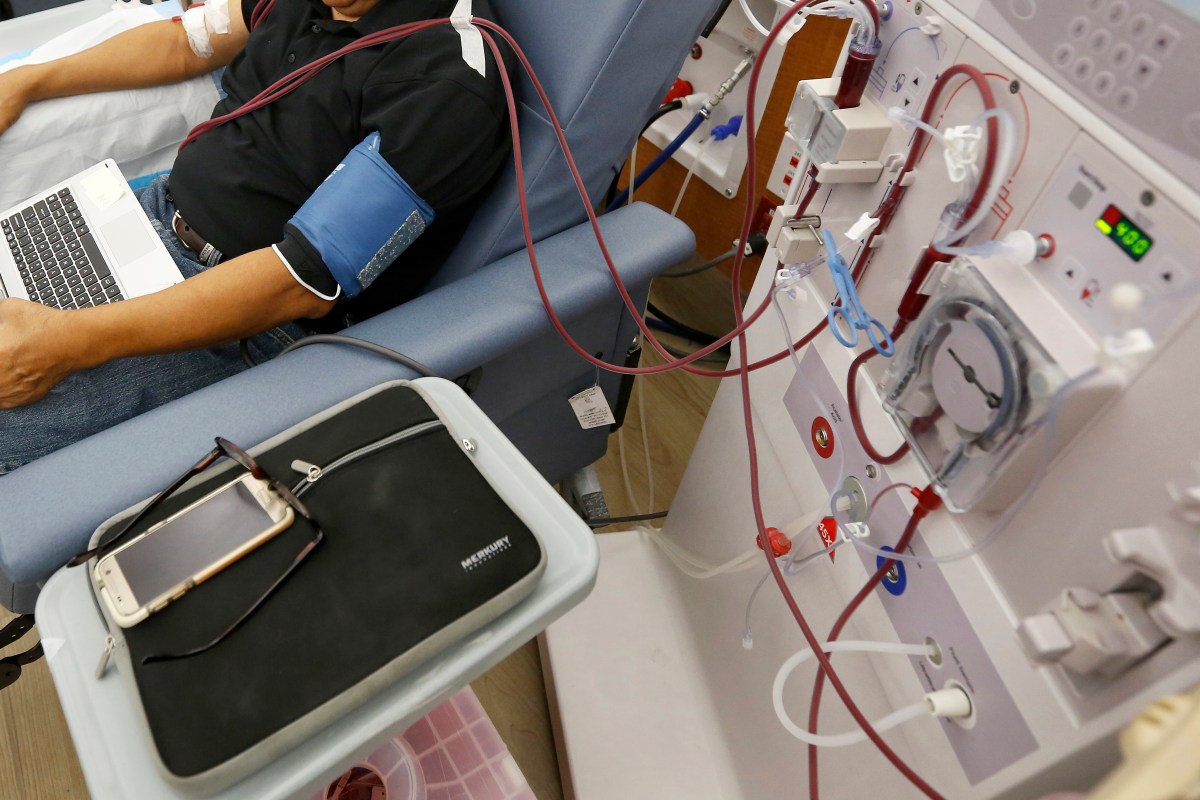
Fulton, who has end-stage renal disease and requires regular dialysis, is challenging what he says was inadequate medical-discharge planning before his deportation to Jamaica
…
The majority noted that a prior panel of the court had already found he raised a substantial claim that a district court improperly dismissed his request for discharge planning related to his “life-threatening medical condition.”
“Here, as the Government does not dispute, failure to supply adequate medical care will result in Fulton’s ‘near certain death,'” the court wrote. “These circumstances are sufficiently extraordinary to render the grant of bail necessary to make the habeas remedy fully effective.”
The majority pointed to evidence that Fulton had previously suffered a life-threatening episode after missing a dialysis appointment while in ICE custody. Judges also cited records showing that a medical provider referred him for a kidney-transplant evaluation but that ICE had declined requests to facilitate the transplant process
The court further noted that the government had not argued Fulton posed either a danger to the community or a flight risk
The majority rejected arguments that Fulton could simply end his detention by accepting deportation
“No one disputes that, for Fulton, deportation without dialysis is effectively a death sentence,” the court wrote. “And no one disputes that, while in custody, ICE will not and Fulton cannot arrange his post-deportation medical care.”
ICE Argues Medical Arrangements Were In Place
The ruling stems from a legal dispute over the government’s obligations when deporting immigrants with severe medical conditions. Fulton argues that federal officials must provide adequate planning for his continued medical treatment before removing him to Jamaica. The merits of that claim remain pending before the court
Judge Steven Menashi dissented, arguing that Fulton had failed to satisfy the requirements for release pending habeas proceedings
Menashi said Fulton remained detained largely because he obtained a court-ordered stay preventing his removal while the litigation continues. He wrote that the government had already coordinated with Jamaican authorities to ensure dialysis treatment would be available after Fulton’s return and that Fulton was receiving regular dialysis while in U.S. custody
According to the dissent, U.S. officials communicated with the Jamaican government, secured confirmation that dialysis treatment would be available, and obtained approval for his return from Jamaica’s Ministry of Health and Wellness
“The only reason that Fulton remains in custody is because Fulton himself asked the federal courts to delay his removal,” Menashi wrote
The dissent also argued that Fulton’s case concerns whether the government must obtain additional assurances about his medical care after deportation, rather than whether he is receiving adequate treatment while detained
The majority, however, concluded that the risks posed by Fulton’s medical condition, combined with the unresolved legal questions surrounding his discharge planning, justified release while the appeal proceeds
The court directed the parties to attempt to agree on any conditions of release and to return to the panel if they cannot resolve any disputes
Decision Raises Questions Over Deportation Care
The ruling could have implications beyond Fulton’s case by signaling that federal courts may be more willing to grant release to immigration detainees with life-threatening medical conditions while legal challenges remain pending
Although the decision does not resolve the underlying dispute, the appeal could shape the government’s obligations to arrange continuity of medical care before deporting seriously ill immigrants
A ruling in Fulton’s favor on the merits could affect how ICE handles removals involving detainees who require ongoing, life-sustaining treatment
Contact Newsweek editors on this story: John Fitzpatrick and Gray R. Thomas
Request Reprint & Licensing
View Editorial & AI Guidelines
