


- Future Perfect
Cuba has plenty of doctors. So why is its healthcare system collapsing?
The crisis reveals a forgotten variable in the health equation: energy
byAnanya Rupanagunta
Aug 19, 2026, 12:30 PM UTC
Since January 2026, many Cubans have lived a life of near-constant darkness. The Trump administration’s oil blockades have led the country into a worsening energy crisis, collapsing what was already an eroding national power grid
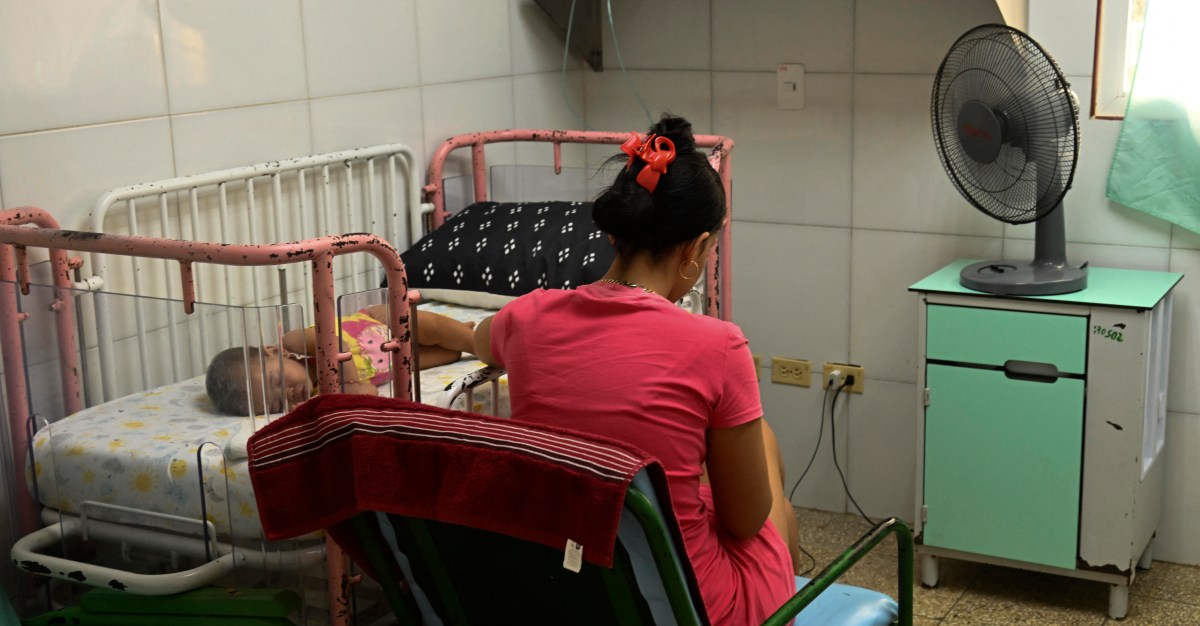
Daily blackouts have plunged the Cuban nationalized, universal health system, once the pride of the country, into a humanitarian crisis. For months, hospitals have been without necessary power and ambulances strapped for fuel. Piles of trash line the streets, increasing the risk of disease. Cold storage issues threaten life-saving vaccines, and a combination of the frail economy and US sanctions has left pharmacy shelves almost empty
The public health crisis exposes an often overlooked aspect of the way we tend to think about the promise of universal healthcare. Having accessible and free medical services is only one part of the solution. While Cuba’s once-vaunted health system is bound up in its own history and national context, it still demonstrates that public health of all kinds can only be as resilient as the electricity, water, transportation, refrigeration, supply chains, and institutions that enable it
An old prototype for universal healthcare
Not long ago, Cuba’s health system was seen as a promising model for successful free universal healthcare. In the years following Fidel Castro’s rise to power, health authorities focused on the integration of healthcare delivery models into a single public system. The Castro government aimed to expand services once concentrated in Havana into rural areas, such that the entire population would have access to basic care services. In 1974, the government launched community-based polyclinics that placed primary care specialists in almost every Cuban community.
Over the decades that followed, that widened access to health care led to significant, measurable returns. Infant mortality in the country has dropped from 37 per 1,000 live births right after the revolution to 7 per 1,000 live births in 2024. Infectious and parasitic disease mortality also improved, dropping from a rate of 45.4 per 100,000 inhabitantsin 1970 to 9.8 per 100,000 inhabitants in 2019, according to data reported by the Cuban Public Health Ministry
It’s not entirely surprising that the successful Cuban national health model has been thesite of curiosity and enthusiastic scrutiny in American health equity circles, despite vast differences in state ideologies. The US has never ensured that every citizen has affordable access to healthcare, and large disparities persist in low-income and rural populations. The chokehold of private insurance has ensured that, unlike nearly every other country in the world, the US has largely rejected the prospect of universal care. Even historic gains in insurance coverage have faced rollback threats under the One Big Beautiful Bill.
On certain key metrics, the US also falls far behind Cuba, which boasted 9.5 physicians to 1,000 people in 2021. That same year, the US reported just 3.7 physicians to every 1,000 people. The 2019 measles epidemic demonstrated a gap in childhood vaccination rates as well: 92 percent of children ages 13 to 17 in the USreceived two doses or more of the measles, mumps, and rubella vaccine. In Cuba, the childhood completion rates were well over 99 percent, and the country has not seen a measles outbreak since 1993.
From its early years, the Cuban health system has functioned against a background of economic decline particular to the country, one attributable to a complex combination of external pressures, among them US blockades, a complicated economic reliance on Venezuela, a struggling state-run economy, and a flailing industry heavily impacted by the Covid-19 pandemic
While other sectors faced attrition, Cuba’s health system, at least, appeared capable of weathering these crises. During the pandemic, the country proved to be a model in global health, having developed a homegrown Covid-19 vaccine rapidly and reaching a 95 percent vaccination rate. Its robust supply of trained health professionals made headlines when Cuban healthcare workers provided essential pandemic aid to a small town in Italy
So why has this system proved to be so fragile now?
New blockades deal the final blow after Hurricane Melissa
Torrents of rain and flooding from the Category 3 Hurricane Melissa hit Cuba in October of last year, affecting much of the island’s eastern provinces. More than 735,000 people were evacuated, and the environmental disaster has put the country’s basic health infrastructure in a precarious state
In the storm’s wake, a combination of flooding and damaged water systems increased the spread of viral infections of arboviral diseases such as dengue and oropouche. A report by the Pan American Health Organization (PAHO) published in March this year placed water, food, and vector-borne diseasesin the “very high” health risk categories. Apart from damaged water and sanitation infrastructure, the report describes how disruptions to health service access, routine surveillance of disease vectors, and environmental conditions that breed mosquito-borne disease outbreaks have dramatically increased the risk of infectious disease spread.
Hurricane Melissa arrived during a recovery period from earlier storms, such as Hurricane Rafael in late 2024, as well as sporadic earthquakes in recent years. These natural disasters also heavily damaged health facilities, leading to collapsed roofing, damaged roads and cables, and the loss of supplies and equipment
For years, Cuba’s economy was propped up in large part by its relationship with Venezuela. In exchange for support from Cuba’s highly-trained professionals — especially healthcare workers — Venezuela long provided a critical supply of crude oil, which helped the country keep the lights on even in the face of US sanctions
That partnership ended in January after the nighttime capture of former Venezuelan President Nicholas Maduro, and the sweeping Trump oil blockade soon after has dealt a challenge too difficult for the energy infrastructure to withstand
Already struggling to recover from other disasters, Cuba plunged further into its present crisis. Cruz Peñate noted that while the public health situation has been evolving for a while, he has seen more acute upheavals as sanctions persist, causing mass blackouts that have made it impossible to sustain vital health services and emergency care
Disease control continues to struggle post-Melissa, with aid organizations worrying about communicable food- and water-borne diseases, such as hepatitis A and diarrhea, that can be caused by unrefrigerated food. On the administrative level, limited transportation rewhich typically require cold rooms for transfer and storage
Continuity of care, in particular, has been affected for the worse. More than 100,000 elective and reconstructive surgeries have been postponed, for example, because of a lack of supplies and a backlog of emergency surgeries. At a briefing in May, representatives of the UN Office for the Coordination of Humanitarian Affairs and the World Health Organization reported that over 32,000 pregnant women faced limited access to diagnostics and limited amounts of the stable electricity needed to sustain neonatal units. Prenatal care faces delays because of the lack of everything from testing supplies to available facilities. And now, even once successful improvements in health indicators have fallen: a report from the Center for Economic and Policy Research measured an increase in infant mortality rates from 4.0 to 9.9 per 1,000 births between 2018 and 2025.
For humanitarian aid organizations, alleeñate ascribes this to availability, timing, and opportunity to distribute aid supplies, all of which have been made inconsistent by the ongoing blockade
“The response to the situation in Cuba has to increase; we have to scale up the response. All the support we can manage to receive will be important,” Cruz Peñate said. “Here in Cuba there is really a situation that needs attention.”
Is Cuba now an outdated prototype for universal healthcare?
While Cuba’s healthcare system was never bound to map precisely onto the US, some of its most notable successes — the high physician-to-patient ratio, the almost entirely vaccinated population, the ample health screenings — still remain desirable. And yet those very accomplishments have crumbled under the threat of extreme weather events and the country’s inability to restore its broken power grid
Trump targeted even more petroleum suppliers in his latest round of sanctions on July 23, leaving Cuba scrambling still further to revitalize its energy sector. Those same sanctions also took aim at the Cuban healthcare export economy, alleging that it involves forced labor
Earlier this month, Cuba’s government loosened constraints on a handful of private operations, including pharmaceuticals and elder-care facilities, in response to the shortage of medicine in the country. With state-stocked shelves running empty, the new decree allows private pharmacies with Cuban health registration to fill in the medicine gap. Similarly, privatized elder facilities are also allowed to operate at a capped rate of 60 people per home, with mandatory visits from state physicians.
The government still prohibits private sector medical and dental care, and Cuban officials remain adamant that the “socialist state enterprise keeps its central role,” so it’s difficult to claim that the country’s medical model is being pressured towards privatization. But the erosion of some of its elements still speaks to a state-run health system under strain
We often think of healthcare itself as an equation of medical services along with healthcare personnel and the authorities — government, industry, or both — that control it. But the crisis facing Cuba gets at the dependence of all of these factors on the broader energy ecosystem. Even a once-promising healthcare model can quickly collapse when a crucial component is missing: fuel
A version of this story originally appeared in theFuture Perfectnewsletter.Sign up here!
See More:
