


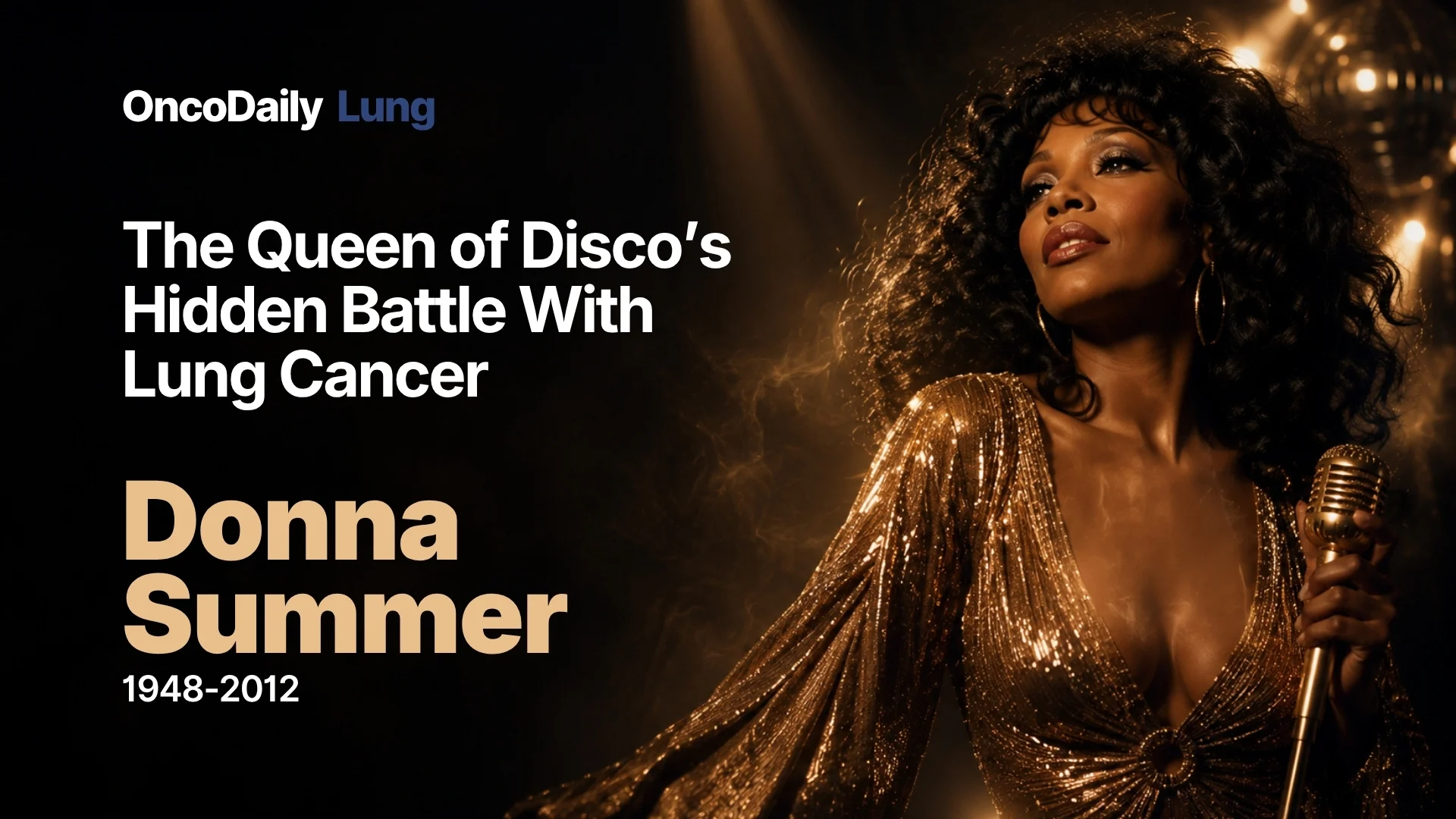
Donna Summer and Lung Cancer: The Queen of Disco’s Private Battle, and 9/11 Dust Theory
Donna Summer was known worldwide as the “ Queen of Disco ” a trailblazing vocalist whose songs defined an era and helped shape modern dance music, fashion, and LGBTQ+ culture. When she died on May 17, 2012, at the age of 63, the news shocked the music industry and millions of fans. Summer was a five-time Grammy Award winner whose voice had become associated with joy, freedom, resilience, and reinvention. Few people outside her closest circle knew that she had been living with lung cancer
Her family confirmed that she had died after a private battle with the disease. Almost immediately, however, conflicting accounts emerged about what may have contributed to her cancer. Some reports described Summer as a non-smoker who believed that inhaling toxic dust after the September 11 attacks had caused her illness. Later accounts suggested that smoking or a family history of cancer may have been more relevant, although neither explanation has been supported by publicly available medical records.

The uncertainty surrounding Donna Summer and lung cancer is part of what makes her story so significant. It raises broader questions about lung cancer in never-smokers, environmental exposures, disease stigma, and the challenges of identifying a single definitive cause of cancer in an individual person
Who Was Donna Summer?
Donna Summer was born LaDonna Adrian Gaines on December 31, 1948, in Boston, Massachusetts. She was one of seven children in a working-class family and grew up in a deeply religious household. Music became part of her life at an early age. She sang in church choirs and local gospel groups, developing the powerful voice that would later make her internationally famous. At 17, she left school and joined a psychedelic rock band called Crow. She later moved to New York and successfully auditioned for the German production of the musical Hair. That decision took her to Europe and marked the beginning of her professional career.
How Did Donna Summer Begin Her Music Career?
While living in Europe, Summer performed in productions including Hair, Godspell, Show Boat, and Porgy and Bess. She also studied at the Vienna Folk Opera and gained experience across musical theatre, gospel, rock, soul, and pop. During this period, she met Austrian actor Helmuth Sommer, whom she married in 1972. She later adapted his surname into the stage name “Summer.” Her career changed after she began working with producers Giorgio Moroder and Pete Bellotte at Musicland Studios in Munich.
Their collaboration produced “Love to Love You Baby” in 1975. The song’s extended club version became an international hit and helped establish both Summer and Moroder as defining figures in the emerging disco movement
How Did Donna Summer Become the Queen of Disco?
From the mid-1970s onward, Donna Summer became one of the most recognizable voices in popular music. Her work blended disco, soul, R&B, funk, rock, pop, and electronic production, allowing her to move far beyond the boundaries of a single genre. Her most celebrated songs include “I Feel Love,” “Hot Stuff,” “Last Dance,” “Bad Girls,” “MacArthur Park,” “She Works Hard for the Money,” and “On the Radio.”
“I Feel Love,” produced with Giorgio Moroder, was particularly influential. Its electronic pulse and synthesizer-driven production helped lay the foundation for later developments in dance music, techno, house, and electronic pop. Her 1979 album Bad Girls represented one of the commercial and creative peaks of her career. The album produced several major singles and demonstrated her ability to move between disco, rock, soul, and pop
Estimates of her worldwide record sales vary, but she is widely credited with selling more than 100 million records, with some sources placing the total above 130 million. She won five Grammy Awards and received a star on the Hollywood Walk of Fame. Summer was also widely recognized as the first African American woman to have a music video placed in heavy rotation on MTV, an important milestone during a period when Black artists—particularly Black women were significantly underrepresented on the network.
Why Is Donna Summer Still So Influential?
Donna Summer’s influence extends far beyond the disco era. Her collaborations with Moroder helped transform the use of synthesizers and electronic production in popular music. Artists across pop, R&B, rock, house, techno, and dance music have cited her work as an inspiration. Her songs also became deeply connected to LGBTQ+ culture. In clubs around the world, tracks such as “I Feel Love,” “Last Dance,” and “Hot Stuff” became anthems of freedom, community, desire, and self-expression.
For many listeners, Summer’s music represented more than entertainment. It created spaces where people could feel visible, liberated, and connected. Her legacy continues through samples, remixes, covers, films, stage productions, and the work of artists influenced by her sound
When Was Donna Summer Diagnosed With Lung Cancer?
The exact date of Donna Summer’s lung cancer diagnosis has never been publicly disclosed. People close to her have suggested that she was undergoing treatment in 2011. Musician and producer Michael Omartian later recalled that both he and Summer had received care at Cedars-Sinai Medical Center in Los Angeles during that period. This suggests that she may have lived with the disease for several months or approximately a year before her death. The type and stage of her lung cancer were not publicly announced. There was also no official disclosure of her tumor’s molecular characteristics, the treatments she received, or whether the disease had spread to other organs.
There is no credible mainstream evidence confirming that Donna Summer had previously been treated for breast cancer. Claims suggesting otherwise should be regarded as unverified
Why Did Donna Summer Keep Her Illness Private?
Donna Summer guarded her medical condition closely. Even some people within her professional circle reportedly did not understand how serious her illness had become. Several friends and collaborators said they learned about her cancer only after her death. Her family later described her illness as a private battle and did not release detailed medical information. This decision was entirely within the family’s rights, but it also created an information vacuum. Without confirmed details, public discussion quickly shifted from what was known to what people believed might have happened. That uncertainty contributed to competing narratives about smoking, environmental exposure, family history, and the possible role of 9/11 dust.
How Did Donna Summer Die?
Donna Summer died on May 17, 2012, at her home in Naples, Florida. She was 63. Her family confirmed that the cause of death was lung cancer. Tributes followed from musicians, producers, actors, political figures, and fans around the world. Many remembered her not only as the Queen of Disco but as one of the most important vocalists and musical innovators of the twentieth century. Because her diagnosis had remained private, the announcement felt sudden to much of the public. The limited medical information released after her death also meant that questions about the origin and course of her cancer remained unanswered.
Why Did Donna Summer Believe 9/11 Dust Caused Her Lung Cancer?
According to accounts published after her death, Donna Summer believed that her lung cancer may have been connected to toxic dust and fumes released during the September 11, 2001 attacks. Reports indicated that she had been staying near lower Manhattan around the time of the attacks. People close to her said she believed she had inhaled contaminated air following the collapse of the World Trade Center towers. For someone who reportedly did not consider herself a smoker, this exposure may have appeared to offer a plausible explanation for an unexpected diagnosis.
The connection also made intuitive sense on a personal level. The dust cloud was visible, overwhelming, and widely understood to contain hazardous substances. Years later, reports of respiratory diseases and cancers among responders, recovery workers, residents, and others exposed to the disaster reinforced concerns about its long-term health effects
What Was in the World Trade Center Dust?
The collapse of the World Trade Center released a complex cloud of dust composed of pulverized construction materials, combustion products, chemicals, metals, and fine particulate matter. Analyses identified numerous potentially hazardous substances, including asbestos, cement and gypsum, glass fibers, silica-containing materials, lead, mercury, copper, dioxins, polycyclic aromatic hydrocarbons (PAHs), and fine and ultrafine particles. Many of these substances are known or suspected to damage the respiratory system, and several are recognized human carcinogens.
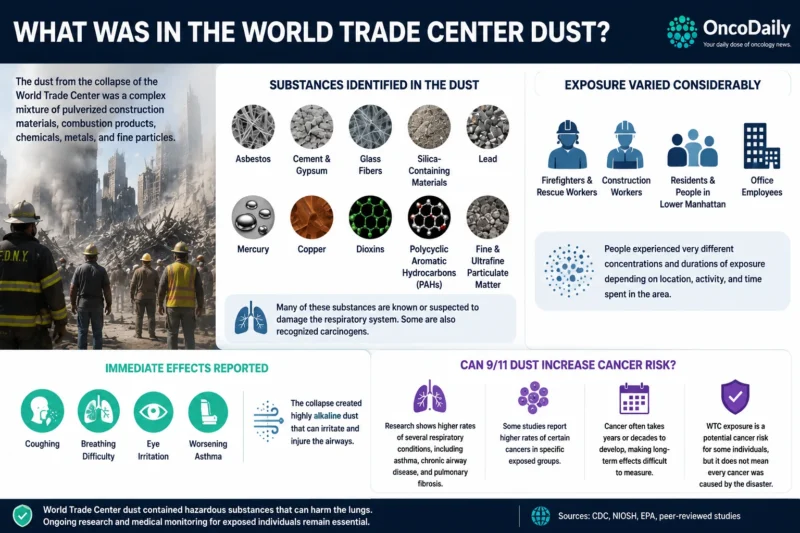
The degree of exposure varied considerably among firefighters, rescue and recovery workers, construction workers, residents, office employees, and others present in lower Manhattan, depending on their proximity to the disaster site and the duration of exposure. The collapse also generated highly alkaline dust capable of irritating and injuring the airways, with many exposed individuals experiencing immediate symptoms such as coughing, difficulty breathing, eye irritation, and worsening asthma
Can 9/11 Dust Increase Cancer Risk?
Research involving populations exposed to the World Trade Center disaster has documented increased rates of several respiratory conditions, including asthma, chronic airway disease, and pulmonary fibrosis. Some studies have also reported higher rates of certain cancers among specific exposed groups. However, the results vary depending on the population studied, the duration of follow-up, the level of exposure, and the type of cancer being examined
Cancer often takes years or decades to develop. This long latency makes it difficult to measure the full consequences of a major environmental exposure soon after it occurs. It is therefore scientifically reasonable to consider World Trade Center exposure as a potential cancer risk for some individuals. However, that does not mean every cancer diagnosed in an exposed person was necessarily caused by the disaster
Can Doctors Prove That 9/11 Dust Caused One Person’s Lung Cancer?
Usually, no. Scientists can identify associations at the population level. For example, they may find that a highly exposed group develops a disease more often than a comparable unexposed group. Determining the cause of cancer in one individual is much more difficult. Lung cancer may result from the combined influence of:
- Tobacco exposure
- Secondhand smoke
- Radon
- Air pollution
- Occupational carcinogens
- Previous radiation exposure
- Chronic lung disease
- Genetic susceptibility
- Age
- Random cellular mutations
Even when a person has experienced a significant environmental exposure, doctors may not be able to determine how much that exposure contributed to the final disease. In Donna Summer’s case, the 9/11 exposure may have been relevant. However, no publicly available evidence can establish that it was the sole or primary cause of her lung cancer
Can Non-Smokers Develop Lung Cancer?
Although smoking is the leading cause of lung cancer, the disease also occurs in people who have never smoked. A never-smoker is generally defined as someone who has smoked fewer than 100 cigarettes during their lifetime. Lung cancer in never-smokers is not rare. If considered as a separate disease category, it would still represent one of the major causes of cancer-related mortality worldwide. Never-smoker lung cancers are often biologically different from tumors associated with heavy tobacco exposure. They are more likely to be adenocarcinomas and may carry molecular alterations that can be treated with targeted therapies.
How Common Is Lung Cancer in Never-Smokers?
Estimates differ by country, sex, environmental conditions, and the definition used. In many Western populations, approximately 10% to 20% of lung cancers occur in people who have never smoked. The proportion may be higher in some regions, particularly among women in parts of Asia. The existence of lung cancer in never-smokers is important because public messaging has historically presented the disease almost entirely as a consequence of smoking. Smoking remains the largest preventable cause of lung cancer. However, treating every lung cancer diagnosis as evidence of tobacco use is medically inaccurate and contributes to stigma.
What Causes Lung Cancer in People Who Never Smoked?
There is rarely one simple explanation. Several known and suspected factors can contribute
Can Secondhand Smoke Cause Lung Cancer?
Long-term exposure to other people’s tobacco smoke can increase lung cancer risk․ Secondhand smoke contains many of the same carcinogens inhaled directly by smokers. Exposure may occur at home, in workplaces, in social settings, or through long-term contact with a smoking partner or family member. Risk generally rises with the intensity and duration of exposure
Can Radon Cause Lung Cancer?
Radon is a naturally occurring radioactive gas produced by the breakdown of uranium in soil and rock. It can enter buildings through cracks, foundations, drains, and construction gaps. Because radon is invisible and odorless, people may be exposed for years without knowing it. Radon is considered one of the leading causes of lung cancer among never-smokers. The only way to know whether a home has elevated radon levels is to test for it
Can Air Pollution Increase Lung Cancer Risk?
Long-term exposure to outdoor air pollution, particularly fine particulate matter, has been associated with increased lung cancer risk. Fine particles can travel deep into the lungs and contribute to inflammation, oxidative stress, and cellular damage. Traffic emissions, industrial pollution, wildfire smoke, coal combustion, and other
Which Workplace Exposures Can Cause Lung Cancer?
Several occupational carcinogens are associated with lung cancer, including:
- Asbestos
- Arsenic
- Diesel exhaust
- Silica dust
- Chromium compounds
- Nickel compounds
- Certain mining exposures
Risk may be especially high when occupational exposure occurs together with smoking
Can Genetics Contribute to Lung Cancer?
A family history of lung cancer may increase risk, even among people who have never smoked. Some individuals may inherit genetic variants that affect DNA repair, toxin metabolism, immune surveillance, or susceptibility to malignant transformation. Tumors may also develop acquired molecular changes unrelated to inherited risk. Alterations involving genes such as EGFR, ALK, ROS1, RET, MET, and HER2 are more frequently identified in some never-smoker lung cancers. These changes can be clinically important because they may allow treatment with targeted medicines.
Can Previous Lung Disease Increase Risk?
Chronic inflammation and scarring within the lungs may also contribute to cancer development. Conditions associated with increased risk include pulmonary fibrosis, chronic obstructive pulmonary disease, previous tuberculosis, and other forms of long-standing lung injury. The degree of risk varies, and most people with these conditions do not develop lung cancer
Was Donna Summer Really a Non-Smoker?
This remains disputed. Shortly after her death, representatives described Summer as a non-smoker and said that her cancer was not believed to be related to smoking. Years later, some media reports and documentary-related coverage suggested that she had smoked and that tobacco exposure or family history may have contributed to her illness. These claims were based largely on accounts attributed to friends or associates rather than publicly released medical records. Her family and representatives continued to reject the idea that she was a smoker. Because no verified smoking history, pathology report, or detailed clinical record has been made public, the available evidence does not allow outsiders to resolve the disagreement.
Why Did Conflicting Stories About Her Cancer Spread?
Although smoking remains the leading cause of lung cancer, the disease can also develop in people who have never smoked. A combination of environmental exposures, inherited susceptibility, and other medical factors may contribute to lung cancer risk, often through long-term damage to lung cells
Why Did Medical Privacy Create Uncertainty?
The family disclosed only the diagnosis and cause of death. There was no public information about the type of lung cancer, tumor stage, genomic findings, treatment history, tobacco exposure, radon exposure, occupational risks, or family history. Without those details, journalists and the public attempted to fill the gaps
Why Is Lung Cancer So Heavily Stigmatized?
Lung cancer is often framed as a self-inflicted disease. Patients may be immediately asked whether they smoked, sometimes before they are asked about symptoms, treatment, or emotional well-being. This can create a false division between patients considered “responsible” for their disease and those perceived as “innocent.” Cancer biology does not follow such moral categories. Smoking substantially increases lung cancer risk, but addiction is a medical condition, tobacco exposure is shaped by social and commercial forces, and never-smokers can also develop the disease. No patient deserves blame for a cancer diagnosis.
Why Did the 9/11 Theory Attract So Much Attention?
The long-term health consequences of September 11 remain politically and emotionally charged. For first responders, recovery workers, residents, and survivors, recognition of exposure-related illness has been essential for obtaining medical monitoring, treatment, and compensation. Donna Summer’s reported belief became part of that wider debate. For some, her story appeared to demonstrate the carcinogenic consequences of the toxic dust. For others, it became an example of how a plausible environmental association could be presented too confidently without sufficient evidence. In reality, both extreme interpretations go beyond what can be established from the publicly available facts of her case.
Can One Risk Factor Be Identified as the Cause of Cancer?
Cancer is usually multifactorial. It develops through accumulated damage and biological changes over time. Some exposures carry much greater risk than others, but the final disease may still reflect a combination of genetics, environment, aging, behavior, and chance. A person may have several risk factors and never develop cancer. Another person may develop cancer without any obvious major exposure. This does not mean risk factors are unimportant. It means that population-level risk cannot always be translated into certainty about one individual.
For Donna Summer, the possibilities may have included environmental exposure, secondhand smoke, radon, family history, an undisclosed smoking history, or molecular events unrelated to any identifiable exposure. The responsible conclusion is not that one theory has been proven. It is that the true cause of her cancer remains unknown
Why Does Donna Summer’s Story Matter?
Her story challenged the public assumption that lung cancer affects only smokers. It also drew attention to environmental and occupational exposures that are often overlooked in discussions about the disease. At the same time, the conflicting reports showed how easily a private medical history can be transformed into a simplified public narrative. The choice was often presented as either smoking or 9/11 dust. But cancer rarely fits such clean categories. Donna Summer’s illness may have involved one factor, several factors, or no clearly identifiable external cause. Her story therefore offers a broader lesson: uncertainty should not be replaced by speculation simply because a definitive explanation feels more satisfying.
How Do Celebrity Cancer Stories Influence Public Awareness?
Celebrity diagnoses can have a powerful effect on public understanding of disease
Can Celebrity Stories Reduce Cancer Stigma?
When a beloved public figure develops cancer, the disease becomes more personal and less abstract. Donna Summer’s death reminded people that lung cancer can affect successful, active, and apparently healthy individuals. The reports that she had not smoked also encouraged greater recognition of lung cancer among never-smokers. Such stories can promote empathy and challenge the idea that a diagnosis reflects personal failure
Can Celebrity Diagnoses Encourage People to Seek Care?
High-profile cancer stories often lead to increased searches for symptoms, risk factors, screening information, and treatment options. They may encourage people with persistent cough, unexplained weight loss, chest pain, shortness of breath, coughing up blood, or recurrent respiratory infections to speak with a healthcare professional. However, symptom awareness should not be confused with population screening. Lung cancer screening is generally recommended only for people who meet specific age and smoking-exposure criteria.
Can Celebrity Health Stories Spread Misinformation?
Complex medical histories are often reduced to dramatic headlines:
“Smoking caused it.”“Toxic dust caused it.”“Stress caused it.”“It was genetic.”
These explanations may appear clear but often exceed the available evidence. The focus on a single cause can also distract from the diversity of lung cancer biology and the importance of comprehensive medical evaluation. Donna Summer’s case illustrates how a story can raise valuable awareness while simultaneously becoming a
What Can Donna Summer’s Story Teach Us About Lung Cancer?
First, lung cancer is not exclusively a smoker’s disease. Second, smoking remains the strongest preventable risk factor, but it is not the only one. Third, environmental exposures such as radon, air pollution, asbestos, diesel exhaust, and other carcinogens deserve greater public attention. Fourth, molecular testing has become increasingly important in lung cancer. Some tumors, particularly those arising in never-smokers, contain actionable genetic alterations that can guide targeted treatment. Finally, patients should not be blamed for their disease. Whether or not a person smoked, every patient deserves evidence-based care, compassion, and access to treatment.
What Should People Know About Lung Cancer Symptoms?
Lung cancer often causes no symptoms in its early stages. When symptoms develop, they may include a persistent cough, coughing up blood, chest pain, shortness of breath, hoarseness, unexplained weight loss, loss of appetite, fatigue, recurrent chest infections, bone pain, or headaches. These symptoms can have many causes besides cancer, but if they are persistent, unexplained, or worsening, they should be evaluated by a healthcare professional
Who Should Be Screened for Lung Cancer?
Lung cancer screening using low-dose computed tomography can reduce mortality among people at high risk because of age and substantial smoking exposure. Screening recommendations differ between countries and professional organizations. In the United States, the U.S. Preventive Services Task Force recommends annual low-dose CT screening for adults aged 50 to 80 years who have at least a 20 pack-year smoking history and who currently smoke or stopped smoking within the previous 15 years. A pack-year is generally calculated by multiplying the number of cigarette packs smoked per day by the number of years a person smoked.
Screening should stop once a person has not smoked for 15 years or develops a health condition that substantially limits life expectancy or the ability or willingness to undergo curative lung surgery. Other countries and medical organizations may use different eligibility criteria. Routine screening is not currently recommended for most never-smokers because the balance of potential benefits and harms has not been clearly established for people at average risk. Individuals with significant occupational exposure, a strong family history, or other concerns should discuss their personal risk with a healthcare professional.
How Is Lung Cancer in Never-Smokers Treated?
Treatment depends on the cancer’s type, stage, molecular features, and the patient’s overall health
Options may include:
- Surgery
- Radiation therapy
- Chemotherapy
- Immunotherapy
- Targeted therapy
- Combinations of these approaches
- Molecular testing is especially important in advanced non-small cell lung cancer.
Tumors with alterations involving EGFR, ALK, ROS1, RET, MET, BRAF, KRAS, NTRK, or HER2 may respond to specific targeted treatments. The treatment landscape has changed substantially since Donna Summer died in 2012. Today, some patients with molecularly defined lung cancers can receive therapies that were not widely available at the time of her illness
What Is Donna Summer’s Legacy?
Donna Summer’s legacy cannot be reduced to the circumstances of her death. She was an artist who helped redefine popular music. Her voice crossed genres, her collaborations transformed electronic production, and her songs became enduring symbols of freedom and collective celebration. Her influence can still be heard in contemporary pop, dance, house, techno, R&B, and electronic music. Her cancer story also continues to resonate, though it should be discussed carefully. She reportedly believed that toxic exposure after 9/11 contributed to her illness. Her family maintained that she was a non-smoker. Other accounts challenged that version of events. None of the available public evidence resolves the question conclusively.
What is certain is that Donna Summer died from lung cancer, that her illness was largely hidden from public view, and that the debate surrounding her death helped broaden conversations about a disease too often reduced to smoking alone
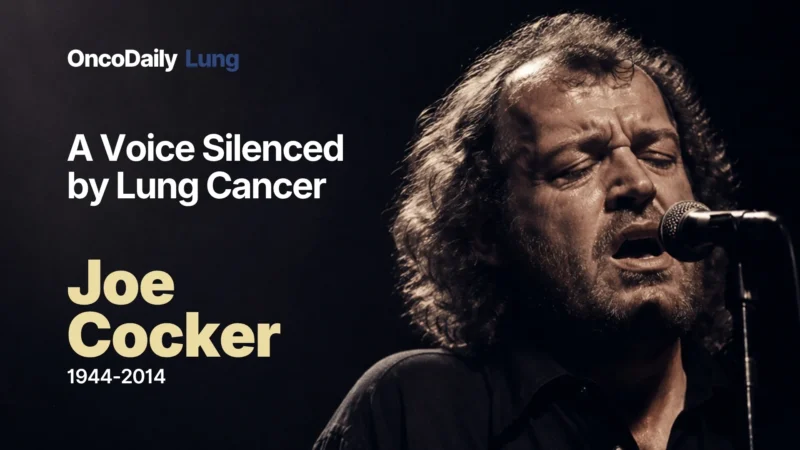
You Can Also Read Joe Cocker and His Battle With Lung Cancer: The Voice That Defined a Generation by OncoDaily
Written by Aharon Tsaturyan, MD, Editor at OncoDaily Intelligence Unit
FAQ
What type of cancer did Donna Summer have?
Donna Summer died from lung cancer on May 17, 2012, at the age of 63. The specific type, stage, and molecular characteristics of her cancer were never publicly disclosed
How did Donna Summer die?
Donna Summer died at her home in Naples, Florida, after a private battle with lung cancer. Most people outside her family and closest professional circle did not know how seriously ill she had become
Was Donna Summer a smoker?
Her family and representatives described her as a non-smoker and stated that her cancer was not related to smoking. Later media reports disputed this account, but no verified medical or smoking history has been publicly released
Did 9/11 dust cause Donna Summer’s lung cancer?
Donna Summer reportedly believed that exposure to toxic dust and fumes following the September 11 attacks contributed to her illness. However, there is no publicly available medical evidence proving that the exposure caused her cancer
Was Donna Summer near the World Trade Center on 9/11?
Reports published after her death indicated that she had been staying near lower Manhattan around the time of the attacks. People close to her said she believed she had inhaled contaminated air and dust following the collapse of the towers
Can people who have never smoked develop lung cancer?
Yes. Approximately 10% to 20% of lung cancers in many Western populations occur in people who have never smoked. Possible risk factors include radon, secondhand smoke, air pollution, occupational carcinogens, previous lung disease, and genetic susceptibility
What are the early symptoms of lung cancer?
Lung cancer may cause no obvious symptoms in its early stages. Possible warning signs include a persistent or worsening cough, coughing up blood, chest pain, shortness of breath, unexplained weight loss, fatigue, hoarseness, and recurrent chest infections
What was found in the World Trade Center dust?
World Trade Center dust contained a complex mixture of pulverized building materials, fine particles, asbestos, glass fibers, metals, silica-containing materials, combustion products, dioxins, and other potentially harmful substances
Who should be screened for lung cancer?
In the United States, annual low-dose CT screening is recommended for adults aged 50 to 80 who have at least a 20 pack-year smoking history and currently smoke or stopped within the past 15 years. Screening recommendations may differ in other countries
What is a pack-year of smoking?
A pack-year measures cumulative smoking exposure. One pack-year is equivalent to smoking one pack of cigarettes per day for one year; smoking two packs daily for ten years equals 20 pack-years
