


ImmigrationNews Exchange
Fear, Anxiety and Resolve as End of TPS Protections Loom for Salvadorans
ByAraceli Martinez
Aug 12, 2026
Latest Content
Author Related
LOS ANGELES – Daily life for Isela García has alternated between worry, stress and anxiety ever since she first learned that temporary legal protections for Salvadorans living in the US would end September 9
“What I worry about most is losing my status from one day to the next and running the risk of being deported,” said García. “If they put me in a detention center, I don’t know how long they can keep me there, and from what I’ve heard, it’s terrible.”
The Trump administration announced last year that it was ending Temporary Protected Status (TPS) for the more than 200,000 Salvadorans in the country, many of whom have lived in the US for more than two decades
The administration has targeted a total of 13 countries out of 17 for termination of their TPS designations, affecting some 1.3 million people. Nine countries — including Nicaragua, Venezuela, Haiti and Honduras — have already seen their TPS designations ended
TPS provides holders with temporary relief from deportation as well as work authorization. The program was approved on bi-partisan lines by Congress as part of the Immigration Act of 1990
Los Angeles is home to one of the largest Salvadoran communities in the country. García, 36, came to the city when she was just 5 years old. At 17 she and her mother both received TPS for the first time
“TPS allowed me to be productive,” said García, who graduated from CalState Los Angeles and now works as an administrator for a seafood importer in Carson, about 13 miles south of Downtown LA
“Before Trump, we lived in peace. When he arrived, that’s when the anxiety and worry began. No other president has tried to revoke TPS, and we’ve never had to fight in court or appeal to representatives to renew the protections,” said García. “Our lives have completely changed.”
The U.S. government first granted TPS designation for El Salvador in 2011 following two devastating earthquakes that killed upwards of 1000 people. Since then, Salvadorans have raised families here, purchased homes and started businesses
Many now face the possibility that all they’ve worked for and built could be lost
“I’ve lived here my whole life. I’ve studied and worked here. Being deported to El Salvador would mean starting from zero all over again in a country I don’t know,” said García, who credited the non-profit Central American Re with providing “a lot of emotional support” during this period
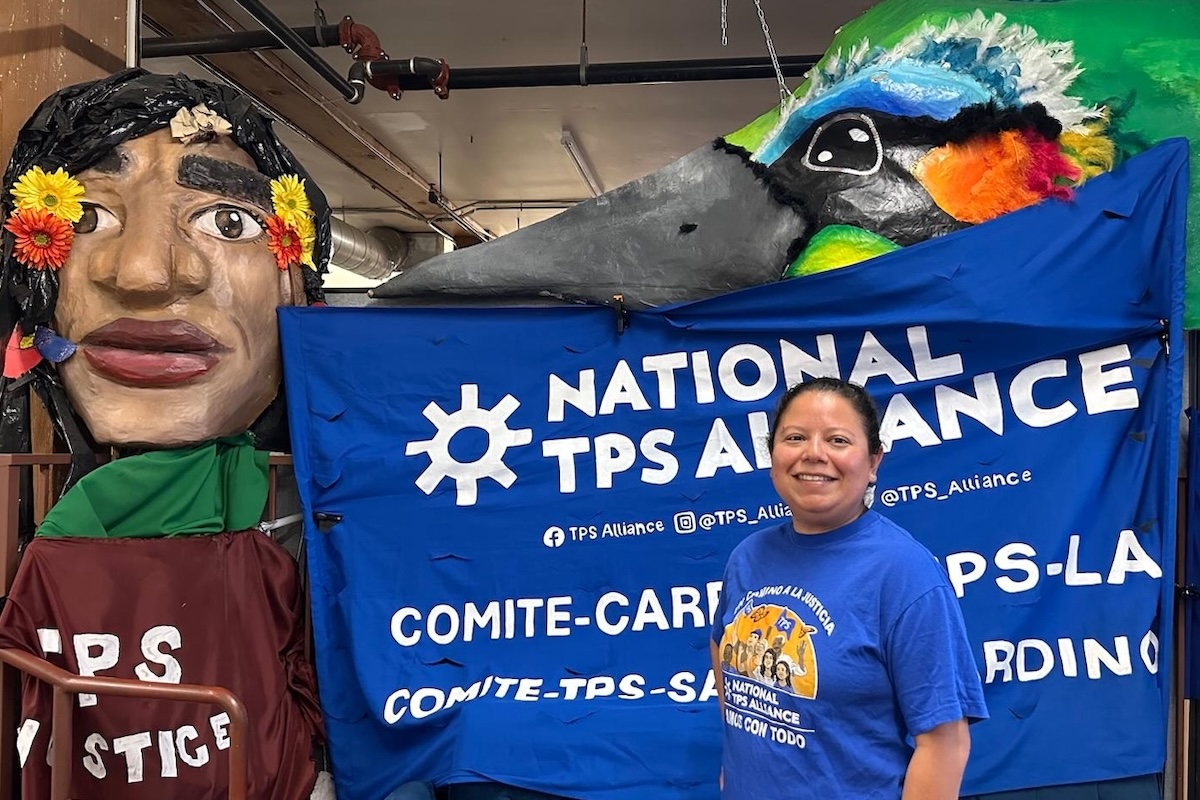
García also pointed to the work of groups like the National TPS Alliance (of which CARECEN is a member), which recently sponsored a bill seeking residency for TPS holders
The bill, the American Dream and Promise Act (HR 1589) remains stalled in the GOP-controlled House of Representatives. A group of Democratic legislators began circulating a petition in June to force a vote on the bill on the floor of the House, though even in the unlikely event it passes the bill would almost certainly be vetoed by the president
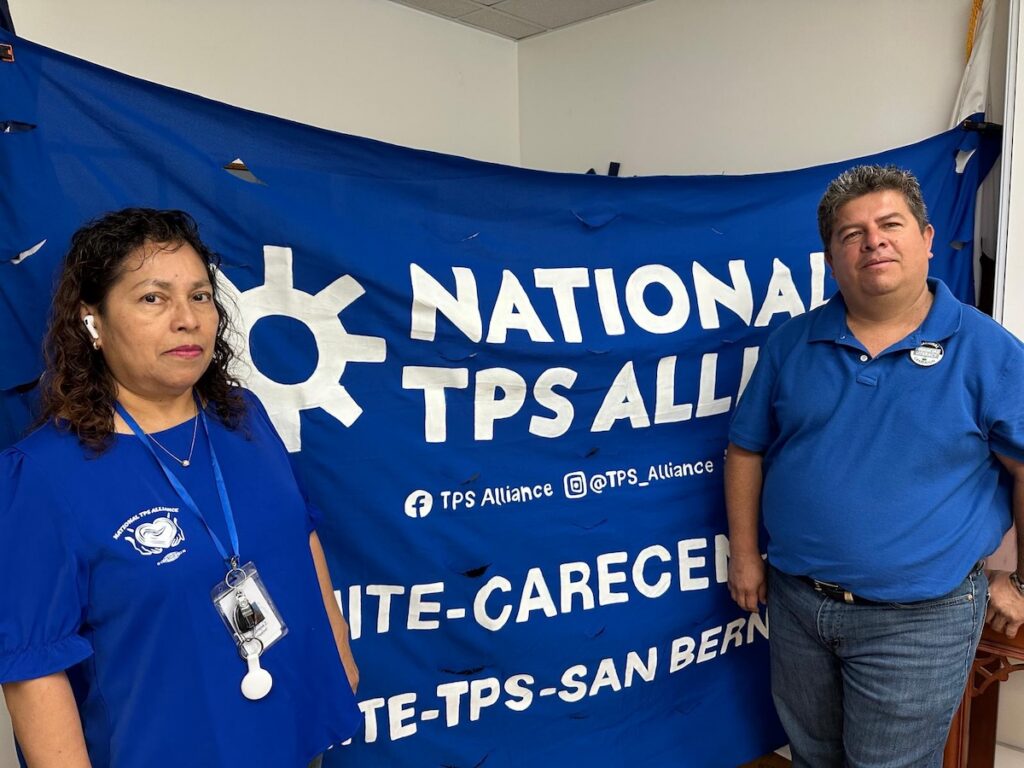
Lorena Zepeda is a mother of two children, both born in Los Angeles. She’s held TPS since 2001 and began working with CARECEN full-time two years ago after several years as a volunteer
“We’re fearful, but we hold on to hope because we’ve fought in Washington for many years, we’ve marched, visited with lawmakers. We’ve done everything,” said Zepeda, whose husband, Orlando and son, Benjamin Zepeda, then 14, were plaintiffs in a 2018 lawsuit challenging the first Trump administration’s effort to end the TPS program
“There is sadness, there is fear because at this moment no one is secure, everyone is at risk with this administration, even if they were born here,” she added. “They’ll detain you just for protesting.”
For Walter Ventura, fear of losing TPS is exacerbated by the reality that with it he could also lose his commercial driver’s license. Ventura has spent years as a truck driver at the ports of Los Angeles and Long Beach and says he is the sole breadwinner in his home
“We don’t know what could happen when I go out,” noted Ventura, who said his own son had been harassed by men appearing to be federal immigration agents. “They wanted to take my son, who is a U.S. citizen and works for FEDEX. They didn’t believe that he was born in the United States, nor did they show identification.”
Ventura says the men referred to his son as a “wet” — a racial pejorative aimed at immigrants from Mexico and Central America — because of the “color of his dark skin.”
Recent reporting has documented numerous instances in which federal immigration agents appear to use racist language during enforcement operations. The ACLU reports incidents of racial profiling have skyrocketed since a 2025 SCOTUS ruling cleared the way for federal agents to consider race and ethnicity during immigration stops
“During the pandemic, truck drivers were recognized as essential workers because we risked our lives to ship food, clothes, and all the other things people needed. We never stopped working,” said Ventura. “And now they turn their backs on us.”
According to the organization FWD.us, TPS beneficiaries contribute approximately $29 billion annually to the U.S. economy, in addition to paying $7.8 billion in combined federal, payroll, state, and local taxes
Work authorization for Salvadoran TPS holders officially ended August 5 though the country’s underlying designation remains in effect until September 9
“TPS has allowed thousands of Salvadoran families to live, work, and contribute to this country for more than two decades,” said Martha Arévalo, executive director of CARECEN-LA. “Not renewing this protection would put thousands of families and communities who now call the United States home at risk.”
