


Sponsored by
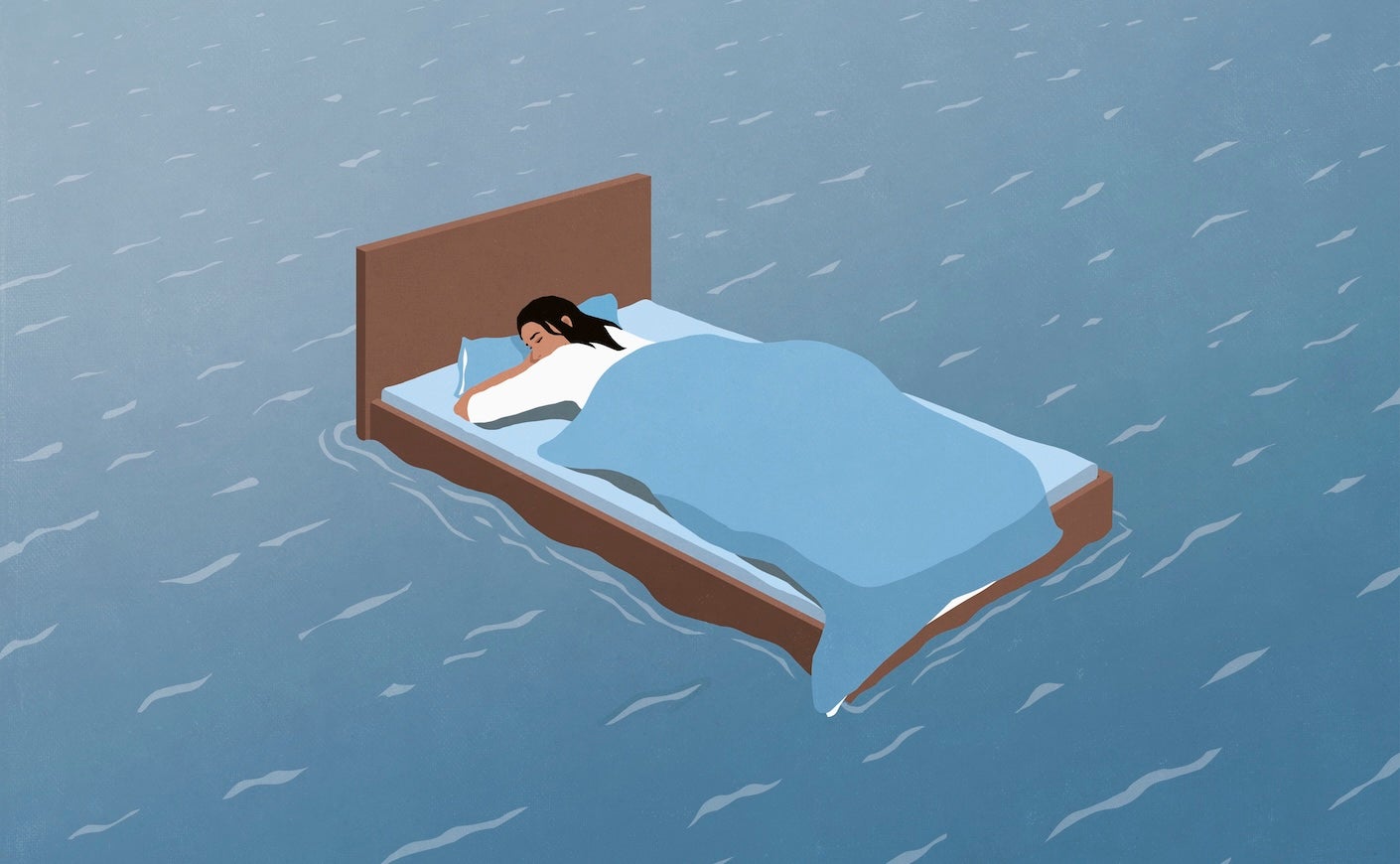
Do you wake up every morning after a full night’s sleep and still feel exhausted? Are you reluctant to tell anyone, worried you’ll sound dramatic or lazy? The truth is, being perpetually worn out isn’t a normal part of life, even if you’ve come to believe it’s simply how you’re wired
While countless women dismiss chronic exhaustion as stress, aging, or the price of a busy life, sometimes it’s a sign of an underlying medical condition. Fatigue — a profound, whole-body exhaustion that doesn’t improve with rest — is one of the most common symptoms across a wide range of chronic illnesses. Conditions that disproportionately affect women, including multiple sclerosis, migraine, and the rare autoimmune liver disease primary biliary cholangitis (PBC), can all cause debilitating fatigue long before other symptoms become obvious.
For 50-year-old Chicago native L. Marie, fatigue wasn’t just about feeling sleepy after a long day: It slowly stole her ability to function. In January 2019, shortly after the holidays, L. Marie began feeling unusually tired. At first, she chalked it up to Chicago winter. “It was cold, it was dark, and I’d eaten all the good holiday food,” she says. “But I started feeling much more tired than I’d ever been.”
She made an appointment with her primary care physician, expecting a simple explanation. Instead, after routine blood work failed to reveal an obvious cause, she was encouraged to lose weight, exercise, and eat healthier. At first, she tried to accept that answer. But as the weeks passed, her symptoms became impossible to ignore
Every evening after work, she would come home intending to cook dinner. Instead, she’d doze off almost immediately. “I would take food out with a plan to cook it, fall asleep, wake up, and suddenly it’s two in the morning,” she recalls. “I hadn’t cooked anything. I was just completely wiped out.”
The exhaustion wasn’t relieved by sleep — it followed her everywhere. At the time, L. Marie worked in community engagement, a job that required her to organize health fairs, lead community meetings, travel between events, and spend long days on her feet. Tasks that had once come easily suddenly felt overwhelming. “I knew my body,” she says. “I knew this was something I’d never experienced before.”
Over the next several months, L. Marie returned to her doctor again and again, each time explaining that the fatigue was worsening. She wasn’t asking for sympathy; she was asking for answers. “I kept trying to explain that I didn’t have the energy to go to the gym,” she says. “It wasn’t that I was lazy. I was barely getting up, going to work, and taking care of myself.”
The experience left her feeling isolated, frustrated, and increasingly convinced that she would have to advocate for herself. At yet another disappointing appointment, her doctor had mentioned that her bloodwork revealed slightly elevated liver enzymes, and suggested they continue to monitor the situation. For L. Marie, that wasn’t enough. “I said, ‘You’ve been monitoring me for three months. I don’t have any answers, and it’s getting worse. I don’t want to lose my job.'” She decided to take matters into her own hands and began researching liver specialists in Chicago.
L. Marie found a specialist who was able to schedule an appointment for the following Monday, where she underwent additional testing. Then, one morning at 3 a.m., L. Marie woke up — as she often did, after falling asleep early from sheer exhaustion — and saw a notification in her patient portal. Her test had come back positive for primary biliary cholangitis (PBC). “I knew what ‘positive’ meant,” she says. “But I had no idea what PBC was.”
PBC is a rare chronic liver disease in which the body’s immune system mistakenly attacks bile ducts within the liver. It primarily affects middle-aged and older women, and if left untreated, can lead to tissue scarring or liver failure. The two most common symptoms are fatigue that doesn’t improve with sleep and pruritus — severe, persistent itchy skin, often worsening at night
The morning after receiving her diagnosis, L. Marie called her hepatologist’s office. Her physician explained her diagnosis, answered her questions, and reassured her that effective treatment was available
For L. Marie, a diagnosis helped answer many questions, but it didn’t erase the fatigue, which she describes as fundamentally different from ordinary tiredness. “It feels like someone is physically holding you down and preventing you from moving,” she says. “A nap isn’t going to fix it.” Also, the exhaustion would arrive without warning. “I could be perfectly fine one minute and then suddenly just fade.”
Fatigue is something she’s learned to manage. Now, she schedules demanding activities early in the day, when her energy is highest. She exercises first thing each morning, relies on protein shakes for an extra boost, and carefully plans her commitments around the reality that she can’t do everything she once could. “I’ve had to accept my limitations,” she says. “Being self-aware is really important.”
Like many people diagnosed with a rare disease, L. Marie initially felt alone. No one she knew had ever heard of PBC — even though she had spent a decade working in healthcare. But that all changed when she attended a PBC event where she met other people with a diagnosis. “It was the first time I’d ever been in a room with other people living with PBC,” she says. Seeing people who were living full lives despite their diagnosis gave her something she desperately needed: hope. “I realized this wasn’t the end of the world; I was just navigating a new normal.”
That experience inspired L. Marie to ensure others wouldn’t have to navigate the disease alone. She began volunteering with patient-advocacy organizations before eventually helping launch a nonprofit dedicated to supporting people living with PBC. “I knew if I didn’t fight for myself, no one would,” she says
Fatigue can have many causes, from poor sleep and stress to anemia, thyroid disorders, autoimmune diseases, liver disease, and countless other medical conditions. And while occasional tiredness is part of life, persistent fatigue that interferes with daily activities deserves medical attention
But because fatigue is such a common and vague symptom, it can be difficult to know when it’s an indicator of a serious underlying condition. L. Marie believes that listening to her instincts changed the course of her life. “I felt validated once I finally got a diagnosis,” she says. “While I wasn’t excited to learn I had PBC, having an answer meant I could finally start treatment.”
Today, L. Marie continues to manage her PBC while serving on rare-disease advocacy initiatives, helping educate lawmakers, supporting newly diagnosed patients, and encouraging others to speak up when something doesn’t feel right. Her message is simple: Don’t ignore your symptoms. “So many people may tell you that you look fine,” she says. “But they don’t know you’re exhausted. They don’t know what you’re carrying.”
She hopes more women will recognize that persistent fatigue isn’t a personal failing or something to simply push through. “I want people to understand they’re not alone,” L. Marie says. “Maybe it isn’t PBC. Maybe it’s something else. But listen to your body. If something doesn’t feel right, keep asking questions until you get answers.” Because feeling drained every day shouldn’t be anyone’s definition of normal
L. Marie was compensated by Ipsen for her time to share her PBC experience
©2026 Ipsen Biopharmaceuticals, Inc. All rights reserved. NON-US-004811 August 2026
