


This month, Mitchell Caudill starts a new job as an assistant professor and section head of bacteriology and mycology at the University of Kentucky’s Veterinary Diagnostic Laboratory
Five years ago, he was a public health veterinarian with the U.S. Department of Agriculture’s Food Safety and Inspection Service, which inspects the nation’s meat, poultry, and egg products. What happened in between is a lesson in what a veterinary degree can become
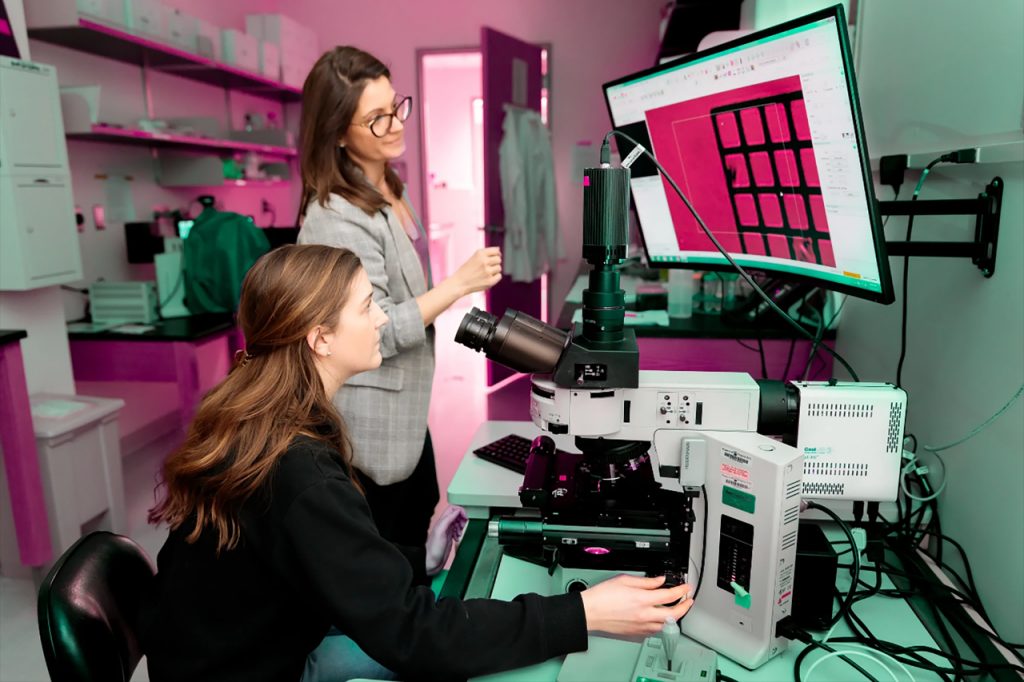
Caudill spent 2021 to 2025 as a trainee in a National Institutes of Health (NIH)-funded program at the Virginia-Maryland College of Veterinary Medicine at Virginia Tech that trains practicing veterinarians to become biomedical researchers. That program, Animal Model Research for Veterinarians, has run continuously since 2006 and just secured another five years of funding, keeping Virginia Tech in rare company: only a handful of veterinary schools nationally hold this kind of NIH training grant and fewer still have kept one running for two decades.
S. Ansar Ahmed, professor of immunology, and Audrey Ruple, Metcalf Professor of veterinary medical informatics, serve as co-directors for this renewal
What makes it work, said X.J. Meng, University Distinguished Professor of Molecular Virology and the program’s director, is something veterinarians already carry with them
“Veterinarians are broadly trained in biomedical and health sciences, and that gives them a competitive edge in conducting biomedical research, particularly One Health research and comparative medicine,” Meng said. “Many spontaneous animal diseases, like cancers including osteosarcoma, melanoma, and glioma, also occur in humans. Many infectious diseases in animals also affect humans, causing similar diseases. Veterinarians are uniquely qualified to study those diseases using various animal model systems because of the physiology, pathobiology, and clinical experience they already have.”
Caudill trained under mentor Clayton Caswell, studying brucellosis, then completed a postdoctoral fellowship at the Johns Hopkins Bloomberg School of Public Health before landing the University of Kentucky faculty position
“The T32 was excellent preparation for a career with a research component,” Caudill said. “The training I received in classical bacteriology in the Ph.D. portion of the program, which isn’t typically covered in a DVM [Doctor of Veterinary Medicine] program, was critical for both my postdoc and my new position. I would definitely recommend the program to any veterinarian interested in a career with biomedical research as a major component.”
Meng came to comparative medicine from the opposite direction, as a trained physician who built his career studying emerging and zoonotic animal viruses with direct relevance to human health, which may be why he’s spent 20 years arguing the reverse route works just as well
“I never thought I would end up here in a veterinary college as a physician,” Meng said. “My mother still doesn’t understand what I do. I told her, yes, I still work with pigs and chickens.”
Elizabeth Harris, a current trainee in the program, is living out the same argument Caudill did, just earlier in the process. Working in the laboratory of Michelle Theus, professor of molecular and cellular neurobiology, she studies how immune cells contribute to long-term cognitive and mood problems after a brain injury and is investigating ways to reprogram those cells to control inflammation and promote healing. She said the questions she asks in the lab trace directly back to years spent in exam rooms.
“My clinical background reminds me that nothing in biology occurs in a vacuum,” Harris said. “It really helps me consider what we observe in the brain on a systems level, to determine whether what we’re seeing is biologically meaningful and how our findings can best be applied clinically. Clinical practice also really teaches us to be innovative and relem-solving on the research side.”
She could have stayed in full-time clinical practice. She chose otherwise
“I realized that I am very motivated by the process of scientific discovery,” Harris said. “I’m a curious person by nature, and I enjoy being able to identify a question or a process that isn’t fully understood and really pursue that in depth. But most importantly, research allows me to make meaningful contributions to the evolution of medicine in both veterinary species and humans, and I find a lot of fulfillment in that.”
Animal Model Research for Veterinarians trainees, already licensed veterinarians, enroll in the college’s biomedical and veterinary science Ph.D. program and pair with faculty mentors whose work spans infectious disease, immunological and inflammatory disease, neurobiology, and cardiovascular disease
The $1.43 million in renewal funding supports a stipend of more than $60,000 a year for three years per trainee, plus tuition and a research and travel allowance. The program funds up to six new trainee positions each five-year cycle, and more than 30 faculty mentors across the veterinary college, the College of Science, the College of Agriculture and Life Sciences, the College of Engineering, and the Virginia Tech Carilion School of Medicine take part
Margie Lee, associate dean for research and graduate studies at the college, who helped keep trainees supported through a funding gap during the wait for the new award, said winning the renewal is no small feat. The application scored a 20 on the NIH’s 10-to-90 scale, where 10 is the best possible score, the strongest review the program has received in its 20-year history
“The T32 is one of the National Institutes of Health’s most prestigious awards to universities and research institutions for graduate training,” Lee said. “Having served several years on an NIH study section reviewing applications, I understand just how difficult it is to acquire one of these awards. The fact that Dr. Meng has been successful in having the training award run for nearly 20 years is a testament to the college’s investment in research training for veterinarians.”
“Veterinarians are uniquely equipped to bridge a gap between basic science and clinical medicine that many may not even know exists,” Harris said. “This program embraces the value of DVMs in research by helping to facilitate that transition. For those who are considering branching out into research, this is a really strong program with supportive faculty and a wide variety of opportunities.”
Contact:
540-231-9005
