


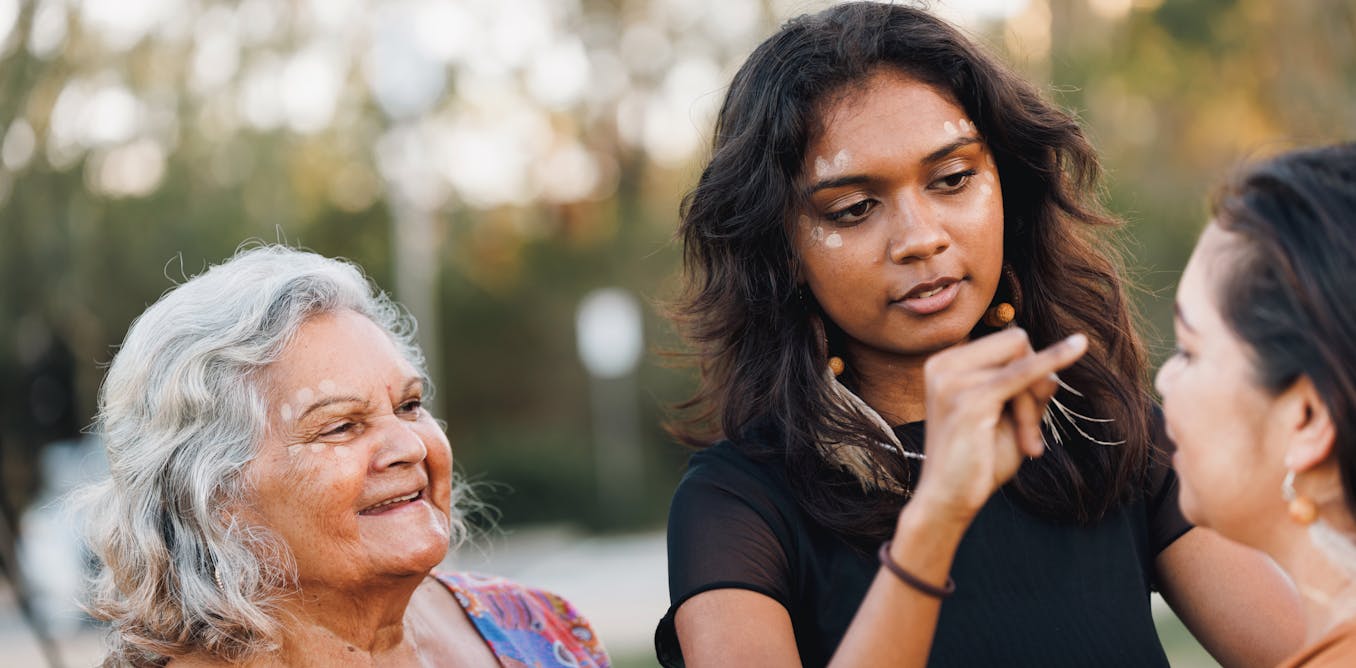
The inherent connectedness between people, land and spirituality runs deep in Aboriginal and Torres Strait Islander communities. It’s seen today through art, songs, stories, ceremonies, languages and cultures being revived and practised across the continent
In Indigenous worldviews, there is little separation between these elements of life. Bodies are understood as part of the land itself – of Country – which constitutes the living lands, waters and skies that Indigenous people hold custodial responsibility for
Dreaming stories across many communities describe how human bodies are fashioned from the clay of their Country. As Worimi Elder Steve Brereton explains, “we are Country, and Country is us”
Studies show that when Indigenous people are displaced from or denied access to Country, measurable declines in mental health, physical health and social and emotional wellbeing follow
And when Country is damaged, Indigenous people feel it
It’s more than a connection to nature
Australians are increasingly seeking connection with nature. A nationally representative survey of more than 4,000 Australians found spending time in nature is strongly associated with higher wellbeing
Among gen Z Australians, 76% report a close connection with nature, and 38% identify as spiritual
Our research team examines how spirituality, Country and wellbeing intersect across Australian communities. Our findings confirm what Indigenous communities have known for tens of thousands of years: Aboriginal and Torres Strait Islander people’s connection to Country is more than connection to nature. It’s both physical and spiritual. And its disruption has measurable consequences
When the land is damaged, the body is too
As Trawloolway theologian Garry Deverell explains, First Nations spirituality “begins with the Earth”
When that Earth is damaged, the spiritual, psychological and physical consequences are inseparable
Across Australia, decisions that alter, extract from, or destroy Country are made every day, often despite the objections of affected communities. This most commonly occurs through native title negotiations and Indigenous land use agreements, where communities face pressure to approve mining or infrastructure projects
The 2020 destruction of the 46,000-year-old Juukan Gorge rock shelters by Rio Tinto, made legally despite the Traditional Owners’ explicit objections, remains the starkest recent example
Puutu Kunti Kurrama and Pinikura Traditional Owner Burchell Hayes described the aftermath:
Myself, my family, our elders and our ancestors are in mourning at the desecration of our sacred site […] Healing is slow and painful and will not come easily
Studies have linked reduced access to and sovereignty over Country to poorer mental and physical health outcomes
When that harm is ongoing and unresolved, the body cannot recover. Researchers call this accumulated burden “allostatic load” – the physiological wear and tear of chronic, unresolved stress. The consequences include a greater risk of depression, cardiovascular disease and impaired immune function
The body knows and, over time, it shows
Connection as preventative health
The spiritual and cultural practices Indigenous Australians have maintained for more than 65,000 years help regulate the nervous system. This refers to the body’s capacity to move out of states of stress and threat and return to a baseline of calm, safety and connection
Welcome to Country, smoking ceremonies and the act of returning to and caring for places of significance orientate the body within its environment
Research confirms on-Country activities are associated with lower levels of psychological distress and better health outcomes through an increased sense of self, connection, belonging and calmness
The limits of modern institutions
Connection to Country, through the active protection, maintenance and custodianship of Australia’s lands and waters is a foundational determinant of health: the basis on which wellbeing is built
Institutions have made genuine progress toward improving Aboriginal and Torres Strait Islander health and wellbeing through better recognition of discrimination, culturally safe workplaces and improved engagement
Yet structural limitations persist. Institutions tend to address wellbeing through policies and compliance processes rather than addressing some of the actual
The most promising examples of addressing the agency. This includes:
cultural camps that restore ecological and spiritual health
Aboriginal cultural burning programs that restore ecological health
ranger programs that place Aboriginal land managers in direct governance roles over Country
When Aboriginal and Torres Strait Islander peoples are supported to practise culture on Country, the health benefits are significant and measurable
The systems of care that kept this continent and its people healthy for tens of thousands of years are still here. We need to build our institutions around these systems, rather than continuing to decorate the margins with them
Read more:
Practising culture on Country can improve Aboriginal people’s health and wellbeing
