


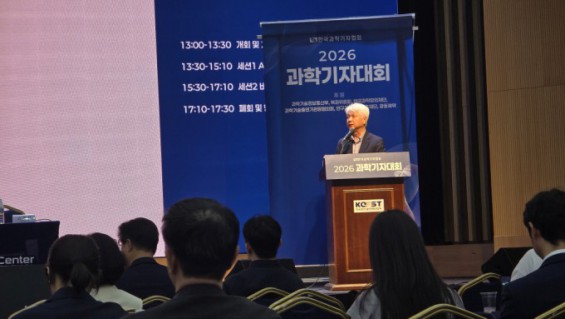
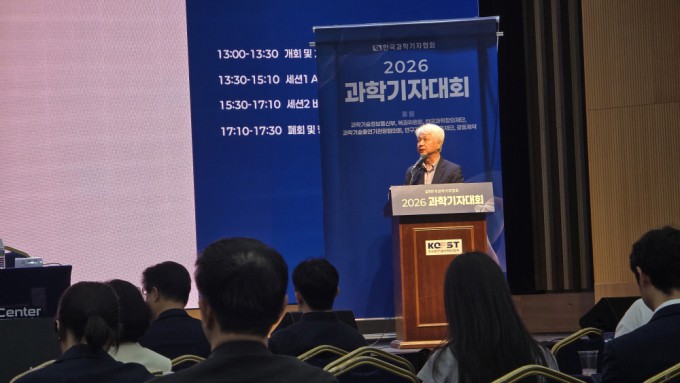
Professor Oh Sang-woo of the Department of Family Medicine at Dongguk University Ilsan Hospital gives a lecture at the ‘2026 Science Journalists Conference’ held at the Korea Science and Technology Center on the 28th. Photo by reporter Moon Se-young
Glucagon-like peptide-1 (GLP-1) receptor agonist obesity drugs such as Wegovy and Mounjaro have opened a new paradigm in obesity care with their remarkable weight-loss effects and ability to improve complications. The problem is that patients who actually need pharmacological treatment are not receiving it properly. Experts point out that institutional reforms are needed to support people with disabilities, patients with mental illness, and other vulnerable groups
At the ‘2026 Science Journalists Conference’ held at the Korea Science and Technology Center on the 28th, Professor Oh Sang-woo of the Department of Family Medicine at Dongguk University Ilsan Hospital pointed out that vulnerable populations have poor access to obesity medications
“In the past, anti-obesity drugs went through a dark history in which their use was halted due to various side effects, including narcotic issues, risks of valvular heart disease, suicide risk, and cancer risk,” Professor Oh said. “By contrast, the recently introduced GLP-1 class obesity drugs overcome the shortcomings of earlier medications and, beyond simple weight loss, are demonstrating diverse benefits in improving complications, such as reducing cardiovascular disease risk, alleviating sleep apnea, and easing metabolic dysfunction–associated steatohepatitis (MASH).”
The issue is that patients in urgent need of obesity treatment are not benefiting from these drugs. According to statistics compiled by Professor Oh, obesity is on the rise particularly among low-income women and people living in remote rural and mountainous regions
These vulnerable groups are also experiencing serious mental health problems such as depression, anxiety, and suicidal ideation, driven by societal prejudice and constraints directed at “fat people.” In addition, because these drugs are prescribed as non-reimbursed services, the high out-of-pocket cost poses a major financial burden, leaving access to obesity medications very low
Professor Oh said, “For people with developmental disabilities who find it hard to exercise or control their diet on their own and for their families, and for patients with mental illness and obesity who face suicide risks due to depression and anxiety, GLP-1 obesity drugs are like desperately needed rain. Yet they cannot use them because of economic barriers and lack of insurance coverage,” adding, “It raises the question of whether current prescribing patterns for anti-obesity medications truly align with the purpose for which these drugs were developed.”
While high-risk patients who genuinely need treatment are blocked by financial barriers, cosmetic and non-medical misuse has reached a serious level. According to Professor Oh, some private clinics prescribe these drugs after a mere ‘two-minute consultation,’ without in-depth counseling or adequate explanation of potential side effects
“Social prejudice that labels people with obesity as ‘lacking willpower’ or ‘lazy’ only deepens avoidance of medical care and feelings of depression among those who truly need treatment,” Professor Oh said. “Since obesity is a disease shaped by social and environmental factors rather than individual failings alone, we need public debate and policy support to ensure that the benefits of treatment are directed to patients who genuinely require care.”
Copyright ⓒ DongA Science. All rights reserved.
