


Pa. — In northern Dauphin County, the nearest hospital is a 45- to 60-minute drive away. For residents facing poverty and a lack of transportation, that distance can turn a simple health concern into a crisis
But the community isn’t waiting for outside help to solve the problem. Instead, local leaders are training everyday citizens to become Community Health Workers, helping their neighbors navigate the healthcare system and find the re
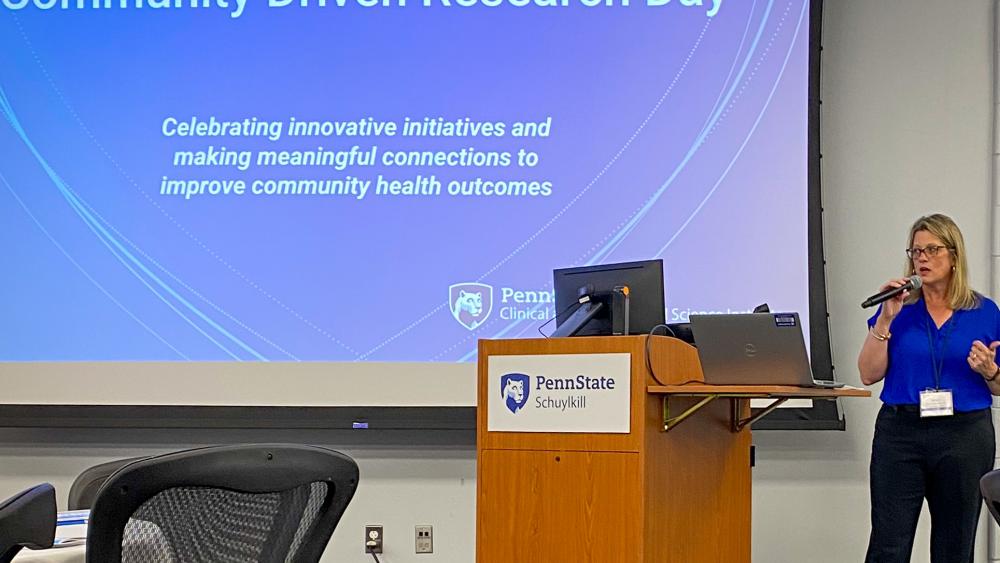
This grassroots solution was one of 19 showcased at a regional Community-Driven Research Day, hosted by Penn State Clinical and Translational Science Institute (CTSI) in partnership with Penn State Schuylkill
Building on past events in 2023 in Northern Dauphin County, in 2024 in Schuylkill County and in 2025 in Berks County, the 2026 gathering united 87 community leaders, healthcare providers and Penn State researchers from all three regions for the first time
“It is incredibly inspiring to see how these communities have united to tackle their most pressing health challenges,” said Jennifer Kraschnewski, director of Penn State CTSI. “As we look to the future, I am thrilled to see these regional collaboratives taking the lead. The true power of this initiative lies in their hands, ensuring that our research is driven by the very people who know their communities best.”
Flipping the script on research
Historically, academic research often involves universities studying communities from the outside. This event flips that script. Nearly 60% of attendees were community organization representatives, ensuring local voices guided conversations on three urgent priorities: access to care, healthy behaviors and food security
A recurring theme was the need to take healthcare outside the four walls of a clinic. Penn State’s LION Mobile Clinic showcased its “tailgate medicine” approach, which operates as a traveling clinic and research hub that brings medical re
“We are taking medicine outside of brick and mortar to our rural communities,” said Michael McShane, associate professor of medicine from the Penn State College of Medicine. “We view this as a relocated.”
In a similar effort to break down travel barriers, Penn State Cancer Institute shared its mobile HPV self-screening pilot, a program that provides no-cost, self-collection testing kits to expand early cancer detection for women in rural areas
Mental health and basic needs were also front and center. Attendees learned about “Threads of Success” at Governor Mifflin High School, a student-led nonprofit creating a stigma-free space for students to get clothing, food and hygiene supplies
“Peer-to-peer relationships are key to reducing stigma around participation and accepting help,” explained Ashley Berg and Kristi Bonanno, advisers for the Threads for Success program
Food as connection
When it comes to healthy eating, rural areas often face a lack of nearby grocery stores and the high cost of fresh food. Local organizations are tackling this creatively
Courtney Shober of the Berks Agricultural Re emphasized the power of urban agriculture
“The opportunity isn’t just to grow food, but to grow healthier and more connected communities,” she noted
Other highlighted programs included the Interfaith Health Network’s “community sharing boxes” at local libraries, and “Veggie Rx,” which pairs cooking classes with fresh ingredient boxes. Meanwhile, Breadcoin gives people tokens to buy prepared meals from local vendors
“We recognize that food is more than fuel; it’s an opportunity for connection,” explained Aisha Mobley, who represented Breadcoin along with David Vader. “It keeps money in our communities longer by using local businesses and creating wealth within the community.”
Building lasting bridges
For the Penn State researchers and healthcare providers in the room, the day offered an eye-opening look at the power of community action
“It made me realize how little I know about members of the community and their efforts,” reflected a Penn State Health internal medicine resident who attended the event. “My interactions with people are largely restricted to the hospital, and this made me realize how far I practice from where my patients live.”
“Community-Driven Research Day is just one step in an ongoing journey of partnership and collaboration,” said Miriam Kelly Miller, community engagement coordinator for Penn State CTSI. “Together, we can build on the strengths that already exist across our region and create lasting impact through community-driven action.”
According to Miller, by building trust and listening to the people who know their communities best, Penn State is helping ensure that future health research is deeply rooted in the real-world needs of rural Pennsylvania
Last Updated July 17, 2026
