


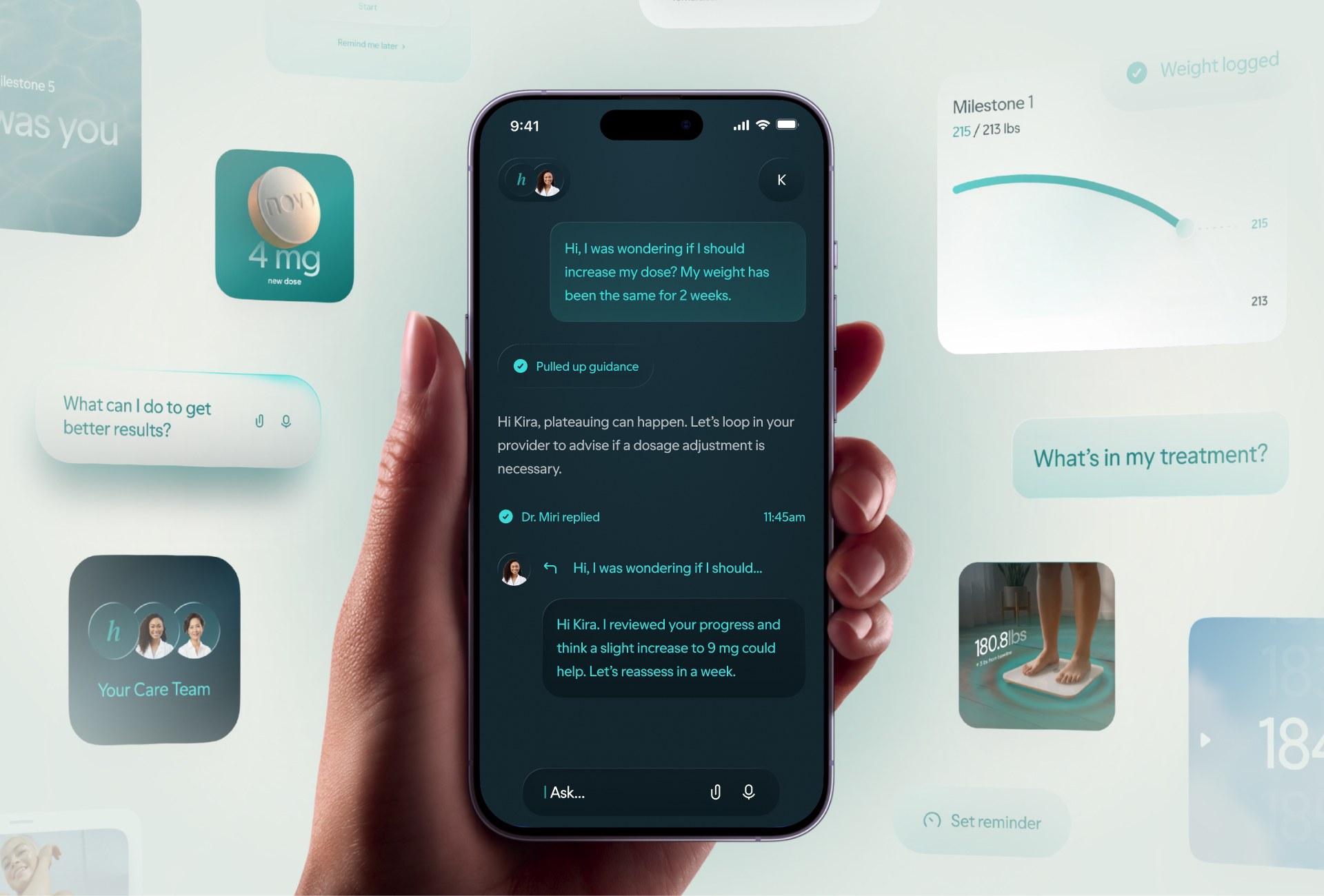
Hers, a digital healthcare platform that provides virtual care and prescriptions, is expanding its services by adding a built-in AI tool to its app. The AI feature uses information from the patient’s medical history and connects them to a provider for additional personalized support. Hers is first focusing on weight loss patients and those on GLP-1 medications with the new AI rollout
Hers’ chief medical officer and OB-GYN, Dr. Jessica Shepherd, tells CNET that the new AI function is built into every step of the care journey. “It’s designed to reinvent care around the two people who matter: the patient and their provider,” Shepherd explains
Many wellness wearables, including Oura and Whoop, as well as online services such as Amazon One Medical and Luffu have jumped on board the telehealth healthcare platform trend. AI is generally used as a component to help patients share their medical history with providers or to keep their data organized along with other forms of support.
How Hers’ AI feature works
The Hers AI clinical engine is considered longitudinal care (an ongoing relationship-based medical support) and is embedded into the patient’s existing care. Hers connects users to over 1,500 providers accessible through its platform. The AI function is meant to be a part of an ongoing conversation between the patient and their provider to help support their treatment. This could mean that even if they have a medical question late at night, they can receive some assistance from the AI feature, which can also connect them to a provider for further help.
“The experience is grounded in clinical protocols built with licensed providers, and the system knows its limits. It has been designed to understand when to escalate to your provider, when to stay in its lane, and when it doesn’t know something, it says so,” explains Shepherd. These frequent interactions make the AI function smarter, but the clinician will make the final decisions appropriate for the patient.
Although the AI function on the Hers platform will help streamline health data, it’s also meant to support women actively when they have questions between visits. “When a woman has a question, the AI supports her directly, drawing on clinical protocols we built with licensed providers, not generic health content, so what she gets back is grounded in expertise and specific to her treatment plan,” Him & Hers Chief Technology Officer Mo Elshenawy tells CNET. If she has a question the system can’t answer, the provider is notified to further assist.
Since Hers is a women’s healthcare platform, its goal is to help women as they navigate different life stages and health concerns. “Women are still underrepresented in clinical research; their symptoms are more likely to be dismissed, and many of the most important transitions in their lives—whether that’s reproductive health, menopause, weight changes or healthy aging—have historically lacked the personalized, longitudinal care they deserve,” says Shepherd.
Weight loss patients will be the main focus
To start, Hers plans to implement its AI feature for weight loss patients. With GLP-1 medication use on the rise, Hers recognizes that these patients require proper medical guidance. Shepherd notes that according to a recent KFF poll, about 15% of women are using GLP-1 drugs compared to 9% of men. “They [GLP-1 medications] require ongoing medical oversight, thoughtful dose optimization, management of side effects, nutritional guidance, preservation of muscle mass, behavioral coaching, and support through every phase of treatment,” Shepherd explains, adding that the most successful patients on these medications have a comprehensive care strategy. Although Hers is focusing on weight loss, it eventually plans to expand into other aspects of women’s health with its AI tool. The Hims app will also include the AI feature in the future.
The AI clinical engine will let clinicians monitor progress and help patients who need additional support or personalized recommendations. “Technology should never replace the provider-patient relationship — it should strengthen it by making expert-led care more accessible, responsive and continuous,” says Shepherd
In addition, Hers is introducing a smart scale, its first hardware that will connect to its app. Shepherd says weight is one of the most actionable biomarkers during a medically supervised weight-management program. “For patients using GLP-1 medications, weigh-in data can help providers identify trends, recognize when progress has plateaued, intervene before small challenges become larger ones, and celebrate meaningful milestones along the way.”
Hers aims to connect with other popular wearables as well in the future. “Wearables capture signals like sleep, stress and activity that add real value to someone’s care, and we built this AI clinical engine to bring in more signals over time, not fewer,” Elshenawy explains.
Privacy concerns
As with any healthcare platform that uses AI, there are questions about privacy concerns. According to Hers privacy policy on its website, it excludes information that customers share with their healthcare providers from marketing activity. Additionally, it configures technologies to prevent protected health information from being shared. To reduce detectable information, the company uses abstraction and hashing within its system, among other protective actions
How much will it cost?
Hers weight loss membership costs $39 for the first month and then autorenews at $149 per month. This includes a 24/7 care team and provider access, nutrition and exercise guides, meal replacement discounts and additional partner offers through the Hers Benefits program. Medications are an additional cost and are billed separately, but may be FSA and HSA eligible
