


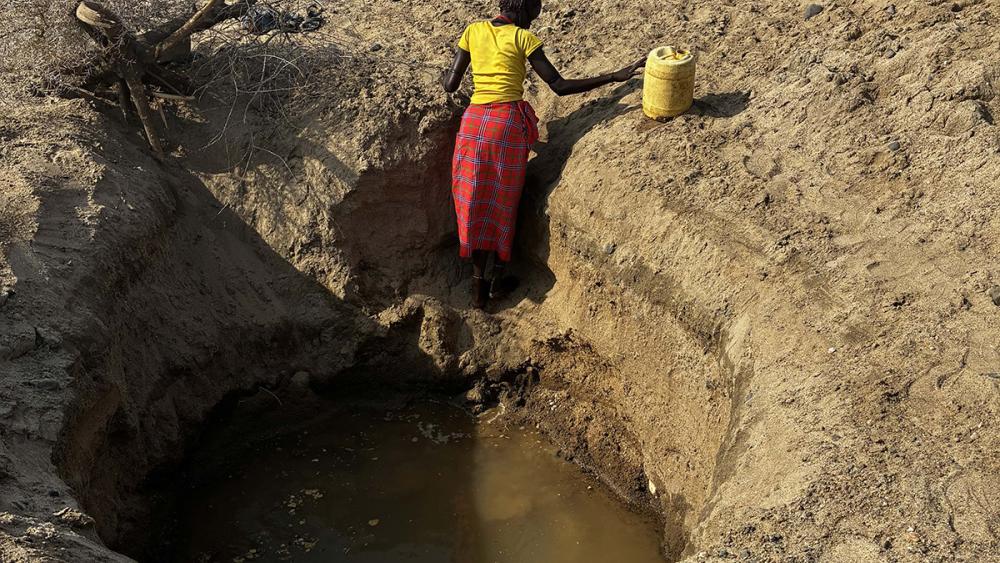
Pa. — During a historic drought in northern Kenya, a pastoralist community turned to a foodk: fishing
As herds dwindled and families struggled to obtain food, fishing on nearby Lake Turkana became increasingly common among the Daasanach. By the end of the drought, a livelihood once associated with poverty and social stigma had become an important
The shift is among the key findings of a new collaborative study — led by Penn State researchers and published in the journal Global Environmental Change — showing that prolonged drought can alter not only physical health and food access, but also the cultural norms, livelihoods and settlement patterns that shape daily life
The researchers began the study before the drought, so they were able to document the changes as they unfolded and follow the Daasanach for a year after rains returned. The team found that the effects of an extreme climate event can persist in many ways, even after environmental conditions improve
“When we started this project, we were interested in understanding long-term water and food security among a population living in a hot, dry environment that is highly susceptible to droughts,” said Asher Rosinger, associate professor of biobehavioral health and anthropology at Penn State, who was lead author and principal investigator on the study. “We didn’t know we were about to witness one of the most severe droughts in recent history, which allowed us to see how people adapted as conditions changed.”
Rosinger and collaborators included 515 adults and 384 children from the Daasanach community from 2019 through 2024. The study spanned the period before the historic Greater Horn of Africa drought, which lasted from late 2020 to early 2023, and included a full year after conditions improved
According to the researchers, the drought affected nearly every aspect of life they measured, including nutrition, physical health, food and water security, livelihoods and mobility
Livestock losses sharply reduced access to milk and meat, which also meant people moved less with their herds and stayed closer to town. Adults and children lost weight, and children experienced reduced growth in height. While reported food and water insecurity improved after the drought ended, many nutritional effects persisted through 2024
“The physical consequences of the drought lasted well beyond the return of the rains,” Rosinger said. “Children’s growth did not fully recover during the period we studied, highlighting that these events can have long-term health consequences.”
However, the study found that children who consumed more milk during the drought had better nutritional outcomes
Fishing offered a form of adaptation. Historically, the Daasanach stigmatized fishing because livestock and meat were highly valued. People without livestock sometimes turned to fishing for food and were viewed as poor
During the drought, more families began fishing to supplement their diets and earn income to purchase other foods. As fishing became more common, its stigma diminished
“The fact that Daasanach widely moved more toward fishing and that the stigma went away shows how large shocks like extreme drought can affect cultural processes, including behaviors and norms that govern how people act and how they perceive each other,” Rosinger said
The drought’s effects were not shared equally. Women experienced greater hardship than men, in part because they are primarily responsible for collecting water and preparing food and often eat after other family members. Women reported higher food and water insecurity and experienced greater losses in body fat, with the largest differences occurring at the height of the drought
The drought also changed where people lived. As pastoralism became more difficult, families became less mobile and increasingly settled near towns, where food assistance, schools and other re
Rosinger said the findings illustrate how drought can destabilize communities by depleting food, water and the assets people use to manage shortages. As those retance or move in search of food, water and work
The findings may be relevant beyond the Daasanach Other drought-prone communities that depend heavily on environmental reor become more reliant on outside assistance. The specific responses, however, depend on local cultures, economies and environments
The study also suggests that drought monitoring systems could be strengthened by measuring how people experience shortages, rather than relying solely on environmental indicators such as rainfall and livestock numbers, Rosinger explained
“People’s lived experiences of water insecurity provide important information about how drought affects health and well-being,” Rosinger said, noting that rainfall data can identify drought conditions, but they cannot show how often people go without water, go to bed thirsty or skip bathing because water is unavailable. “Combining those experiences with environmental and nutritional data can help governments and humanitarian organizations better target assistance.”
Rosinger said the study demonstrates the value of long-term research as extreme weather events become more frequent and severe
“Being able to see the process from before to after the drought was critical,” he said. “It allowed us to see how the landscape and water responded to it.”
The researchers are continuing to collect data from the Daasanach community to better understand how environmental changes, including changes in drinking-water salinity, affect health
In addition to Rosinger, the team included Penn State researchers Kedir Teji Roba, postdoctoral scholar; Alfredo J. Rojas Jr, postdoctoral scholar; Leslie Ford, graduate student; and Nicole Bobbie, Carey Musumeci, Kiera Papa and Zoe Farrar, all Penn State alumni. The study also included researchers from the University of Nebraska-Lincoln, Duke University, Northwestern University, Tufts University, the National Museums of Kenya, Vanderbilt University, George Washington University and the Kenya Medical Research Institute.
The research was supported by Penn State, the U.S. National Science Foundation under award numbers 1924322 and 1852406 as well as the National Institutes of Health’s Eunice Kennedy Shriver National Institute of Child Health and Development under award number P2CHD041025 and the National Institute of Environmental Health Sciences under award number R01ES035402. The content is solely the responsibility of the authors and does not necessarily represent the official views of the funders
At Penn State, researchers are solving real problems that impact the health, safety and quality of life of people across the commonwealth, the nation and around the world
For decades, federal support for research has fueled innovation that makes our country safer, our industries more competitive and our economy stronger. Recent federal funding cuts threaten this progress
Learn more about the implications of federal funding cuts to our future at Research or Regress
Last Updated August 25, 2026
Contact
- mediarelations@psu.edu
