


NEWS ANALYSIS
How a US-Japan pact to hit yen speculators came together
American participation in the intervention was considered as early as January
SummariseAdd BT as a preferred source
Add BT as a preferred source
Published Mon, Aug 3, 2026 · 06:05 PM
- Shared currency anxiety between Japan and the US has forged cosier conversations about exchange rates and added pressure for the BOJ to persist with rate hikes. PHOTO: REUTERS
[TOKYO] A joint US-Japanese effort to fight off speculative bets against a battered yen last week followed months of preparation by the two nations and a rare and public alignment of interests in Washington and Tokyo over exchange rates
While unilateral efforts by Japanese authorities to stop sharp yen selling in the past have failed to provide a firm floor for the currency, US Treasury Secretary Scott Bessent’s verbal support for a stronger yen has given bureaucrats in Tokyo a new tool in their fight this year
For Japan, a weak yen has fanned import prices, creating cost-of-living headaches for successive governments, including current Prime Minister Sanae Takaichi’s
For the US, a weak yen blunts the trade advantage from President Donald Trump’s flagship tariffs while a related sell-off in Japanese government bonds could spill over to US Treasury yields
The shared currency anxiety has forged increasingly cosy bilateral conversations about exchange rates, historically a diplomatically thorny topic for the two economic powers, but also added new pressure for the Bank of Japan (BOJ) to persist with rate hikes
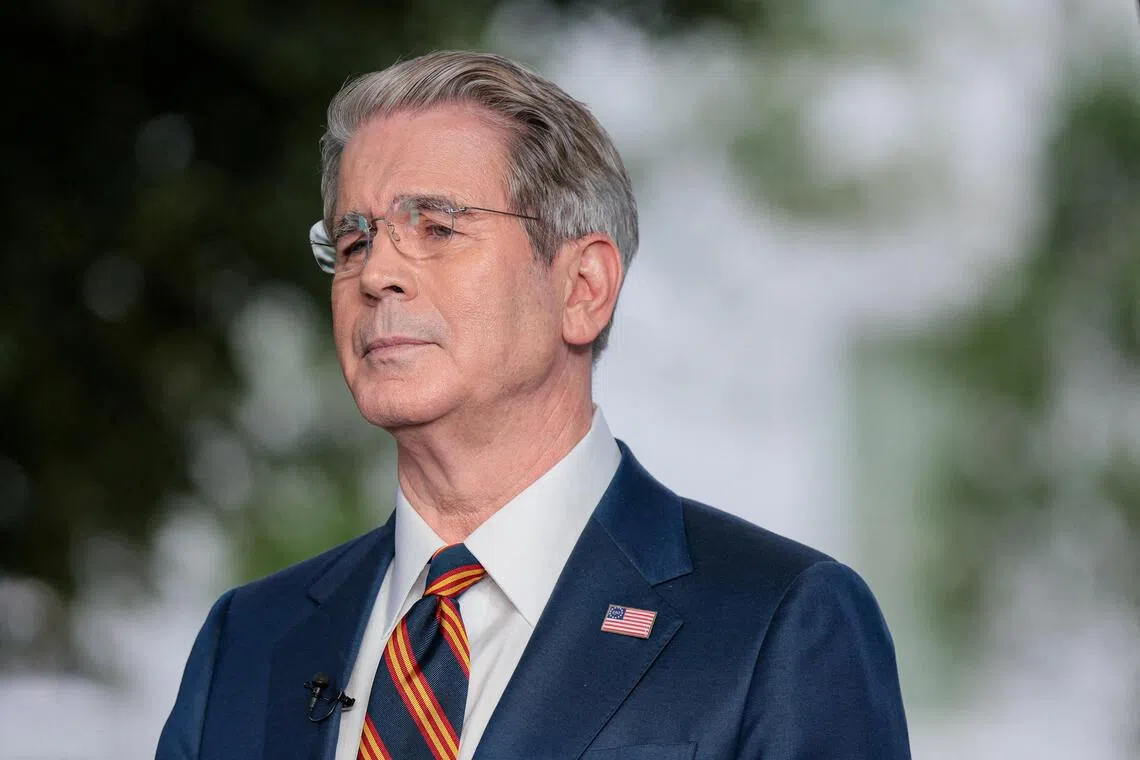
US participation in yen-buying intervention was considered as early as January, when the New York Federal Reserve made rare rate checks to help Tokyo combat yen declines, said a Japanese government official with knowledge of the preparations
Asean Intelligence
Get insights into businesses across South-east Asia
Get the free report
“Including online meetings, we’ve held talks about 10 times for discussions that included exchange rates,” Japanese Finance Minister Satsuki Katayama said on Monday on how frequently she spoke with Bessent
“When he visited Japan in May, we talked three-and-a-half hours including over dinner,” she said upon announcing Japan’s joint currency intervention with the US
The May talks followed Japan’s huge yen-buying intervention between late April and early May, which failed to reverse the yen’s downtrend
Yen climbs as traders watch for further US-Japan forex intervention

Japan and US confirm joint yen-buying intervention, signal more action
‘Buy Japanese Yen (JPY) $5-10 bil’: US Treasury Secretary Bessent joins US-Japan bid to lift yen
Yen surges to lower 157 versus US dollar, Japan authorities step in
More
In a sign that negotiations were intensifying, Katayama said after the May meeting the two have been “coordinating very closely on foreign exchange and will continue to do so”
Bessent, too, said Japan’s fundamentals are “strong and resilient, and that will be reflected in the exchange rate”
He also repeated his calls for faster BOJ interest rate increases, signalling Washington’s concern its slow pace of hikes could leave the central bank behind the curve in addressing inflation
A month later, the BOJ raised interest rates to a 31-year high of 1 per cent in a landmark step in policy normalisation. But with Japan’s real borrowing costs deeply negative, the move failed to give a lasting boost to the sagging currency
The US Treasury was not reachable for comment outside office hours in Washington. Japan’s finance ministry did not comment
“Lets’ congregate tomorrow”
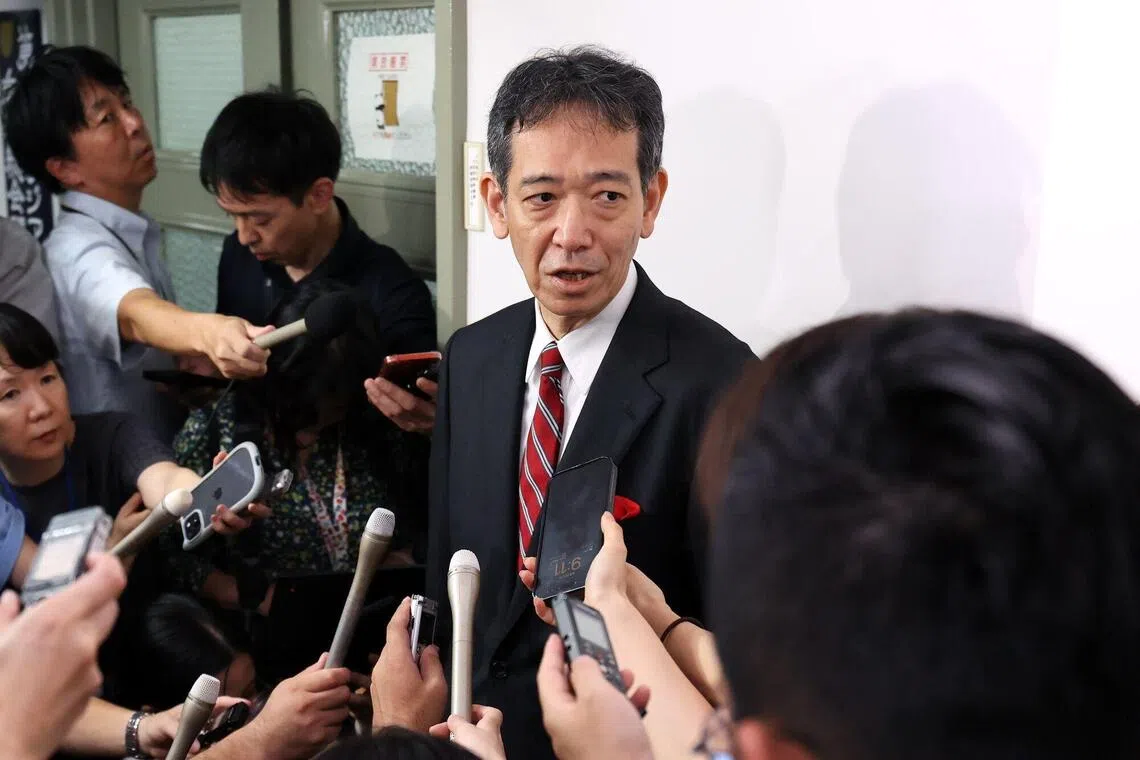
With the yen hitting a four-decade low this year, Japan’s top currency diplomat Atsushi Mimura has shifted tactics
Instead of a daily stream of calibrated verbal warnings against speculators, Mimura has focused on working behind the scenes with US counterparts, said two
That means Mimura, who has sway over when to step in, has been less public, and kept markets guessing about the chance of intervention. He kept a low profile even as Katayama and Bessent held an online meeting in late June to discuss financial market developments
The need for action heightened in July, when concern over Takaichi’s expansionary fiscal and monetary stance drove the yen to recent lows, pushing up the cost of imports and hurting the administration’s approval ratings
The US administration was also grappling with rising inflation and Treasury yields, heightening the incentive to support Tokyo’s effort to combat market headwinds
Nodding to Japan’s concern over the weak yen, the US Treasury’s semi-annual currency report on Jul 24 echoed Tokyo’s warning against excessive yen volatility and pledged to continue “close consultations” with Japan on exchange-rate matters
Both the US Federal Reserve’s and BOJ’s policy meetings last week were seen as potentially vulnerable windows for the yen, as investors positioned themselves based on cues from both banks about the timing of future rate hikes
Japan’s intervention campaign was closely coordinated with the BOJ, according to people familiar with the matter
Using a speakerphone connected with a handful of staff at the finance ministry’s foreign-exchange division, Mimura gave the green light to buy yen for US dollars in the late evening of Jul 30
The move, which hit investors outside Tokyo hours and amid the BOJ’s two-day policy meeting, immediately firmed the yen to 157.80 from around 162.80 against the greenback
When one of the staff told Mimura the yen was sliding back down towards 158, he said: “Yes. Let’s congregate tomorrow.”
Shortly after BOJ governor Kazuo Ueda’s news briefing concluded on Friday, the yen spiked in what markets suspect may have been another bout of yen-buying intervention by Tokyo
This time, Tokyo was joined by Washington
The US Treasury informed a number of banks that it might intervene in the yen market and that they should “stand ready for future action”, a
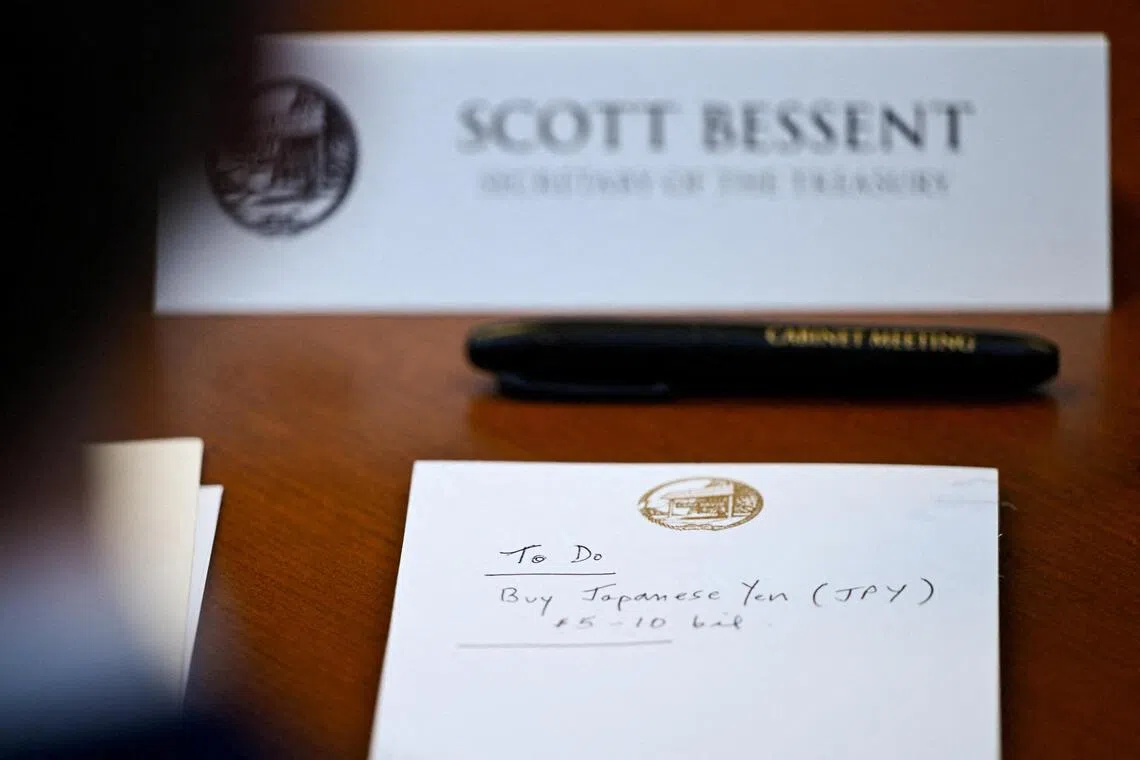
Bessent had a notepad at a Friday Cabinet meeting with the words “To Do”, followed by “Buy Japanese Yen (JPY) $5-10 bil”, a Reuters photo showed
A September rate hike?
The BOJ’s communication on its future rate plans last week was its most hawkish to date and crucially nodded to a line in the US Treasury’s currency report that “monetary normalisation would help reduce excessive exchange-rate volatility”
Carefully reading off a prepared script, Ueda emphasised the vigilance needed “more than ever” against upside price risks; this was read by analysts as all but confirming a September rate hike
Those sentiments also received praise in Washington
“We strongly support Japan’s decisive market and monetary steps to correct the substantial undervaluation of the yen,” Bessent said in an X post on Sunday, stressing anew his support for higher BOJ rates
Mimura, too, said the government will align its currency policy with the BOJ’s monetary policy to address yen weakness, signalling the chance of a near-term rate hike
In a separate X post, Bessent said he would meet Ueda at a US-hosted G20 finance leaders’ meeting at the end of August, preceding the BOJ’s next policy meeting on Sep 17 and 18
Markets now see the BOJ’s September meeting as live
“Given Japan moved to prevent yen falls with the cooperation of the US, there’s a question of whether the BOJ can afford to forgo raising rates in September,” said Yuki Kimura, bond strategist at Okasan Securities
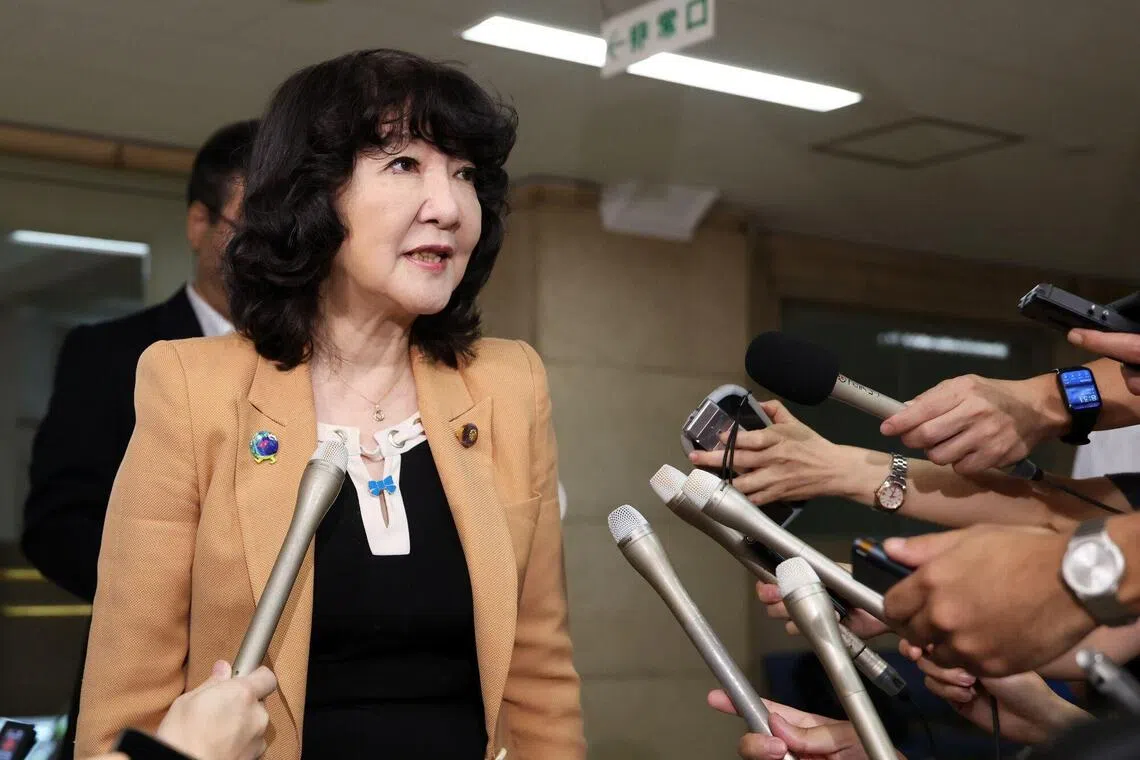
Naomi Muguruma, chief bond strategist at Mitsubishi UFJ Morgan Stanley Securities, sees a September hike as a near-given
“Intervention only has a temporary effect in slowing currency moves. Faster rate hikes are probably needed to put a lasting floor on the yen,” she said
“I feel like a September rate hike is a done deal. It won’t make sense for the BOJ to wait until October and cause another bout of yen declines.” REUTERS
Decoding Asia newsletter: your guide to navigating Asia in a new global order. Sign up here to get Decoding Asia newsletter. Delivered to your inbox. Free
JapanYenCurrenciesScott BessentBank of JapanForex
Share with us your feedback on BT’s products and services
TRENDING NOW

Temasek Financial launches 10-year fixed-rate Singapore dollar bond with initial price guidance of 2.7%

Yeoh Pei Xien: YTL’s third-gen scion with a pastor’s heart

UOB CEO’s youngest child Grant Wee turns burnout into a wellness business

Singapore banks’ battle for wealth talent goes beyond private bankers
