


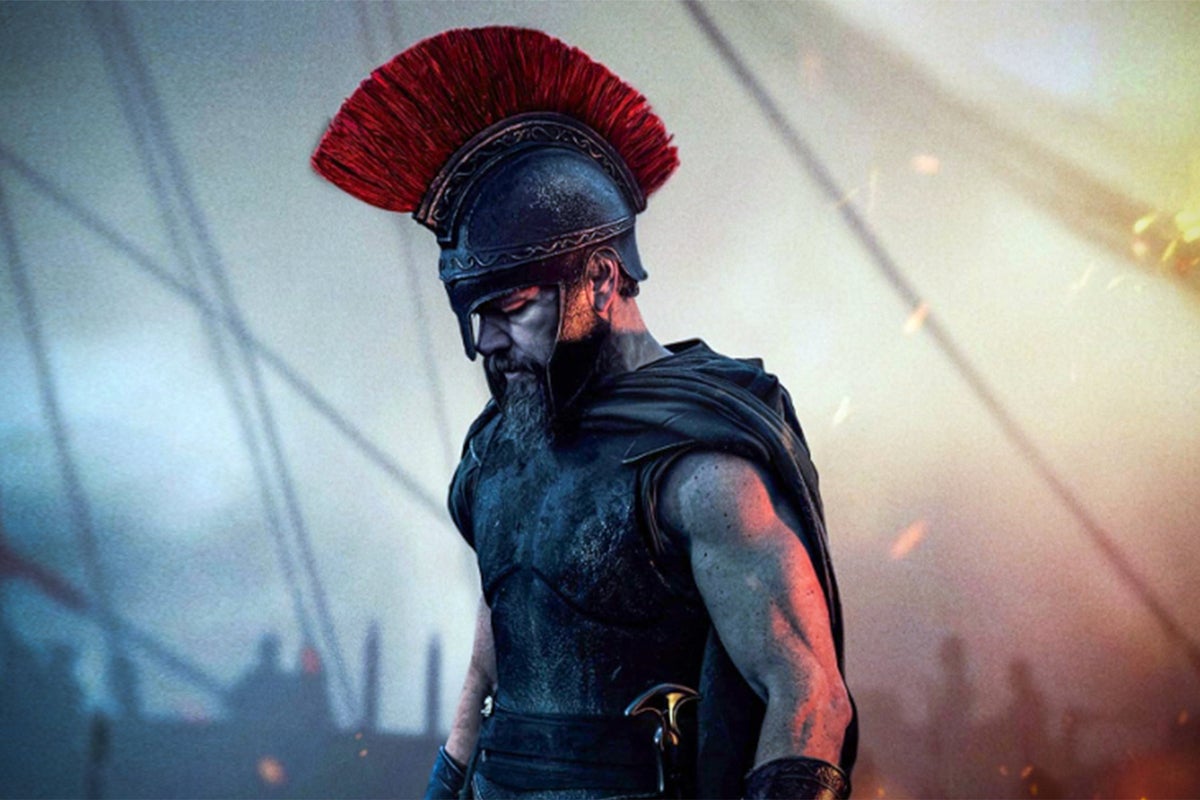
Matt Damon is 55. As the protagonist in Christopher Nolan’s all-conquering adaptation of Homer’s Odyssey, his strong, lean physique is not that of a typical 50-something. But this aesthetic is “merely a side effect of really good training,” his long-time trainer Jason Walsh tells me. What’s more impressive, he argues, are the signs of fitness we can’t see
“Most people start training and they just work out,” says Rise311 founder Walsh. “They want trainers to make them sore and make them sweat, then at the end they go, ‘Wow, that was a great workout’. And that’s not the worst thing. But I want my clients to be able to train like an athlete; to build a body that can go where they want it to go.”
Success leaves clues, and Walsh’s client list is a dead giveaway, reading like the Hollywood walk of fame: Alison Brie, Jake Gyllenhaal, Pedro Pascal, Chappell Roan, Taron Egerton and many more. Walsh himself is, at 50, in ens that better health and fitness is surprisingly simple to achieve
The evolution of Matt Damon: a fine body of work
“I love Matt Damon so much,” says Walsh. “He’s all over the news right now, and rightfully so –The Odysseyis an incredible film by an incredible director. He’s 55 years old and he looks fantastic. But there’s a bigger story here than just [his physique in] The Odyssey.”
When the pair started working together in 2012, an old baseball injury plagued Damon’s shoulder, and his back hurt. He was also holding weight from his role in The Informant, for which a Burger King-heavy diet had raised his body fat levels to the point his family – affectionately – gave him the nickname “Fatty Matty”
“At that time, he was disenchanted and upset because he had worked out with a dozen different trainers, but at fortysomething years old he was in shambles,” Walsh says. “These people were trying to impress him. They would promise to get him from nought to 60 faster than anybody else, and they made him do things that his body wasn’t ready for
“He couldn’t play with his kids because his back hurt so much. Any time he bent over, he would have back spasms. He grew up in Boston, played baseball, screwed up his shoulder, and he was p***ed off. ”

Walsh knew what he had to do. He asked Damon to trust him for a two-week trial period, then subtly started remedying his dodgy shoulder alongside their wider training
At the end of the two weeks, he tossed Damon an American football. To the actor’s surprise, he instinctively caught it – pain-free. The pair have worked together since
“I think, from that, he understood that I knew what I was talking about,” Walsh says. “Then I applied everything I knew to fixing his back. Once I did that, he bought in 100 per cent
“We took him from Fatty Matty to incredible shape for Elysium[an image of an abs-laden Damon did the rounds at the time of the 2013 film’s release]. But what I’m most proud of is that I gave him a new lease of life in a way in which he can live pain-free
“He was strong. He looked good. And he had built an amazing foundation of fitness so he could go anywhere he wanted to go. This is the new norm for him. We set him on a path to better fitness for life.”
The Odyssey posed a whole new challenge
“[Odysseus was] an extremely daunting and physical role to take on,” says Walsh. “If he didn’t have that base and that evolution of his fitness, he would probably have got hurt.”
An actor, like an athlete, cannot do their best work while injured. Staying healthy amid a demanding filming schedule was paramount for Damon. And, though he has joked about the “middle-aged” cast of the film suffering back pain from running along stone streets in sandals all day, his foundational levels of fitness allowed him to emerge largely unscathed
Read more:You don’t need to lift weights for strength training – these exercises count too

How to get in shape in your 50s, according to Matt Damon’s trainer Jason Walsh
“At 50, I’m 220lb, I have 115lb of lean muscle, I’m around 10 per cent body fat, and I maintain that,” says Walsh
His next statement is surprising: “It’s not that hard to do.”
“It’s not as complicated and as expensive as you think it has to be… Before GLP-1s, jabs and shortcuts, we still changed bodies. People weren’t always out of shape.”
To improve your health, fitness and physique, Walsh recommends adopting the framework below
“This is going to be the greatest investment you will ever make in yourself, because it spans every aspect of your life,” he adds
Read more:What scholars think about Christopher Nolan’s adaptation of The Odyssey
Stop scrolling social media
“There is a lot of noise on social media and it’s confusing people,” he says. “When people are confused, they buy things they don’t need – that’s the game plan, and it works.”
For the same reason, Walsh has ditched all fitness trackers. Elite athletes might benefit from the deep insights on offer, but for regular folks he believes this influx of information is surplus to requirements
He takes a similar attitude to the health podcasters and biohacking trends currently populating the internet
“I despise the whole biohack era,” he says, pointing out that some people use their doctor’s badge to preach health tips with authority, turning a tidy profit as a result
“I think there are a lot of things inhibiting people’s hormones, and we can get really detailed into blood work and all that kind of stuff,” Walsh continues
“But what’s the most common prescription from doctors? You work out, you get enough sleep and you pay attention to your diet. That’s the biggest biohack
“It is science, but it’s not rocket science, and it’s not as complicated as some people are making it out to be.”
Read more:I’m a Greek classical drama expert. How faithful is Christopher Nolan’s The Odyssey to the poem?
Commit to daily movement
While training Jake Gyllenhaal this week, the actor asked Walsh if he could share any pearls of fitness wisdom with his driver, who was keen to get in shape. Walsh gave him one to prioritise over all others
“It seems so difficult, but the easiest thing you can possibly do is just to get out and move,” he says
“It has to be a daily commitment – you’re going to have to give up some of your existing bad habits. If you’re busy with kids and family and work, it’s going to be difficult, but [regular movement] has to be the common denominator
“Start with the low-hanging fruit, which is getting yourself out there and walking. I know there are people who are for and against 10,000 steps, but it’s not a bad baseline. Just get out there and move; bike, swim, do recreational sports, spend time outside, have fun.”
This is one of the simplest ways to up your metabolism, maintain a good body fat percentage and build a solid foundation of heart health, he says. It’s also more accessible than trying to adopt a perfect fitness routine right away
“When you overload the brain, it’s going to revolt and push back. Don’t try to do everything at once, just move for a few weeks, then add a little bit of evolution over time – gradually adopt one or two more healthy behaviours.”
Read more:A personal trainer set out to learn everything he could about fat loss – this was his most important finding
Tune in to what you are eating
Movement is one side of the fitness equation. Diet is the other major factor to consider
“There are things you can do to help you not feel as hungry, then you can manipulate your diet to get the body composition you are looking for – that’s what we do with actors,” Walsh says. “Diet is also a big part of the recovery process.”
He recommends beginners avoid obsessing over their food. But, he adds, there does need to be some level of awareness around your activity levels and what you’re eating
“We can give people some broad-stroke ideas to apply,” says Walsh. “If you can adhere to these, they will become habitual. When you develop healthy habits, and you do them consistently over a period of time, you won’t even realise you are making progress, but people are going to start looking at you and going, ‘Wow, you look great! What’s going on? What did you do?’.”
What are these broad strokes? Prioritising fibre as a way to help you feel fuller for longer is one tip that crops up during our conversation. Foods such as oats, fruits and vegetables are all recommended
“I’m more plant-based than I am animal-based, and I think there’s a lot of benefit to that,” Walsh adds. “I have a family history of high cholesterol and heart disease, and it helped me clean up a cholesterol issue I was having
“…I think it’s important to find a better balance between plants versus animal-based foods for overall health. You can get a perfect protein from plant-based foods, and that’s something that needs to be rewired [in people’s minds]
“I don’t think a lot of people eat their fruits and vegetables, and that’s something I advocate for my clients as well.”
Read more:The everyday health hacks cardiologists use to reduce their risk of heart disease
Strengthen your body
Off the back of playing Evil-Lyn in He-Man and the Masters of the Universeearlier this year, Alison Brie shared some of her go-to exercises in a series of videos
Walsh pushed back. “We’re going to do the meat and potatoes and show people that women can lift heavy weights.”
She demonstrated pull-ups on gymnastic rings with 20kg hanging from her waist, heavy glute bridges and shoulder presses
“For the average person, it doesn’t need to be that complicated,” Walsh says. “Do calisthenics – bodyweight exercises. You don’t have to buy loads of equipment.”
“Start with a plank, then progress to push-ups, then lateral planks, then some sort of rotational pull-through. Next, we can learn how to squat and lunge – crawling is a big deal
“If you put a baby on their back, a few weeks later you will go up to the crib and notice they’ve learned to flip over
“These are the types of tools I teach people; learning these fundamental movements, and learning how to control their hips, rotate, and load the spine
“I take people all the way back to rolling, falling, bear crawls – primitive movements that you can do at home.”
Read more:There’s a new golden rule for strength training – expert coaches reveal everything you need to know
Keep track of your hormones
“You can achieve [everyday athleticism] in your forties, fifties and sixties,” says Walsh. “But I think, when you get into your 50s and 60s, you’re really fighting biology.”
For this demographic, he says there is value in getting regular blood tests
“Blood work, to see what’s going on inside you chemically, is an incredible ability,” he explains. “Not everyone has access to that, not everyone can afford it, but I’m hoping at some point there will be a company that can offer this at a price that makes sense for people, because it’s important to see how your hormone levels are
“If your hormones aren’t in a good place, you’re really going to spin your wheels in the gym. I think we see that a lot, with people going to the gym for a few weeks, pushing hard and not getting the results they’re being promised.”
Read more:Three mistakes nutritionists want you to stop making with your meals
