


Key points
- Balancing skepticism and open-mindedness is a key to sound critical thinking.
- It’s not irrational to act on extremely unlikely events when the cost of caution is low.
- Science accepts its own limitations and values skepticism.
Open-mindedness is an important aspect of critical thinking, as the latter requires the consideration of multiple perspectives; however, it’s also important to be sceptical, particularly in situations where the evidence for a perspective is lacking (Dwyer et al., 2016). With respect to balance, the context of the situation should help guide how you engage these dispositions
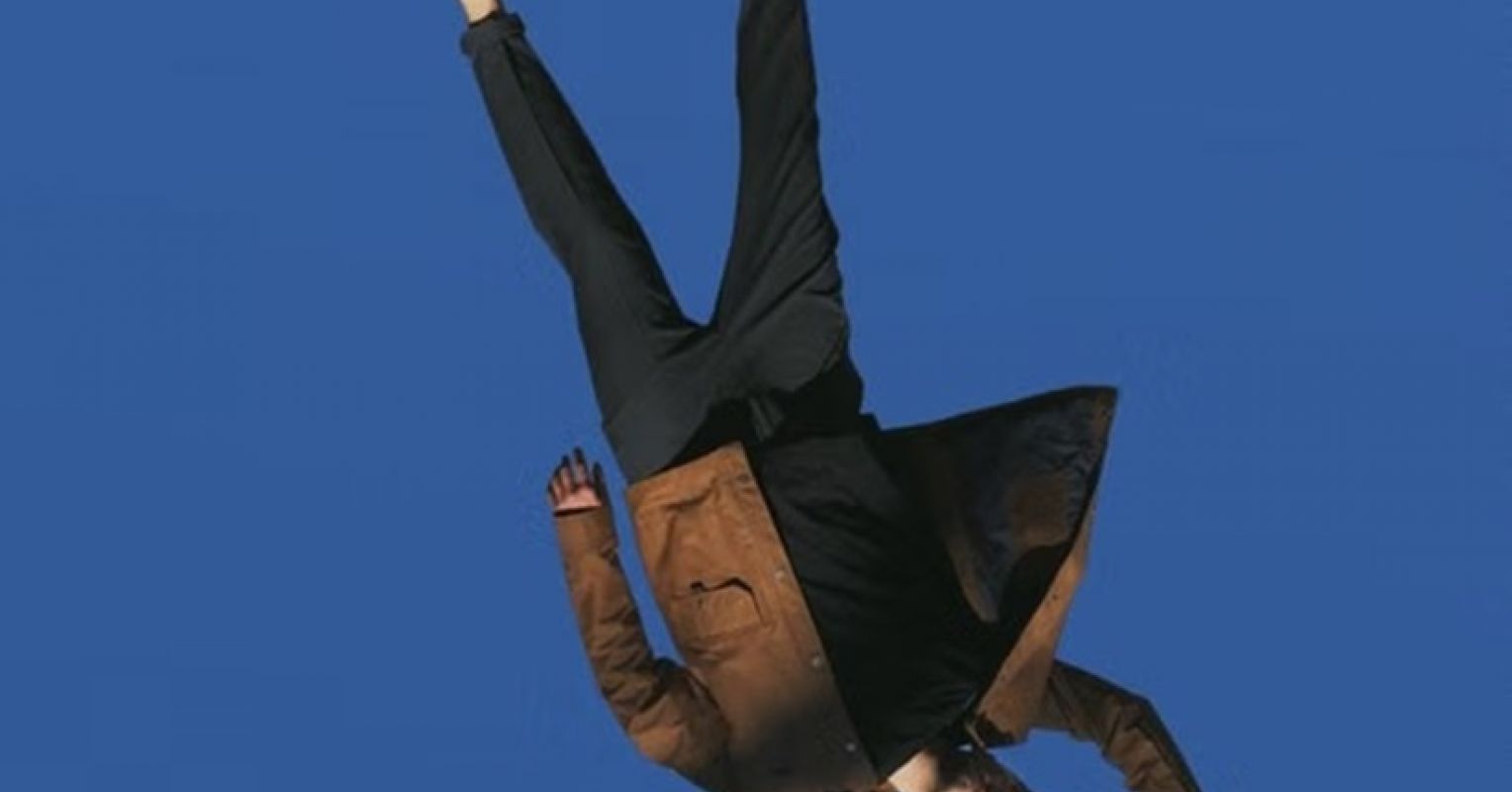
The Viral Conspiracy Belief of 7 Seconds Without Gravity
Almost a year ago, I started seeing rumours online that we would “lose gravity” for seven seconds at 2:33 p.m. GMT on August 12. Postulations suggested numerous potential causes, including black hole, eclipse, and experimentation activities. But, as most of these warnings suggested that “NASA knows about it,” it was also a conspiracy belief
Of course, I was extremely sceptical. I set an alarm for it months in advance, not because I believed it, but because I wanted to be present-minded for the nonsense to be debunked. I wanted a laugh to myself at 2:33 p.m. on that day. I knew (because I did physics in school) that in light of the moon’s orbit around us and the sun’s pull on Earth, for gravity to cease, you’d pretty much need to stop the planet and everything on it from having mass—meaning I also knew that this was close to impossible. So, why then, on that day two weeks ago, at 2:32 p.m., did I actually consider organising my family at our staircase to hold on to the balusters for a few moments?
“Just in Case”
Why do you buy insurance? Just in case. Indeed, despite the lack of evidence to support this prediction, I was open-minded enough to concern myself with a what-if scenario, if for nothing more than an exercise in caution, in which case I would consider the potential for it happening and the weight of the outcome relative to the cost to me of being cautious. That is, we’d only lose a minute or two of our lives, and I’d just look silly in front of my wife. (My kids are too young to understand what we’d be doing.) The mistake would not be costly. However, if the 0.00000000001 percent chance of this conspiracy belief being right came to fruition, at least we’d be prepared to avoid potential serious injury when gravity returned.
As we moved closer to the date, one of my favourite examples from teaching classes on epistemology and the nature of “proof” kept coming to mind. We can’t prove anything. Gravity is a theory. Take this pen for example. I know that when I release it from my hand, it will accelerate to the ground at 9.81 m/s2. I’d bet my house on it. What goes up must come down. We have observed this time and time again, without it being disproved (hence why it is a theory). But that doesn’t mean that one day, some massive asteroid can’t hit Earth and somehow knock us off our axis, thus potentially messing up our gravity. That’s why science is cautious. We cannot see into the future. We cannot prove, only disprove.
With that, what if, as with some other conspiracy beliefs, certain points are partially true (Dwyer, 2025)? For example, what if we lost gravity or some other major disaster occurred at that time? It wouldn’t have to be because of the silly examples the conspiracy theorists suggested, which were rather easily debunked, but because of something else. Practically, who cares about the what or why in this scenario, when it’s the outcome that really matters?
Open-Mindedness & Skepticism
I don’t know everything. Science doesn’t know everything. The public doesn’t know everything. At 2:32 that day, the open-minded part of me suggested that maybe we could lose gravity for a reason that not a single person on Earth has ever considered before, and the one thing that was right was the date and time. Whereas the sceptic part of me said, “Without any credible evidence, the same can be said about any date/time…”
In my previous example, I said “betting my house on it” that gravity will work in terms of releasing the pen. That bet was still on back on August 12, because I certainly didn’t increase my house insurance in advance. Had I somewhere to be, I wouldn’t have thought twice about being out in the open air. But, as things turned out, I was at home. At 2:32, I got up from my desk in the office and went into the kitchen to be with my family to “make some coffee”… not because I believed something would happen (I didn’t); rather, because of caution. I’m not going to risk the safety of my family, no matter how small the odds, because of my pride (be it in science, scepticism, source credibility, etc.), when the cost of open-minded caution was so little. Again, caution, not belief.
Yes, I’m prideful of science. But I also understand its strengths and “limitations.” Unfortunately, many people often get the notion of science wrong. Perhaps that’s a reason why there has been increased distrust in it over the past decade. (See my previous post on the “post-truth era.”)
For example, a common complaint I hear from religious individuals, in an attempt to justify their faith, is that science arrogantly believes it knows everything. That’s not the case. Scientists do not think they know everything, because, as Irish comedian Dara Ó Briain once correctly joked, if they did, then science would just stop (i.e., what’s the point of “sciencing” if we already know everything?). Scientists recognise and celebrate the many knowledge gaps that require filling. That’s what makes science exciting—the opportunity for discovering and learning new things, as well as advancing what we thought we already knew (e.g., again, disproving versus proving).
Decision-Making Essential Reads

How George Soros Trades on Animal Instincts

Betting on the Future
We all get things wrong sometimes. Even the best thinkers, from time to time, make a decision based on their gut alone and get it horribly wrong. When science gets something wrong, it’s often because new, innovative research has facilitated us in learning more about the topic and adds to our knowledge base, thus “changing” it. Being wrong affords us new and better understanding. That’s a good thing. We can learn from being wrong, in which case, the big mistake of being wrong would be not learning from it.
A big mistake, personally, would have been me actually changing my insurance policy in light of this conspiracy belief. Of course, though, good thinking stops me from doing that, knowing I had no credible evidence to support the possibility of this event occurring (i.e., scepticism). I wasn’t wrong about it, because I didn’t believe it; but I did make “a mistake” out of caution (i.e., open-mindedness), in that I cost myself a minute or two of my life. But, at least I had a fresh cup of coffee out of it. It was a mistake I was happy to make…just in case.
Good thinking isn’t about being wrong or right; it’s about, as best possible, ensuring good decision-making, and caution is core to good decision-making
Dwyer, C.P. (2025). Knowledge Doesn’t Exist and Other Thoughts on Critical Thinking. Cambridge, UK: Cambridge University Press
Dwyer, C.P., Hogan, M.J., Harney, O.M. & Kavanagh, C. (2016). Facilitating a Student-Educator Conceptual Model of Dispositions towards Critical Thinking through Interactive Management. Educational Technology & Research, 65, 1, 47-73
