


Australian schoolyards: how new designs boost teen wellbeing | The Canberra Times | Canberra, ACT
Ad

News Home
Home/News/Education
How we can turn schoolyards from harsh battlegrounds to calm spaces
BySarah Lansdown
July 20 2026 – 5:30am
BySarah Lansdown
July 20 2026 – 5:30am
Australian schoolyards can be harsh battlegrounds where boredom and bullying flourish
or signup to continue reading
Save 30%
All articles from our website & app
The digital version ofToday’s Paper
Crosswords, Sudoku and Trivia
All otherin your area
University of Canberra researchers want to change this and make the schoolyard a place where teenagers can recharge and socialise in the way they feel most comfortable
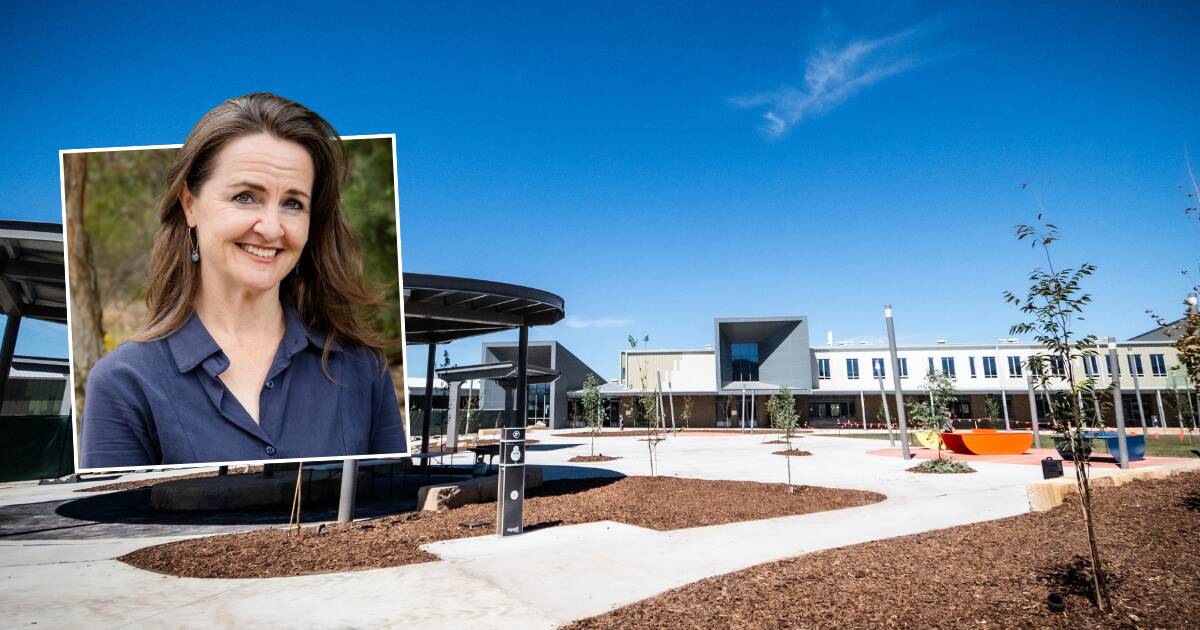
Aunty Agnes Shea High School in Taylor and, inset, researcher Dr Gweneth Leigh. Pictures by Karleen Minney, supplied
A team at the university’s Health Research Institute has revealed its Schoolyard Greenprint which it hopes will set a new standard in schoolyard design
Research fellow Dr Gweneth Leigh said a lot of high school outdoor spaces have not evolved alongside school buildings over the past few decades
“I think right now they are a ‘nice to have’ rather than a ‘must have’ in the way we approach the renovation of existing schools
“I think school buildings can be quite easy to quantify in terms of their benefits and their economic benefits, and our outdoor spaces can be much harder to measure.”
Amid rising rates of youth stress, anxiety and depression, the researchers argue that school outdoor spaces could play a pivotal role in promoting the physical and mental wellbeing of students
“We’ve talked to students from around the country, and many of them engaged with us, saying they’re looking for shade
“They’re looking for quiet. They’re looking for calm, and they’re looking for those comfortable places to sit.”
While boys often gravitated to playing sport during lunchtime, girls often retreated to the toilets during breaks
“The girls expressed more social anxiety around how they were perceived in the schoolyard and they were bored,” Dr Leigh said
“And so the toilets were an area they could engage with their friends, have a quiet chat and feel that they weren’t being watched.”
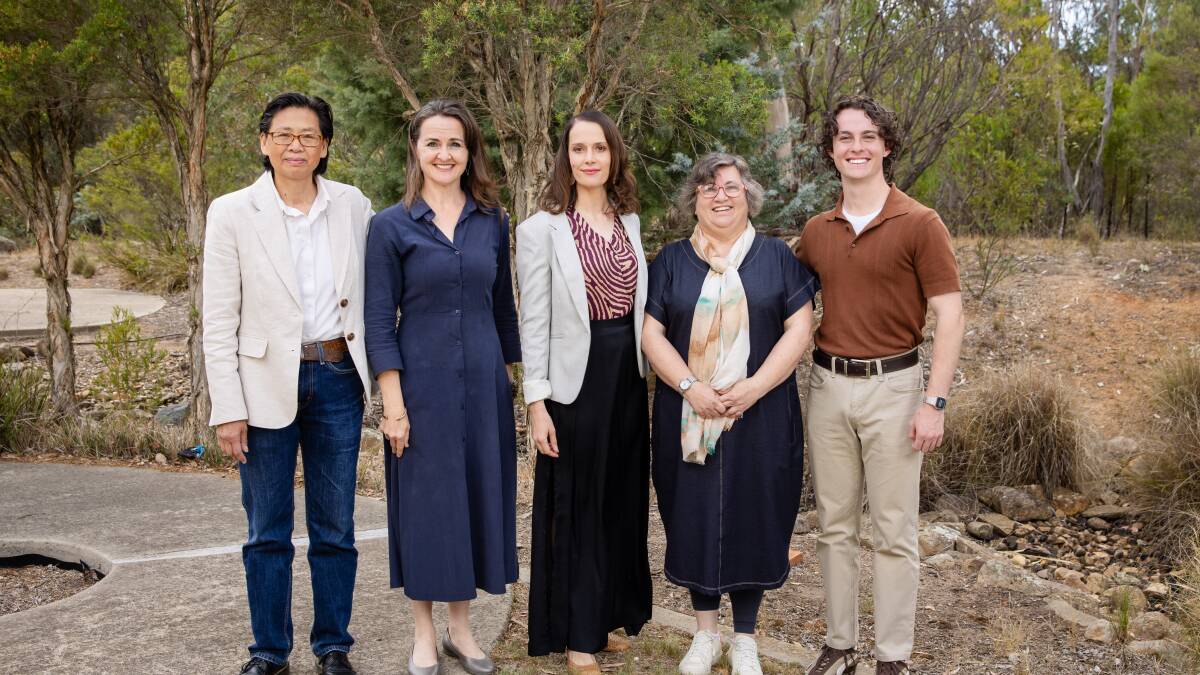
Professor Rachel Davey, Dr Gweneth Leigh, Hannah Richardson, Dr Claire Manning and Finlay Robinson worked on the schoolyard design project. Picture supplied
Senior project co-ordinator Hannah Richardson said the size of schoolyards has been shrinking over the past 50 years as Australian cities continue to densify
A lot of schools lack shade, especially shade provided by trees
“Some of the best schools have a lot of trees, but on average, there are around 56 students per tree in schoolyards,” Ms Richardson said
“That’s a lot of kids to fit under a tree, particularly when a lot of those trees are around the edges of a school, and so that means some of those trees might be out of bounds.”
What students want
Through their research with principals, architects and, most importantly, young people, the team discovered what teenagers really wanted in a schoolyard
Dr Leigh said many students, especially queer and neurodivergent students, wanted smaller, quieter spaces to socialise. But this needed to be balanced with the need to be supervised by teachers
“They tell us things like, ‘I just got a bad test result’, or ‘I feel like I’m going to cry, and I don’t want to be in front of everyone right now.’
“And at the same time, teachers want to be able to see from a staff room or a window nearby to make sure that that kid is still safe.”
Students wanted walking loops to use at break times, as well as a variety of seating options. Picnic tables with face-to-face interaction were too intense for some neurodivergent students who preferred sitting adjacent to friends
Ms Richardson said swings were an often overlooked but very popular option in a high school setting
“Students tell us they want to play, but they don’t want to look childish. So a swing, especially if it takes adult-sized bodies or two bodies at a time, means that students can play, they can relax, they can socialise.”
By making sure there were lots of interesting activities with no hidden spaces, the design of the schoolyard could help prevent bullying and anti-social behaviour.
Aunty Agnes Shea High School
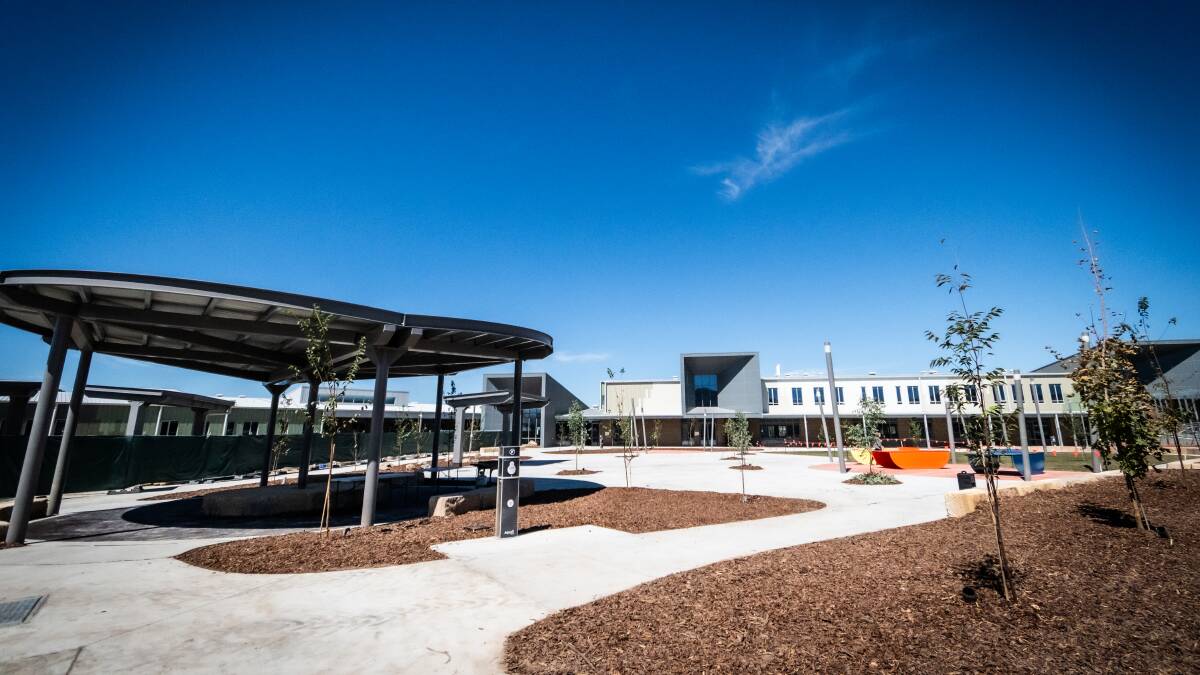
Aunty Agnes Shea High School in Taylor. Picture by Karleen Minney
Canberra’s Aunty Agnes Shea High School was featured as a case study for the project
Ryan Kingston of CK Architecture said the site in Taylor had a 12-metre fall which lent itself to creating a variety of smaller spaces while still allowing staff to easily supervise students
“We’ve had really good feedback from the school so far, even though they’re only 18 months into the process,” Mr Kingston said
The school grounds feature an amphitheatre that can be used for outdoor lessons or for a gathering space during break times
It has a variety of built-in seating, logs and loose furniture. It also has three hardcourts with line markings for basketball, tennis and netball as well as handball courts and table tennis tables. The two buildings and the hardcourts are all connected by covered walkways
Mr Kingston said the school had built-in shade structures and shade sails but eventually the tree canopy will provide ample shade
“We do have a very large number of trees on the site. It has at least 30 per cent tree canopy coverage when the trees are fully grown
“The school is only 18 months old, so the trees are definitely still growing.”
Dr Leigh said she hoped the Schoolyard Greenprint would help schools to improve their outdoor spaces
“Into the future I would love it if students looked back on their outdoor spaces in high school with fond memories as places that they want to go back to and revisit because they had positive experiences there,” she said
“We’re hopeful that through this guide, through the amazing voices that have contributed to it, we can start rethinking and reshaping these outdoor areas in ways that really celebrate the skills and needs of our young people.”
More from Education
PM grilled on AFL team, Garma snub in first Tiwi trip
As private schools grow, experts warn of increasing segregation
No comments
Indian police hospitalise activist on hunger strike
Smashed teeth and an unplanned haircut: mum’s horror at closed childcare centre
Canberra childcare centre banned by regulator after ‘serious medical incident’
‘Left behind’: regions at risk on rush for AI uptake
Newsletters & Alerts
View all

As it happens
Breaking news alert
Be the first to know when news breaks

Advertisement
Ad
Advertisement
Ad
