


The Pros and Cons of a Full-Body MRI
Search
AdvertisementAdvertisement
July 9, 2026/Health Conditions/Cancer Care & Prevention
Is a Full-Body MRI Worth It?
This type of test can spot problems early, but it can come with tradeoffs, like false alarms, high cost and added stress
Image content: This image is available to view online
View image online(https://assets.clevelandclinic.org/transform/6a491a7f-0bd2-46b9-89ed-d2af660f2aa4/MRI-full-body-scan-688386634)
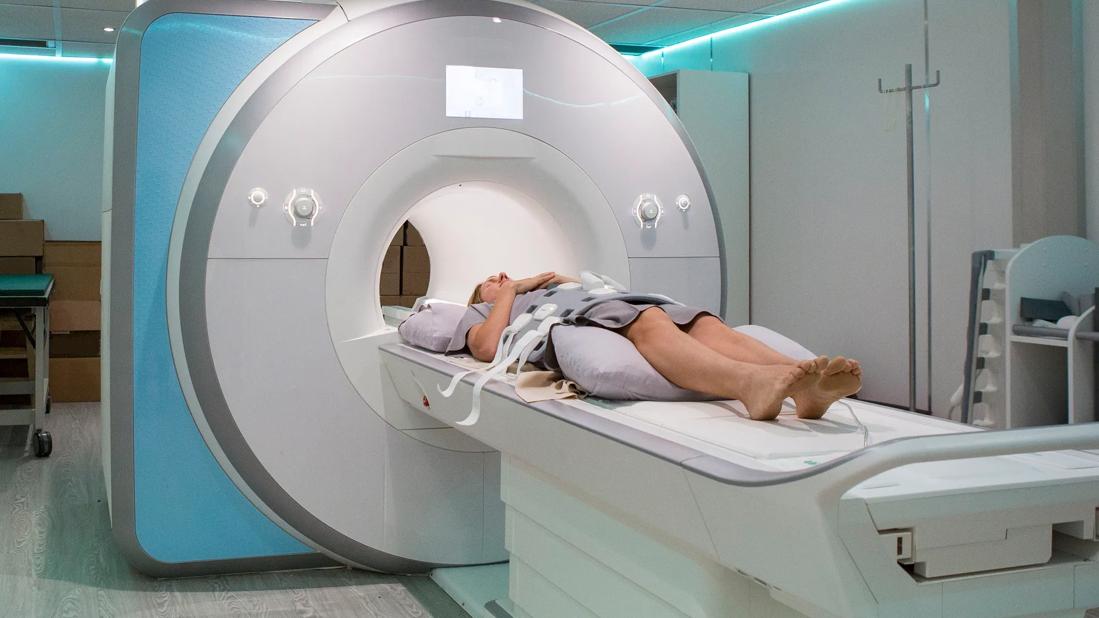
Person lying on MRI table, ready to enter the MRI machine
Full-body MRI scans are getting a lot of attention these days as a way to check your health from head to toe. You might even hear people talk about them as a proactive step for early detection
Cleveland Clinic is a non-profit academic medical center. Advertising on our site helps support our mission. We do not endorse non-Cleveland Clinic products or services.Policy
But are they actually useful, or could they just create unnecessary worry?
Concierge medicine physician Erine Erickson, MD, and neuroradiologist Sarah Stock, MD, explain what these scans can (and can’t) do and how to decide if getting one is right for you
What is a full-body MRI?
MRI, short for “magnetic resonance imaging,” uses strong magnets and radio waves to create detailed pictures of soft tissues inside your body. A full-body MRI looks at multiple areas of your body in one session
“A full-body MRI is a specialized imaging study that scans from the top of your head down to your upper thighs, sometimes all the way to your feet,” Dr. Erickson explains. “Instead of focusing on just one organ or joint, it pieces together multiple regions into a single survey.”
A full-body MRI (aka whole-body MRI or total body MRI) can identify a broad range of diseases and concerns, like:
- Benign and cancerous tumors
- Abnormalities in your bone marrow or lymph nodes
- Irregularities of major blood vessels
- Conditions such as fatty liver, gallstones and kidney cysts
- Brain diseases, like stroke or excess fluid around the brain
- Musculoskeletal issues, like disk disease or joint problems
If you’re getting a full-body MRI, expect your entire appointment to take about one to one-and-a-half hours
Advertisement
Pros of full-body MRI
There are a few reasons why you might consider a full-body MRI. A healthcare provider can talk you through each of them so you can get a better sense of how this imaging may benefit you
It may detect problems early
One of the biggest benefits of a full-body MRI is that it may find conditions before they cause symptoms, which may allow for earlier treatment
“This type of image has the potential to detect disease in an earlier and possibly more treatable stage,” Dr. Stock says. “It may detect cancer before it spreads, an aneurysm before it bleeds or a narrowed artery before it causes a stroke.”
It offers a comprehensive view
Full-body MRI isn’t currently recommended as a routine screening test for most people. But if you’re at higher risk for certain conditions, it can be a helpful surveillance tool
“It’s most useful in select high-risk groups, like with strong cancer syndromes or family histories,” Dr. Erickson says
Your healthcare provider may recommend a full-body MRI if you have a hereditary condition that predisposes you to developing cancer, like:
- Li-Fraumeni syndrome
- Constitutional mismatch repair deficiency
- Von Hippel-Lindau disease
- Neurofibromatosis type 1
It’s radiation-free
Another major benefit of full-body MRI is that, unlike a whole-body CT scan, it doesn’t involve radiation
The results can bring you peace of mind
If you’ve been worried about developing a particular condition, the results of your full-body MRI may help you feel like you can breathe a sigh of relief
“For certain conditions, including some cancers, a normal whole-body MRI can be very reassuring,” Dr. Erickson notes. “Still, it’s important to know that this type of imaging doesn’t rule out every disease, and very small or early findings may not appear on MRI.”
Cons of full-body MRI
The goal of full-body MRI is early detection. But that broad approach also comes with some important limitations — ones that, again, should be discussed with a healthcare provider before you sign up
Dr. Erickson and Dr. Stock explain some of the potential downsides
There’s a potential for overdiagnosis
A full-body MRI may reveal findings that, simply put, you don’t really need to know about
“There’s a potential for ‘overdiagnosis,’ or the diagnosis of a condition that would not have gone on to cause significant symptoms or death,” Dr. Stock says. “This is a growing issue in medicine as a whole — a side effect of advances in early detection.”
Research shows that about 95% of people who undergo a full-body MRI will have at least one abnormal finding. But more than 90% of these are harmless cysts, nodules or other changes that don’t affect overall health.
Advertisement
“That means many people go through extra testing, anxiety and sometimes even biopsies for results that turn out to be harmless,” Dr. Erickson adds. “This is where having a physician who knows your health history can help put those findings into context.”
There’s a possibility of false positives
“Occasionally, MRI findings could be a false alarm, so there’s the potential for needing unnecessary procedures afterward,” Dr. Stock cautions
Here’s an example: Full-body MRI includes specialized images to detect prostate cancer. If it finds anything suspicious, you’ll need a follow-up with a urologist. That may lead to blood testing and a biopsy
But inflammation can sometimes lead to false positives — which means you could end up undergoing additional appointments, tests and procedures that you didn’t need
It may not catch everything
No type of imaging is perfect, including full-body MRI. So, there’s a chance of false negatives, too
“Some cancers and other diseases aren’t reliably detected on MRI,” Dr. Erickson explains. “A normal scan doesn’t guarantee perfect health.”
A whole-body MRI isn’t a replacement for regular appointments with your healthcare providers either. Even if your results are normal, you’ll need to keep up with recommended screenings and exams, like:
Advertisement
- Annual physical exams
- Annual well-woman exams
- Mammograms
- Colonoscopies
It can cause unnecessary worry
Findings from a full-body MRI can take an emotional toll, even when they’re minor
“Not all ‘abnormalities’ detected by whole-body MRI are serious,” Dr. Stock reiterates. “But learning about them can still be stressful.”
Some people go in hoping for reassurance but leave with new uncertainties and follow-up appointments
They’re not as focused as regular imaging
Full-body MRI screening isn’t as detailed as focused imaging of an individual joint or organ, Dr. Stock clarifies
“If your provider recommends an imaging test for your symptoms, a tailored exam can often provide more information about the problem than a full-body exam,” she says
Focused diagnostic exams are also more likely to be covered by insurance than a full-body MRI
It’s not right for everyone
Full-body MRI isn’t recommended as a routine screening test for everyone. Avoid it if you have:
- Cancer: “It’s not intended for people undergoing surveillance for known cancer,” Dr. Stock states. “Your oncologist may have specific surveillance recommendations that may involve other types of exams or a combination.”
- Other significant systemic disease: If you have another type of chronic condition, consult with your healthcare provider before having a full-body MRI.
- Claustrophobia: MRI is lengthy and loud, and it may be especially difficult for people who have a fear of small, tight spaces.
- Implants or certain metal foreign bodies: People with some types of pacemakers or older clips or stimulators shouldn’t undergo whole-body MRIs.
Advertisement
“Even for otherwise healthy people without specific risk factors, in some cases, the downsides may outweigh the benefits,” Dr. Erickson cautions. “Whether it adds value depends on your risk profile, family history and health goals.”
These factors are best weighed with a doctor who knows your health history
It’s expensive
Health insurance companies rarely cover full-body MRIs in healthy people who don’t have specific risk factors. That makes it an out-of-pocket medical expense, which can run $2,500 or more
Is a full-body MRI worthwhile?
Ultimately, we can’t tell you whether a full-body MRI is “worth it” or not. That’s something you have to decide for yourself — hopefully, in partnership with your healthcare provider
The answer depends largely on your personal risk and what you hope to gain. A full-body MRI may be helpful if you:
- Have a strong family history of certain diseases
- Have a known genetic cancer syndrome
- Are working with a physician who recommends it as part of a broader plan
“Full-body MRI can be a powerful tool in carefully chosen circumstances, but it’s not a shortcut to perfect health,” Dr. Erickson reiterates. “Partner with your physician — especially one who follows you closely and understands your health history, family background and personal goals — to decide whether it’s right for you.”
Better health starts here
Sign up for our Health Essentials emails for expert guidance on nutrition, fitness, sleep, skin care and more.
Example emailSign up
Sign upExample email
Learn more about our editorial process
Health Library
MRI (Magnetic Resonance Imaging)
What is an MRI?
Test Details
Results and Follow-Up
Health Library
MRI (Magnetic Resonance Imaging)
What is an MRI?
Test Details
Results and Follow-Up
Advertisement
Related Articles

March 19, 2025/Orthopaedics
MRI vs. Ultrasound: Which Do You Need?
https://health.clevelandclinic.org/mri-vs-ultrasound
While an ultrasound shows your muscles and tendons, an MRI also shows your joint cartilage, bones and heart chambers

June 23, 2021/Heart Health
Are MRI Scans Safe If You Have a Pacemaker or Implanted Device?
https://health.clevelandclinic.org/are-mri-scans-safe-if-you-have-a-pacemaker-or-implanted-device
What to know about cardiac implants and imaging tests
October 27, 2025/Primary Care
CT Scan vs. MRI: How They Work and What They Show
https://health.clevelandclinic.org/ct-scan-vs-mri
CTs and MRIs use different technologies to show different things — neither is necessarily ‘better’ than the other

August 4, 2025/Primary Care
Concierge Medicine: What Are the Pros and Cons?
https://health.clevelandclinic.org/concierge-medicine
The ‘membership medicine’ model offers same-day appointments and increased doctor availability — for a fee

July 6, 2026/Skin Care & Beauty
Why Do Some Men Lose Their Hair?
https://health.clevelandclinic.org/why-do-men-go-bald-and-is-there-anything-you-can-really-do-about-it
Genetics, hormones and aging are usually responsible, but treatments can help slow hair loss and even encourage regrowth

July 2, 2026/Eye Care
How Eye Injections Work for Geographic Atrophy
https://health.clevelandclinic.org/eye-injections-for-geographic-atrophy
Izervay and Syfovre are long-term medications that can slow down the disease

July 2, 2026/Orthopaedics
What Are Toe Separators? And Will They Help?
https://health.clevelandclinic.org/benefits-of-toe-separators-and-spacers
Toe separators can help create space between crowded toes, but they’re not a permanent fix

July 2, 2026/Skin Care & Beauty
Unhealthy Glow: The Dangers of Tanning Beds
https://health.clevelandclinic.org/tanning-bed-dangers
UVA rays from tanning beds increase your risk of skin cancer, wrinkles and eye damage
Trending Topics

Nutrition
Foods To Eat (and Limit) on a Diabetes Diet
https://health.clevelandclinic.org/diabetic-diet
Fill your plate with lean proteins, non-starchy vegetables and complex carbohydrates

Skin Care & Beauty
‘Chicken Skin’: How To Get Rid of Bumps on Your Arms
https://health.clevelandclinic.org/what-are-those-bumps-on-your-arms-and-how-can-you-get-rid-of-them
With time and patience and trial and error, you may be able to find relief from keratosis pilaris (KP) symptoms

Children’s Health
How (and Why) To Help Your Child Stop Sucking Their Thumb
https://health.clevelandclinic.org/thumb-sucking
Thumb sucking is a normal part of early development, but over time, it can affect teeth, speech and habits
Health Categories To Explore
Brain & Nervous System
Children’s Health
Exercise & Fitness
Heart Health
Men’s Health
Mental Health
Nutrition
Orthopaedics
Primary Care
Skin Care & Beauty
Wellness
Women’s Health
Other Popular Categories
Aging WellAllergiesCancer Care & PreventionChronic PainCold, Flu & Respiratory IllnessesDiabetes & EndocrinologyDigestiveEar, Nose & ThroatEye CareInfectious DiseaseLungOral HealthParentingPregnancy & ChildbirthRecipesRheumatology & ImmunologySenior HealthSex & RelationshipsSleepUrinary & Kidney HealthWeight Loss
Ad
Rendered: Thu Jul 09 2026 09:05:32 GMT+0000 (Coordinated Universal Time)
