


Key lawmaker wants CT to explore partnership to manufacture weight-loss drugs
Connecticut Public Radio |
By
Maysoon Khan
Published July 15, 2026 at 5:17 PM EDT
Michael Siluk
/
Universal Images Group / Getty Images
A key lawmaker wants Connecticut to explore manufacturing generic weight-loss drugs despite Democratic Gov. Ned Lamont’s administration backing away from the idea
Lamont last year signed a wide-ranging drug affordability bill into law. One section requires the Department of Social Services to petition the U.S. Department of Health and Human Services for cheaper GLP-1 drugs. Federal approval would allow Connecticut to partner with a generic drug maker to bring down costs
But Cathryn Vaulman, a spokesperson for Lamont, told Connecticut Public this week that the state is no longer moving forward with the plan. Shifts in the GLP-1 market since Lamont signed the legislation were an important factor in the decision, she said
“The introduction of oral pill options, federal pricing deals with manufacturers, and the launch of direct-to-consumer platforms have made these medications increasingly affordable for Connecticut residents—an outcome that was the ultimate intent of this bill,” Vaulman said in a written statement
GLP-1s, short for glucagon-like peptide-1 receptor agonists, are prescription drugs used for weight loss and treatment of diabetes and other medical conditions. They’ve become increasingly popular, and they can be expensive
The law is intended to alleLP-1s cost the state $89.2 million in fiscal year 2025, after factoring in rebates
State Sen. Matt Lesser, a Democrat who championed the legislation, said he’s optimistic the state will file a petition eventually
“This is still a powerful, important tool to lowering drug costs and one that is unique,” said Lesser, who chairs the Human Services Committee. “No other state has asserted this power. And my conversations with the governor’s office have been very clear that the major question is a timing one, not a yes or no,” Lesser said
Tyler Russell
/
Connecticut Public
The state law had required DSS to file its petition within a 30-day window after the legislation was signed. It isn’t clear when the Lamont administration and DSS decided to no longer file a petition
Connecticut Public requested records in April of email communications between DSS and other state agencies related to the implementation of the law
In response, DSS provided emails that span from July 8, 2025 through July 23, 2025. They show no discussion of withdrawing the petition, and instead reveal staff were initially moving forward with it
An email from July 16, 2025 shows DSS General Counsel Matthew S. Antonetti circulating a draft petition to DSS Commissioner Andrea Barton Reeves and other top-ranking agency officials for review
Two days later, Claudio W. Gualtieri, a senior policy advisor in the Office of Policy and Management, emailed staff at other agencies to book a meeting about the petition, including Anne Kleza, legislative and policy director in the governor’s office
“Given the delicate conversations and collaboration needed across stakeholders, I think Anne previously signaled a few additional steps that need to happen before any letter can be submitted,” Gualtieri wrote. “Those include: a meeting with Sen. Lesser, the main proponent, feedback from the industry and consumer advocates. Ultimately, the Governor will also need to be briefed and approve of the letter.”
Emails from July 23 show chatter of figuring out a time to schedule the meeting, and then nothing after that
Nathan Tinker, CEO of the Connecticut Pharmacists Association, said he anticipated the plan would face headwinds, given the difficulty other states have faced exploring drug partnerships
“I am not surprised that Connecticut would back off of this, because I’m sure that if they had any conversations with those original manufacturers, they weren’t very pleased about that plan and probably not especially excited about helping to support that,” Tinker said
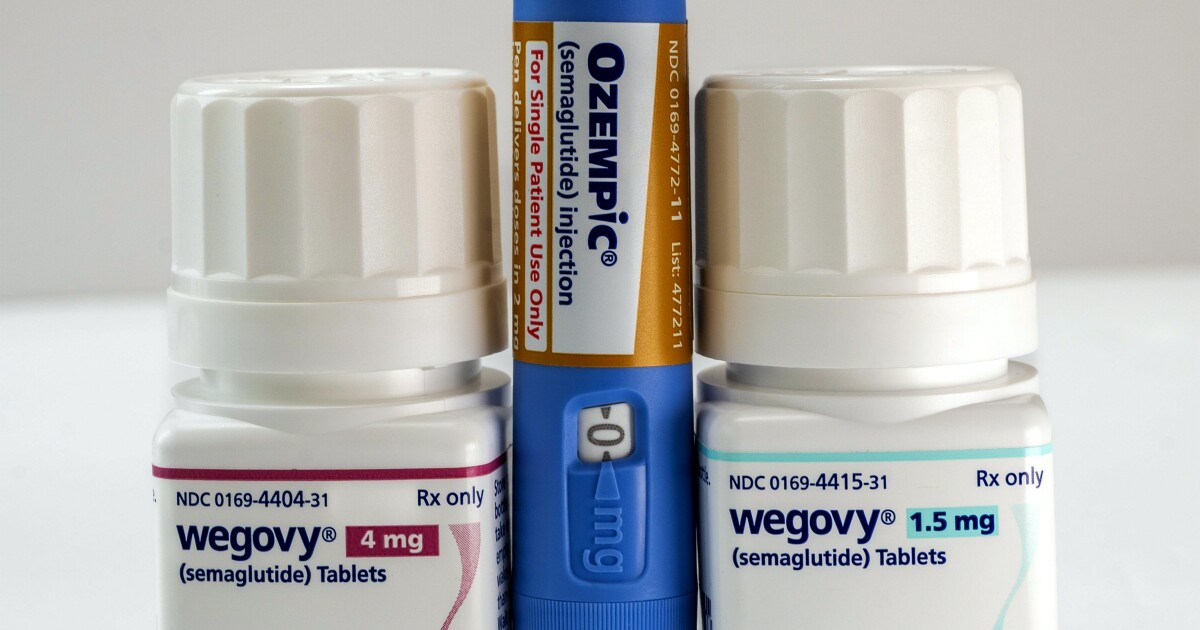
Pharmaceutical company Novo Nordisk, the maker of the popular weight-loss drugs Wegovy and Ozempic, spent $95,715 lobbying the governor’s office, DSS, OPM and other state agencies on pharmaceutical issues in 2025 to 2026, according to public lobbying reports. The records don’t describe whether lobbying activity was specifically focused on GLP-1s
Novo Nordisk declined to comment on that lobbying activity
Another pharmaceutical company, Eli Lilly and Co., which created weight loss treatment Zepbound and diabetes drug Mounjaro, spent about $119,579 lobbying the offices of the governor, lieutenant governor and state comptroller on pharmaceutical issues during that same period
Eli Lilly did not respond to requests for comment
DSS spokesperson Christine Stuart told Connecticut Public in a statement that although the provision was well-intentioned, it sought to have the agency advocate for a potential expansion of federal law that may be beyond the law’s envisioned intent
“Both DSS and the Office of the Governor were transparent about the challenges and realistic about the likelihood of the petition’s success,” Stuart said. “DSS was keenly aware that its limited rechallenging federal landscape as a result of HR 1.”
Cost and access to necessary pharmaceuticals, including GLP-1 medications, remain significant issues for DSS
She said the agency will explore alternative options to make the drugs more accessible to members of Connecticut’s Medicaid program
