



An ecommerce boom is fuelling the sports nutrition sector in Asia Pacific, with multiple categories – including protein powder and ready-to-drink products – seeing healthy growth across the Asia Pacific region
According to data analytics firm Euromonitor, the share of sports nutrition sales made through e-commerce rose from 46% in 2020 to 56% in 2025, representing the largest increase among all retail channels
“While South Korea and China are the largest e-commerce markets, what is interesting to note is that India has seen the largest increase from 30–67% in Asia Pacific – this accelerates the growing market for sports nutrition,” said the firm’s Asia Pacific Insight Manager for Health and Beverage, Nathanael Lim
Lim was speaking at our Growth Asia Summit 2026, which took place from 8 to 10 July at the Marina Bay Sands
The evolution of distribution channels for sports nutrition, Asia Pacific, 2020–2025
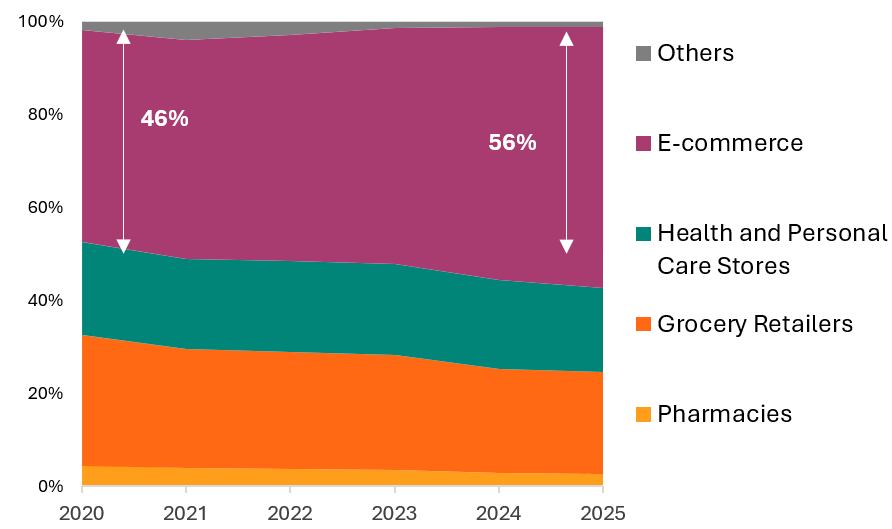
“Beyond lifestyle trends, it is important to understand the role that e-commerce has played in driving the category. Across Asia-Pacific, the share of sports nutrition sales through e-commerce has increased by 10%, highlighting the growing availability of and convenience in purchasing these products online,” added Lim
Euromonitor’s research data showed that multiple categories – sports protein RTD, sports protein powder, sports non-protein products – display healthy growth
This is largely due to the spread of fitness and wellness trends in emerging markets such as South Korea, China, India and the Philippines
The rise of gym culture is propelling sports nutrition across the region
“We estimate that the sports nutrition market will reach US$3.7bn in 2025, having grown at an 8% CAGR between 2020 and 2025,” Lim said
“The majority of that growth has come from protein powders. However, one of the fastest-growing categories is ready-to-drink (RTD) sports protein, particularly in South Korea. Urban density and a growing gym culture among women are driving demand for protein RTDs, which is growing by 24%
He added that the drivers of sports nutrition are different in emerging markets. In countries such as India and the Philippines, protein bars and powders continue to gain traction as fitness and wellness trends spread more widely. These categories are growing by 21% and 15%, respectively
Distribution strategies are also evolving. In the Philippines, for example sports nutrition products are sold inside gyms. This appeals to busy urban professionals by offering greater convenience
Partnerships linked with emerging sports such as padel – a fast-paced racket sport that blends tennis and squash – are also helping to drive the category. Influencers and coaches help build trust and authentic engagement, allowing sports nutrition brands to associate themselves with elite performance
Importantly, these developments have led people to associate protein with prevention, immunity and overall wellbeing
Demand has increased not only because more consumers are pursuing fitness and wellness lifestyles, but also because of the growing adoption of GLP-1 medications, which has further boosted interest in protein consumption
“Beyond sports performance, protein is now linked to metabolic health, energy, immunity and preventive health. In many parts of the world, consumers increasingly view adequate protein intake as an important part of maintaining long-term health. The experience of COVID-19 also reinforced the perception that insufficient protein intake may be linked to greater vulnerability, and that association is unlikely to disappear anytime soon,” said Lim
“In the protein supplements category, India stands out because of its high rates of protein deficiency, coupled with a relatively large vegetarian and vegan population. As a result, protein supplements are growing and this demand is spilling over into the sports nutrition category.”
India’s The Whole Truth, for example, promotes the message that a normal diet alone is often insufficient to achieve optimal health, positioning protein supplementation as one solution
The brand is known for clean-label snacks and offers sports nutrition products such as whey protein powders and high-protein bars for fitness and recovery
“The market has responded well to this approach. According to our e-commerce tracking system, The Whole Truth recorded a sustained 88% growth rate when we last reviewed its performance, making it one of the strongest-performing local brands,” said Lim
Beyond India, the firm is also seeing the rapid rise of ready-to-drink protein products in South Korea. The country ranks sixth globally in per capita consumption, supported by an extensive convenience store network. Around 40% of South Korean consumers say they prefer portable sports nutrition products
Products such as Namyang Dairy’s Take Fit Monster and Orion’s Dr. You PRO provide high levels of protein in convenient drinkable formats, appealing to both fitness enthusiasts and general health-conscious consumers. Even convenience store chains such as CU have entered the market with their own protein shake ranges
The expanding role of protein has also increased interest in complementary sports nutrition ingredients
Most significantly changed sector, by country, by category, 2024–2025
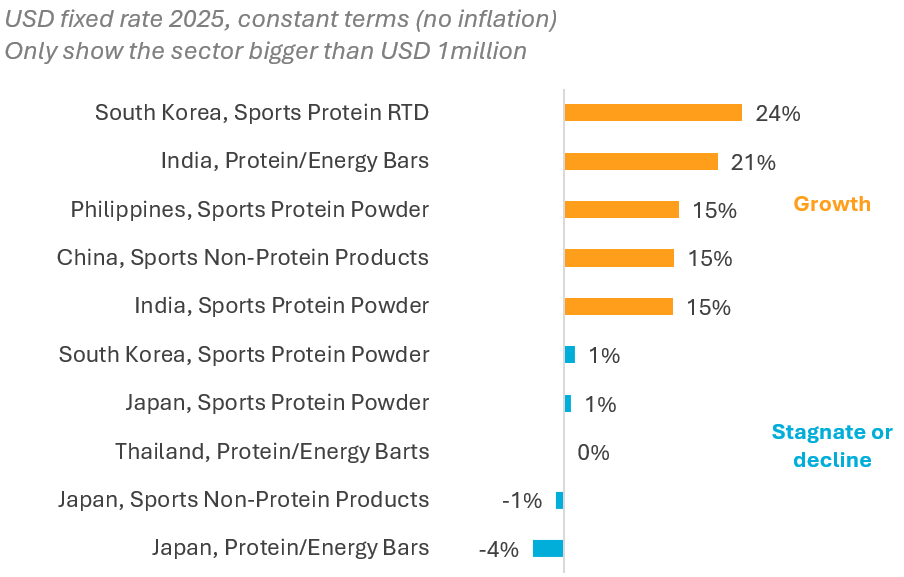
Non-protein sports nutrition is seeing growth as well. In China, for example, sports nutrition growth is fuelled by the non-protein category
“Non-protein sports ingredients include branched-chain amino acids (BCAAs), which are also growing strongly in Japan and South Korea, while creatine is experiencing strong growth in India and Japan,” said Lim
“Ingredients such as BCAAs and creatine remain popular because of their association with improved muscle recovery, strength and athletic performance.”
However, greater consumer awareness has also led to increased scrutiny of potential side effects. For example, BCAAs have prompted discussion over their possible effects on kidney health
“Despite these concerns, the market continues to evolve as consumers become more knowledgeable and selective. As demand increases and product quality improves, sports nutrition is likely to become an even more clearly defined and competitive segment within the wider health and nutrition industry,” Lim said
As consumers become more informed about ingredient functionality and increasingly expect products to contain scientifically supported ingredients, FoodNavigator will explore these trends further in an accompanying analysis of the future of sports nutrition
