


News10 August 2026
Largest at-home dialysis study evaluates training methods to reduce infections
Renal disease
print
Share:
Demand for dialysis in Australia will increase by 42% by 2030. Clinicians at the University of Queensland asked whether standardised training programs could reduce infection risk of Peritoneal Dialysis (PD) and improve quality-of-life for patients.
Authored byBecca Whitehead
Rebecca, 43, was born with infant nephrotic syndrome (NS). Her parents were told she wouldn’t live beyond one year. She began dialysis around 4 years of age, eventually receiving a kidney transplant at 5
Rebecca no longer needed dialysis, but there remained complications.
A few years ago, Rebecca developed cancer (cancer risk is higher for transplant recipients). She had to stay in hospital for six months during chemotherapy. She’s now in remission, but her new kidney is failing.
While awaiting another transplant, she’s begun Peritoneal Dialysis (PD).
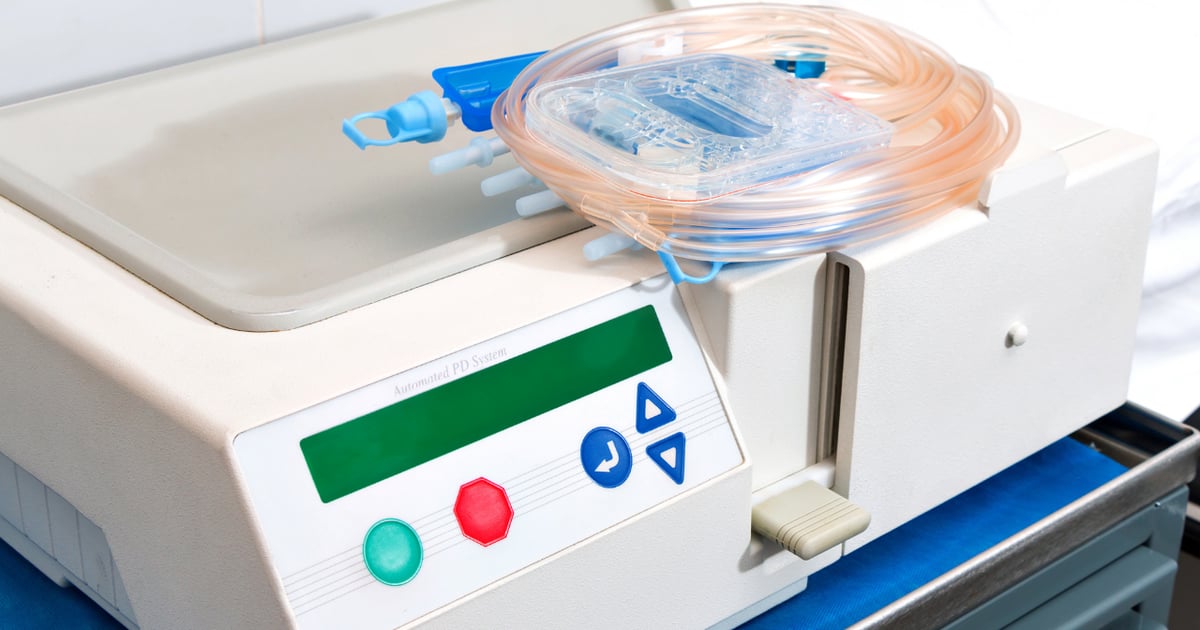
Peritoneal dialysis uses the peritoneal membrane in the abdomen to filter the blood of toxins,can perform the treatment at home
Dialysis affects Rebecca’s quality of life in many ways, but she likes having PD as an option
“Peritoneal is the only way to go. I just get the bag set up, connect myself, always making sure I clean my hands. And then I just stay connected for 10 hours while I sleep, which is amazing. I find it really safe.”
Haemodialysis, the most common form and
“With haemodialysis, that is time out of your day, whereas PD on the machine, you have your days free.”
Rebecca said her PD training was thorough
“I went in for three weeks every day, with the same staff member. They talked me through what I would be doing. Hygiene is so very important. They have to be very comfortable in you going home and being able to do it as well.”
“In November, it’ll be four years that I’ve been on PD. In that time, I’ve had an infection twice.And I think I got one when I was in the hospital.”
“If this stops working, they have to put a permcath in my neck and do haemodialysis that way. It almost happened this past week. I don’t actually know how it happened.”
Since InSight+ spoke with Rebecca, she has had to return to hospital for another procedure, after a catheter issue. She will now be receiving haemodialysis
Australasian study to reduce dialysis infection
Professor Yeoungjee Cho is a consultant nephrologist from Princess Alexandra Hospital, QLD and Deputy Co-Chair of executive operations secretariat of the Australasian Kidney Trials Network.
Prof. Cho is a co-author of the largest investigator-initiated, randomised controlled study in Australasia aimed at reducing peritoneal dialysis-related infection. The study evaluated TEACH-PD, a standardised training program for teaching peritoneal dialysis, led by nurses.
Prof. Cho said that risk of transfer to haemodialysis is real for those with PD-related infection, such as peritonitis.
“That’s why it’s crucial for us to decrease the burden of PD-related infection,” she said
A growing problem
Worldwide, approximately 11% of patients on dialysis receive peritoneal dialysis (PD).
“At the end of 2024, in Australia alone, there were over 16,000 Australians with kidney failure receiving dialysis,” Prof. Cho said
Deloitte Access Economics estimates kidney disease dialysis demand will grow by 42% between 2021 and 2030, and hospitals are reaching capacity for dialysis
“PD-related infection is the top priority outcome shared by patients, clinicians.”
The team recruited 1,462 patients across 42 PD units across Australia and New Zealand and compared delivering standard standardised training curriculum called Teach-PD
“Patients come to the unit, and nurses are expected to teach them how to do it themselves — whilst being very supported.”
“We’re expecting nurses to be trained teachers, but we’ve never empowered them with the necessary skills.”
“And the patients are expected to learn. But when we did the national survey, many of the units didn’t have a competency assessment.”
“We developed this TEACH-PD based on international guidelines, utilising adult learning principles and extensive collaboration.”
Training is crucial
Infections remain one of the biggest challenges when it comes to PD.
“PD-related infections, like peritonitis, can lead to avoidable hospitalisation, catheter removal, and transitioning to haemodialysis. In some cases, it’s associated with increased risk of death,” Prof. Cho said
“In Australia, most patients receive hospital-based haemodialysis. We only have one patient receiving dialysis per machine. The capacity is limited. Over 50% of haemodialysis units in Australia have a waiting list.”
“With PD, there is no limit.”
“And it gives them their life back. Dialysis is very burdensome. Imagine your life now depends on this treatment.”
“It’s important that we try to improve outcomes for these very people. Home dialysis is a real opportunity to address that.”
“But uptake remains relatively low, because people are concerned that their outcomes may not be as good.”
Complex outcomes
The co-authors believed that implementing a standardised training curriculum would reduce infection rates
“What we found was much more complex. We found a small increase in infection risk. At first glance this is quite disappointing, but actually, it’s very important. For the first time we have been able to show that the training matters,” Prof. Cho said
“When you look at the absolute difference, it equates to something like an extra seven infection episodes for every 100 patients, per year. It’s not a huge difference. But now we need to know how to deliver this better to mitigate that risk going forward.”
“That’s the rest of the work for us for the next 6-12 months: we are coming back to the community with that answer.”
The TEACH-ED study included 48 participants who were of Aboriginal or Torres Strait Islander heritage.
Between July 2021 and June 2023, there were 539,439 hospitalisations of First Nations people for care of chronic kidney disease involving dialysis, corresponding to a rate of 269 hospitalisations per 1,000 population. Dialysis was the leading cause of hospitalisation for First Nations people (42% of hospitalisations)
“Will that engagement translate into increasing peritoneal dialysis? I hope so. Do we still have more work to do? Most definitely. It’s really important that we continue to improve outcomes for these people. Infection is, whilst it’s very important, it’s only one aspect of peritoneal dialysis. The other aspect is what are we doing to make patients’ quality of life better?”
Prof. Cho and the study received funding from the MHMRC
Becca Whitehead is a freelance journalist and health writer. She lives in Naarm and is a regular contributor to the MJA’s InSight+
Loading comments…
Authored byBecca Whitehead
More from this week
Opinions
Neurology10 August 2026
Making sense of the brain’s memory banks
Explainer
Artificial intelligence10 August 2026
When your patient arrives with an AI self-diagnosis
Explainer
General practice10 August 2026
Understanding CPD requirements for doctors: a practical guide
Opinions
Vaccination10 August 2026
All the Way with mRNA?
Opinions
Addiction10 August 2026
Young people are being exposed to gambling too early. Here’s what we can do
You may also like
VIEW MORE
News
Renal disease16 June 2025
Patients at risk in “dialysis crisis”
Opinions
Renal disease11 March 2024
