


Microplastic crisis grips Türkiye’s tourist coasts amid record plastic imports – Türkiye Today
Microplastic crisis grips Türkiye’s tourist coasts amid record plastic imports


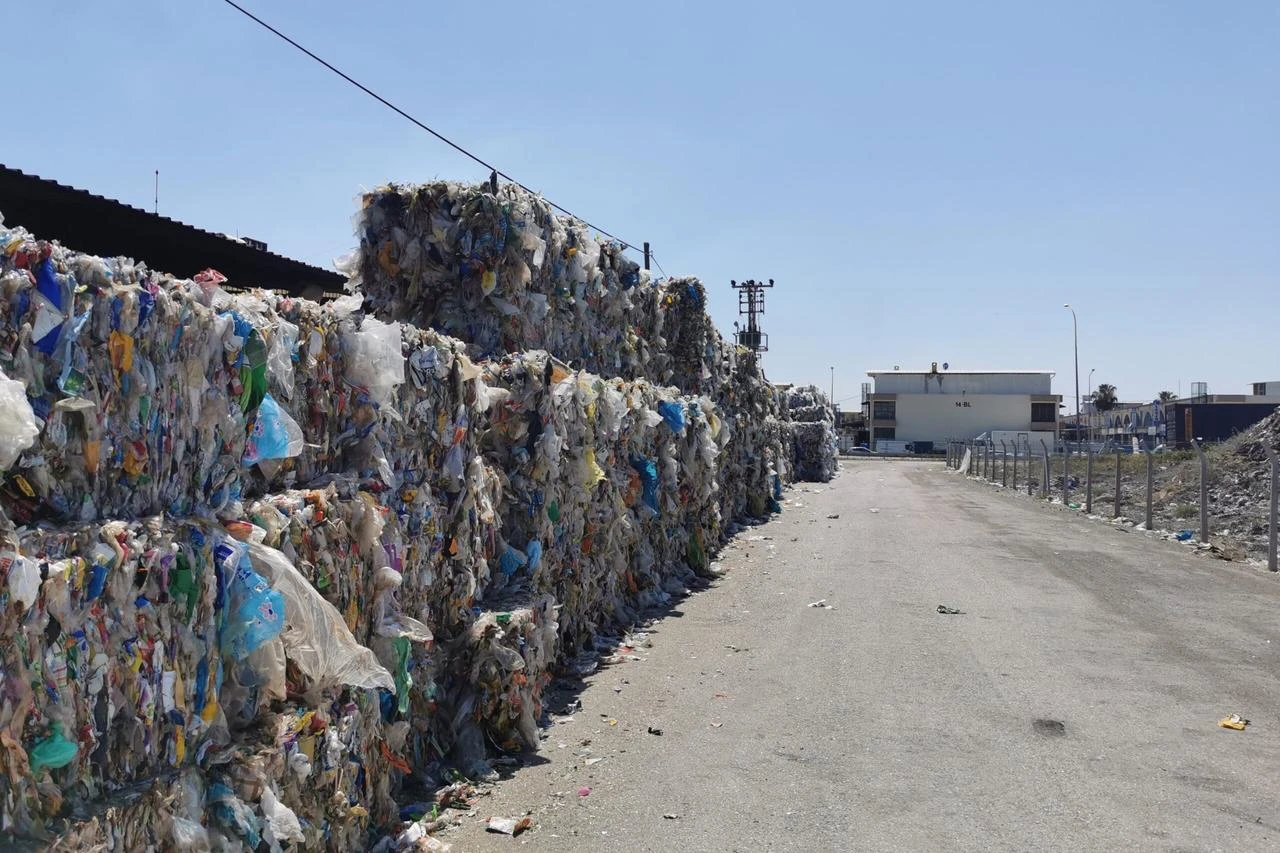
Baled plastic waste is piled at a recycling facility in Türkiye. (Photo via mikroplastik.org)
A microplastic crisis is spreading along Türkiye’s Mediterranean coastline, according to a preliminary assessment by Turkish researchers. Record plastic waste imports are identified as one potential factor behind the pollution, with monthly imports exceeding 80,000 tons in April, the highest level in 10 years
Pollution long observed around Adana and Mersin is now reaching Kemer, Fethiye and Alanya, with eastern Mediterranean currents carrying microplastics westward toward Alanya over weeks or months, the Microplastic Research Group warned in a report
At four stations in Alanya, microplastic concentrations range from 2 to 65 times the highest levels previously reported in scientific literature for Türkiye’s Mediterranean coast, it added
More to Read
WWF report reveals alarming pollution levels in Mediterranean
Lifestyle 1 min read

Türkiye’s plastic waste imports hit decade high
Türkiye imported 698,917 metric tons of plastic waste worth $193.2 million in 2025. Germany was the largest supplier at 126,552 tons, followed by the United Kingdom at 124,915 tons and Belgium at 85,737 tons
Spain supplied 60,351 tons, while the Netherlands, Italy, Poland, Yemen, Romania and Slovenia also ranked among the leading the year
As of April 2026, the volume remained elevated, with Türkiye importing 70,260 tons of plastic waste worth $14 million from countries that had reported figures. Germany remained the largest at 6,264 tons and Spain at 6,073 tons
With figures from several countries still yet to be reported, the actual April import volume is estimated to have exceeded 80,000 tons, reaching the highest level in a decade
Researchers argue that Türkiye’s official recycling capacity is insufficient to handle the volume, with a significant share of imported plastic waste sent to recycling facilities in Adana and Mersin
Column chart shows Türkiye’s top 10 plastic waste suppliers in 2025. (Chart by Türkiye Today)
Heavy rain amplifies recycling pollution
The assessment links the pollution to recycling activity, possible illegal discharges, and unusually heavy rainfall and flooding. Between 59% and 93% of microplastic particles collected at the four Alanya stations showed processing marks associated with recycling facilities
A separate study in Adana found that suspected illegal discharges from recycling facilities increased microplastic concentrations in irrigation channels by up to 132 times, with more than 5.3 billion particles per hour potentially flowing through the three channels examined
Researchers also pointed to exceptionally heavy rainfall as a key factor. The Mediterranean region recorded its highest rainfall levels since records began in the 1960s during the 2025-2026 water year, driving up river flows and runoff
Other potential and weaknesses in urban waste management. However, the researchers identified this year’s exceptional rainfall and flooding as the main factor that intensified the contamination
The assessment calls for tighter wastewater monitoring at recycling facilities, a zero-microplastic leakage requirement, stricter controls on irrigation channels and an end to plastic waste imports
More From Türkiye Today
WWF report reveals alarming pollution levels in Mediterranean
Lifestyle 1 min read

Indonesian officials rescue one of last 400 tigers on Earth
Lifestyle

Kivanc Tatlitug shuts down Instagram account with 5M followers
Lifestyle 1 min read

Turkish actress Duygu Sarisin engaged to Cambridge physicist Mete Atature
Lifestyle 1 min read
