




About our expert: Brian I. Nwannunu, MD, MS, is an orthopedic surgeon with Texas Joint Institute. The medical information in this article is based on an interview with Dr. Nwannunu
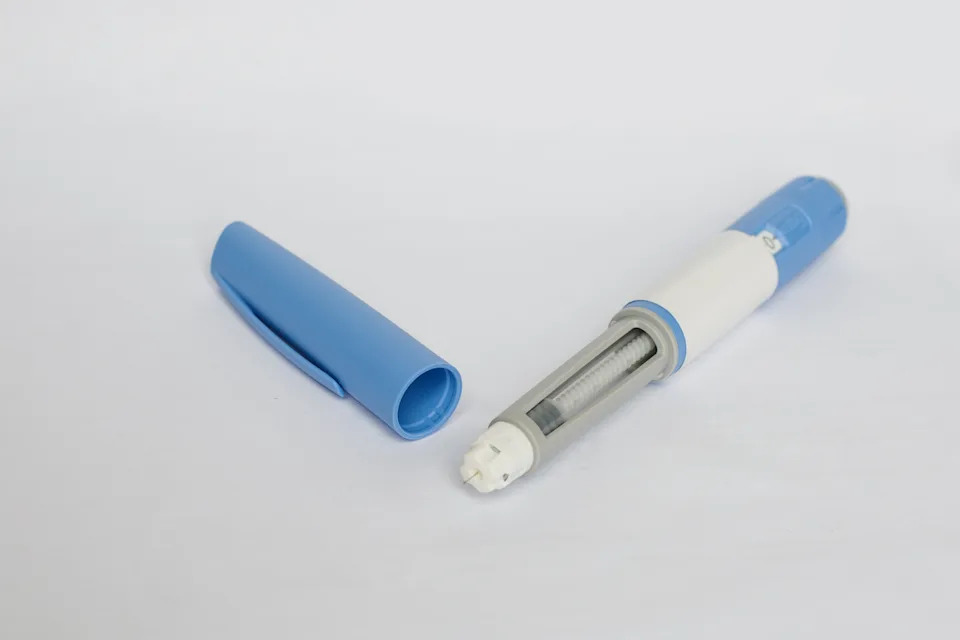
If you’re taking Ozempic, Wegovy, Mounjaro, or another GLP-1 medication, you’re part of one of the fastest-growing health trends of the decade. GLP-1 weight-loss drugs have gone from being used as diabetes treatments to being one of the most widely discussed medical developments in a generation. Millions of Americans are now taking them to shed significant weight. The results, for many, have been remarkable. They’ve enjoyed dramatic weight loss, improved blood sugar, and real cardiovascular benefits.
However, what’s happening to your bones, muscles, and joints while that weight comes off? That’s the question most patients aren’t asking, and orthopedic surgeon Dr. Brian Nwannunu thinks you should get a serious answer
Advertisement
“I think GLP-1 drugs are great medications for the right patient,” Dr. Nwannunu said. However, he’s quick to add that the full picture is more complex than most people realize, and he noted that some of the risks are landing hardest on the people who are least equipped to handle them. Here’s what he wants every GLP-1 patient to know
Your joints are going to love the weight loss, and here’s the science behind it
Let’s start with what’s really remarkable. Excess body weight is brutal on your joints, and the math is startling. Dr. Nwannunu explained, “For every one pound of extra body weight, four times the amount of force is exerted through the knee joint.”
That means if you’re carrying an extra 25 pounds, your knees are absorbing the equivalent of 100 extra pounds of force with every step. So when GLP-1 patients lose 20 or 30 pounds? The relief can be transformative
“The pain relief in their knees can be life-changing, even to the point of preventing them from requiring major surgery like a knee replacement,” he explained
Advertisement
Weight loss is already a standard non-surgical recommendation for knee osteoarthritis. Now, for the right patients, GLP-1 drugs may be one of the most powerful tools orthopedic surgeons have ever seen to get patients there
The muscle loss problem that most patients don’t see coming
Weight loss drugs don’t just help people shed fat. They can also cause muscle loss, and Dr. Nwannunu urges patients to pay close attention. “Weight loss is not just limited to losing excess fat; it also depletes muscle mass,” he said. “Too much muscle loss can affect joints and bone density. For some, that can lead to joint injuries or even fragility fractures.”
Here’s why that matters so much: bone density and muscle mass are deeply connected. The more muscle you have, the denser and stronger your bones tend to be. The reverse is also true. Rapid or significant muscle loss puts your skeletal system at risk in ways that may not show up for years

Who is most at risk for bone and joint problems on Ozempic
Not everyone on a GLP-1 drug faces the same orthopedic risks. Dr. Nwannunu said postmenopausal women and older adults are already at elevated risk for osteoporosis. Add the muscle-depleting effects of a GLP-1 medication on top of that pre-existing vulnerability, and “the combined outcome can be deleterious,” he warned
Advertisement
For patients in these groups, he said protein supplementation and resistance training are essential for protecting bone health while on these medications
Osteoporosis, gout, and bone softening: Long-term risks researchers are now tracking
As GLP-1 prescriptions have surged into the tens of millions, researchers are beginning to track longer-term effects, and some of the early signals are worth watching. In March 2026, The Washington Post reported on new research that links long-term GLP-1 use to increased risks of osteoporosis, gout, and osteomalacia (a softening of the bones).
“Now that the number of patients taking GLP-1 medications have exponentially increased, we are bound to see more and more adverse events,” Dr. Nwannunu said. “It is important for all physicians to adequately counsel these patients and ultimately determine if and/or when the medication needs to be discontinued if these adverse events begin to occur.”
What every GLP-1 patient should actually be doing to protect their bones
So what does Dr. Nwannunu actually tell patients who walk into his office on Ozempic or Wegovy? He zeroes in on two questions immediately:
Advertisement
How much weight are you losing per week?
How many grams of protein are you eating per day?
Tracking protein intake is a bone and joint protection strategy. Adequate protein helps preserve the muscle mass that keeps your skeletal system strong and your joints supported
For exercise, he has a specific recommendation: resistance training with weights. Here’s the science behind why
“Resistance exercises signal a process called mechanotransduction,” Dr. Nwannunu noted. That’s a biological process by which cells convert mechanical stimuli like pressure and stretch into chemical signals that promote bone remodeling and strengthening. In plain English: lifting weights tells your bones to get stronger
Advertisement
That said, he cautions patients to avoid extremely heavy lifting or high-impact activities that could lead to injury, especially while losing weight rapidly

Should you get a bone density scan or start taking supplements?
This is where Dr. Nwannunu pushes back against the instinct to over-medicalize. He doesn’t recommend that everyone on a GLP-1 drug run out for a bone density scan or start loading up on calcium and vitamin D without a clinical reason to do so. They should do so after discussions with their doctor
“Just taking supplements without it being warranted leads to nothing but extremely vitamin-rich urine,” he said. “The body will just excrete anything it doesn’t need and the patient will just flush it down the toilet.”
His practical advice is to make sure your doctor is ordering routine lab work to check for vitamin deficiencies as part of your GLP-1 treatment protocol, and to treat any deficiencies that are identified
What GLP-1 drugs could mean for joint replacement surgery
There’s also emerging data suggesting that GLP-1 users who undergo joint replacement surgery may experience lower infection rates. Dr. Nwannunu said the logic makes sense, even if the evidence isn’t fully there yet
Advertisement
Research has long shown that patients with severe obesity (BMI over 40) and poorly controlled diabetes face significantly higher risks of prosthetic joint infection. Since GLP-1 drugs lower both weight and blood sugar, they may reduce those risk factors. However, Dr. Nwannunu stressed that larger, multi-institution studies are needed before making firm claims

The one thing Dr. Nwannunu is most worried about as GLP-1 use keeps growing
When asked what he’s hoping to see in five to ten years of follow-up data, Dr. Nwannunu is genuinely optimistic. He hopes GLP-1 users will enjoy longer-lasting joint health, delay the need for major orthopedic surgeries, and see fewer complications when surgeries do become necessary
However, he has one significant worry. “I want to caution all patients — either on the GLP-1 medications or considering the medications — to continue to periodically revisit the goals and possible adverse effects with their health care provider,” he said. “I am worried that many patients will adopt a ‘one size fits all’ philosophy to the medications and will inadvertently cause other harm unknowingly.”
Dr. Nwannunu emphasized that GLP-1 drugs are excellent medications for the right patient when they are used thoughtfully and monitored carefully
The bottom line
Ozempic, Mounjaro, and Wegovy can be wonderfully, genuinely life-changing for people who need help managing their weight, and Dr. Nwannunu said he wants patients to feel encouraged by that. However, he’s equally direct about what comes next
Advertisement
“Make sure your doctor is checking your labs regularly,” he warned. “Track your protein intake, get into resistance training, and if you’re a postmenopausal woman or older adult, have an explicit conversation with your provider about protecting your bone density.”
Most importantly, don’t treat these medications as a set-it-and-forget-it solution, Dr. Nwannunu warned. These are medications that require active management. He said your doctor should be your partner in that process every step of the way
More About Our Expert:Brian I. Nwannunu, MD, MS, is an orthopedic surgeon with Texas Joint Institute. He is a member of the American Academy of Orthopedic Surgeons, American Association of Hip and Knee Surgeons, American Medical Association, and National Medical Association
Please note: Robin Raven is a journalist covering health and medicine. All medical information in this article was provided by Brian I. Nwannunu, MD, MS, a board-certified orthopedic surgeon with Texas Joint Institute, during an interview conducted for this story. This article is intended for informational purposes only and does not constitute medical advice, diagnosis, or treatment. Always consult a qualified healthcare provider before making any decisions about your medication or health regimen.
Advertisement
Thank you for reading. I invite you to follow me on Yahoo for more health and wellness reporting
Robin Raven Creator
Robin Raven is a journalist who covers travel, entertainment, health, wellness and more. You can often find her writing songs, flying somewhere she’s never been, reading and listening to Taylor Swift.
Creators are not employed by Yahoo. Views expressed by creators do not reflect the opinions and position of Yahoo.Learn how to become a creator.
