


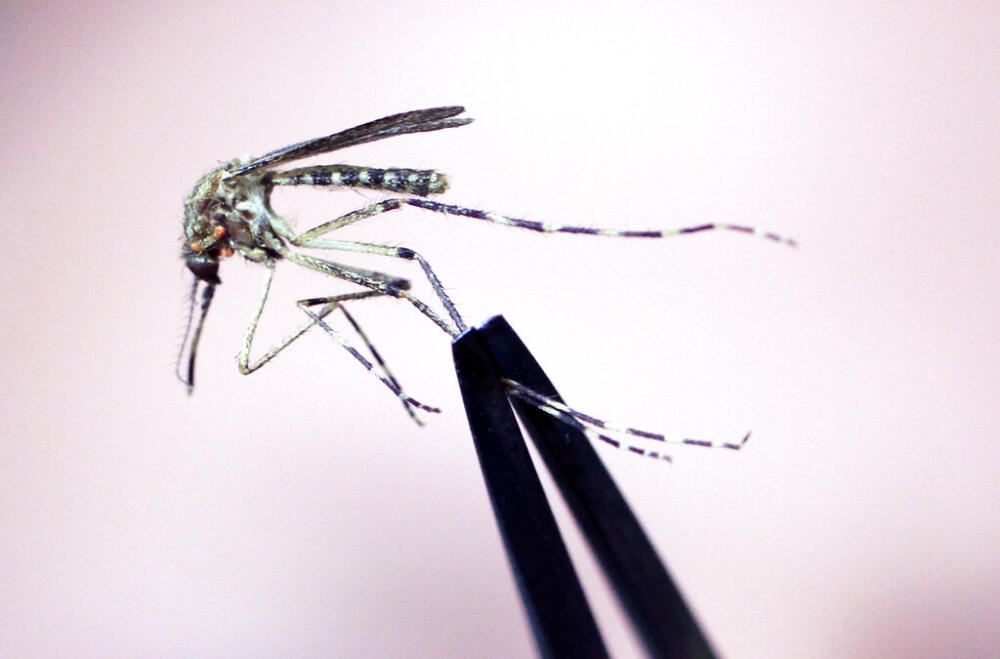
State public health officials said Wednesday they detected Eastern equine encephalitis virus in Plymouth County, marking the first EEE-positive mosquito sample of the season
The sample was collected in Kingston on Monday, the Department of Public Health said. The virus, which is typically transmitted to people through bites from infected mosquitoes, is rare but can result in “serious and potentially fatal disease,” officials said
“The last EEE outbreak in Massachusetts occurred in 2024 and, since then, there have been no human cases of EEE reported in the state,” DPH Commissioner Dr. Robbie Goldstein said. “Today’s finding alerts us to the presence of EEE in Massachusetts this year. While this is late in the season for the first detection of EEE in mosquitoes, when combined with all the evidence of West Nile virus in mosquitoes in Massachusetts, we are asking everyone in Massachusetts to take the necessary precautions to prevent mosquito bites.”
Last summer, the first detection of EEE in Massachusetts was on July 21. No human or animal cases of EEE have been detected yet this year, DPH said
“There were 12 human cases of EEE in Massachusetts in 2019 with six deaths; in 2020, there were five human cases and one death. In 2024, there were four human cases with one death. There were no human cases of EEE in Massachusetts in 2021, 2022, 2023, or 2025,” says a release from the department
DPH last month announced it had identified the first case of West Nile virus detected in mosquitoes in Berkshire County, which is also spread through mosquito bites. Most people infected with WNV don’t experience symptoms, though some might have fever and flu-like illness. More severe illnesses can happen but are rare, officials said
People should use bug spray, consider rescheduling outdoor activities during peak mosquito hours, and wear clothing to minimize the chance of mosquito bites, DPH recommends. People can also mosquito-proof their homes by draining standing water, and installing or repairing screens
“EEE activity in Massachusetts tends to occur in outbreak cycles,” said State Epidemiologist Dr. Catherine Brown. “When EEE is found in mosquitoes later in the season like this, there is less opportunity for the risk to increase to very high levels. But anytime EEE virus is in mosquitoes, it can be spread to people.”
