


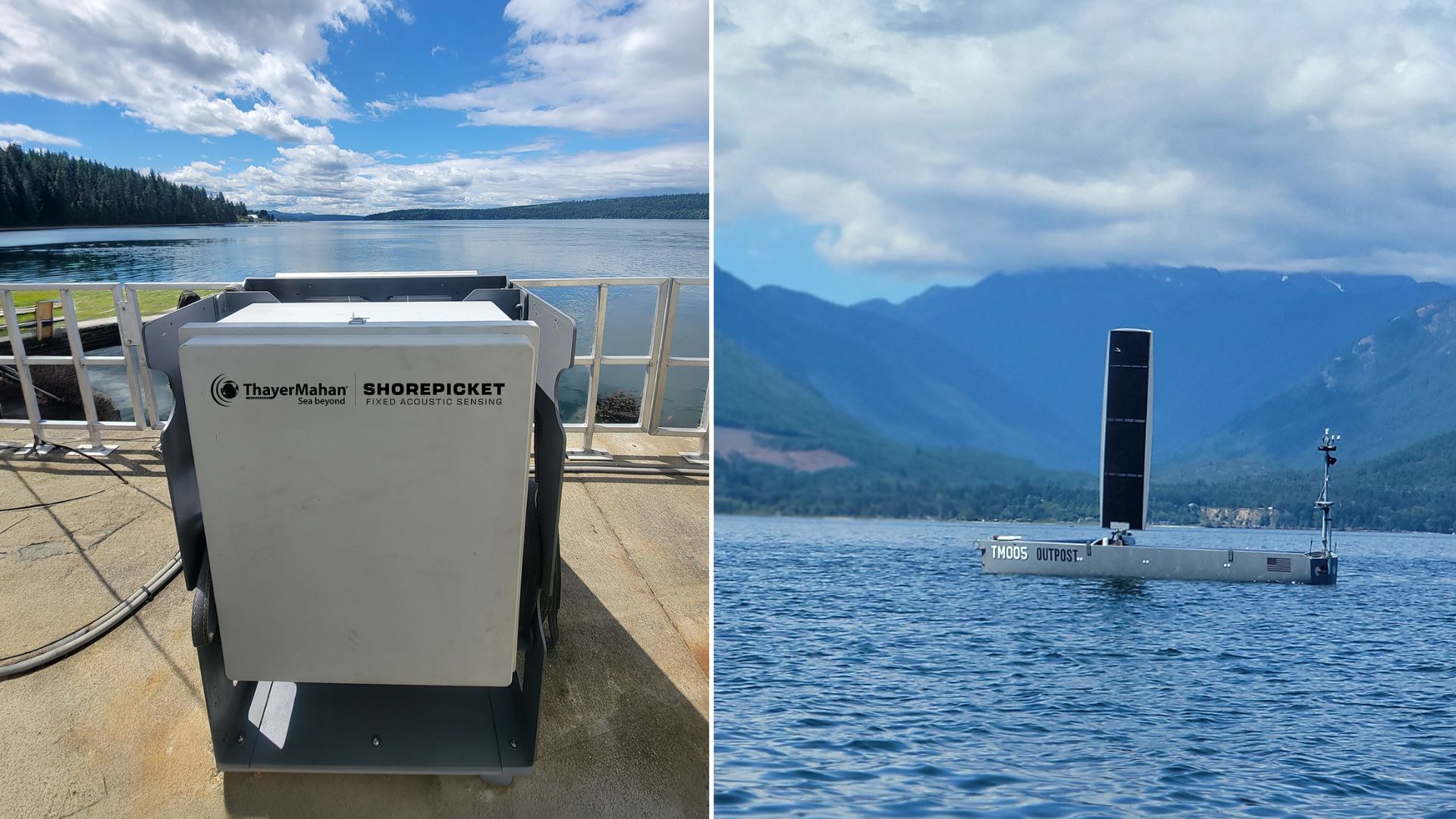
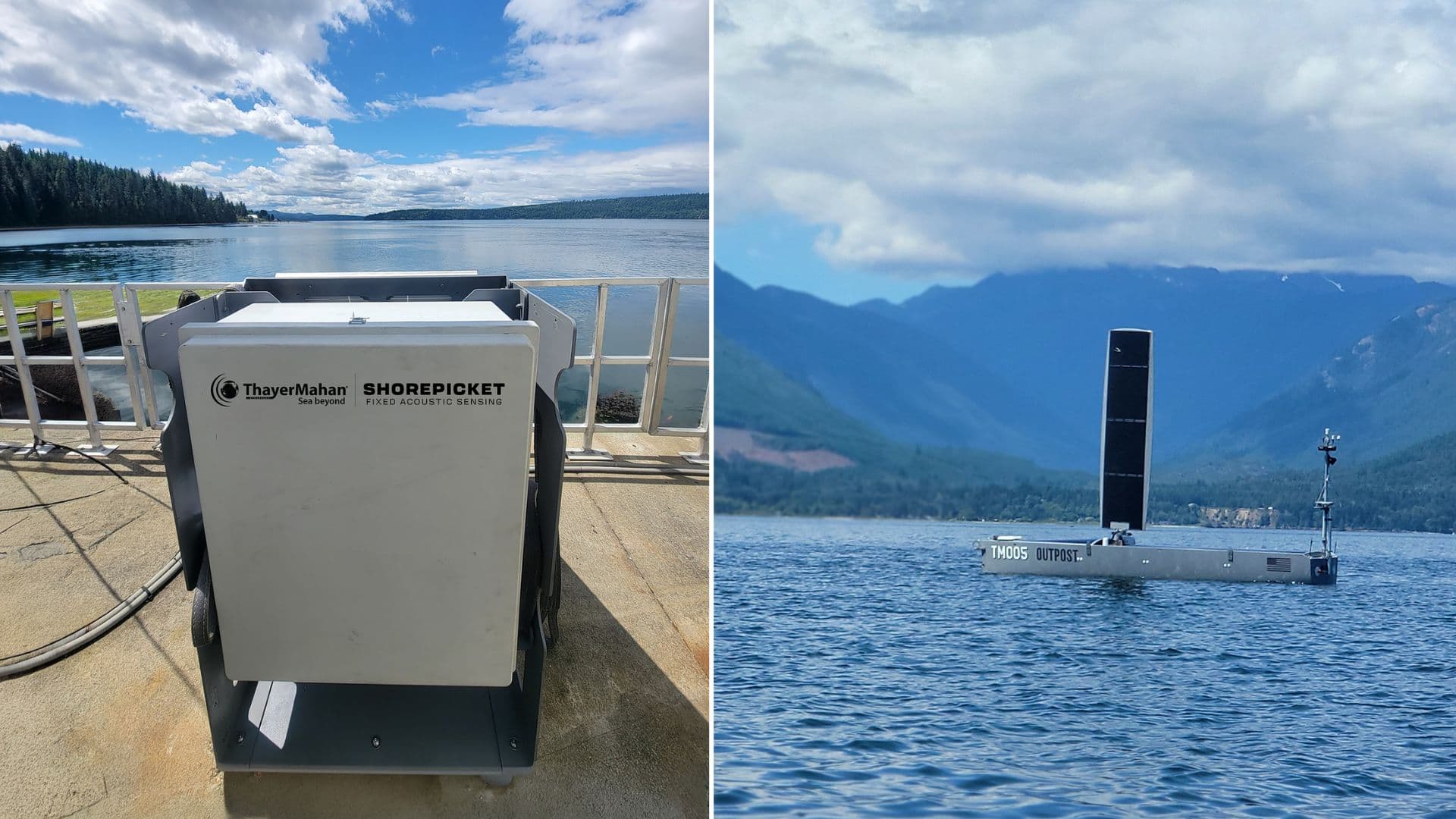
A U.S. Navy exercise focused on undersea autonomy has provided another demonstration of how distributed acoustic sensors could help detect increasingly capable unmanned underwater vehicles (UUVs) around ports and other critical maritime areas
ThayerMahan said its ShorePicket and Outpost sensing systems detected, classified, localized, and tracked every class of UUV used during Exercise Lanternfish 26, ranging from a vehicle about six inches in diameter to extra-large unmanned underwater vehicles (XLUUVs)
The claim comes from the company rather than the Navy, but it is significant because Lanternfish was designed specifically to bring together emerging undersea technologies and evaluate how they work in realistic operational environments.
The exercise involved U.S., British and Australian personnel and industry partners, with demonstrations taking place across several locations in the United States. The U.S. Navy says Lanternfish involved 50 different technologies from 26 industry partners, with the broader goal of improving interoperability under AUKUS Pillar II
Listening for underwater drones
Unlike aircraft, which can often be detected using radar, underwater vehicles operate in an environment where radio waves travel poorly. That makes acoustic sensing one of the most important tools for finding objects beneath the surface
ThayerMahan’s systems use passive acoustic arrays to listen for underwater contacts rather than relying on the target to announce its presence. Its Outpost system, for example, uses a large-aperture towed sonar array deployed from an unmanned surface vessel. The company says the system is designed for long-duration surveillance and can operate for more than 90 days
More from Military
See All
MilitaryUS Army funds autonomous logistics vehicle TALUS to resupply troops in contested areas
MilitaryBoeing ramps up Mach 15 space interceptor hardware output under seven-year agreement
MilitaryChina may have quietly supercharged its new naval frigate with 50% more missiles
MilitaryNew LITAVR+ interceptor can race at 250 mph speed to take down Shahed kamikaze drones
MilitaryLoitering munition system with 62-mile range launched from containerized platform
At Lanternfish, ThayerMahan deployed both fixed and mobile sensing systems. The company’s ShorePicket provided a fixed sensing component, while Outpost supplied a mobile layer. The idea is straightforward. Rather than depending on one large sensor at one location, multiple distributed sensors can create a wider and potentially more resilient acoustic picture
Turning sounds into tracks
Detecting something underwater is only the beginning. A sonar system needs to determine whether a contact is actually an object of interest, identify what kind of contact it might be, determine its location, and then maintain a track as it moves. That’s where ThayerMahan’s TransparenSea software comes in
The company says TransparenSea processes acoustic data at the edge, applies AI-assisted analysis and combines it with human acoustic expertise before reporting contacts to operators. It can also transmit contact information through APIs and other interfaces in near real time
During Lanternfish, ThayerMahan says its software displayed the acoustic intelligence in operator-friendly formats and exported tracks into Navy common operating pictures in real time
That connection is important because a detection is much more useful when it can immediately become part of the wider maritime picture. A harbor security operator, for example, could potentially see an underwater contact alongside information from surface vessels, other sensors and unmanned systems
Why UUV detection is becoming harder
The growing availability of UUVs creates a difficult security problem. Large military submarines are expensive and comparatively conspicuous targets, while smaller autonomous underwater vehicles can potentially be much harder to detect and may be commercially available or relatively inexpensive
That makes ports, naval bases, offshore installations, subsea cables and maritime chokepoints particularly interesting targets for persistent surveillance. Lanternfish itself demonstrated that the challenge extends beyond simply detecting one type of underwater drone. Other participants also tested UUV detection and counter-UUV technologies during the exercise. Ultra Maritime, for example, demonstrated its Sea Spear deployable sonar against medium- and large-diameter UUVs
The Royal Navy also confirmed that Lanternfish involved remotely operated and autonomous underwater systems operated by British, American and Australian personnel, including Teledyne Ga
For ThayerMahan, the company’s Lanternfish demonstration therefore represents more than a test of one sonar system. It shows an emerging approach to undersea surveillance in which persistent sensors, autonomous platforms, software and command networks work together to detect threats before they reach high-value assets.
The company says its systems were deployed and operating in less than 24 hours without specialized installation equipment or disrupting normal port operations. Those characteristics could prove particularly valuable if distributed underwater surveillance needs to be rapidly established around a new or temporary area of concern
The bigger challenge, however, is not simply finding an underwater drone. It is maintaining a reliable track amid vessel traffic, environmental noise and increasingly sophisticated autonomous vehicles. Lanternfish offered a real-world environment in which to test precisely that problem
Get the latest in engineering, tech, space & science – delivered daily to your inbox.
By subscribing, you agree to ourTerms of UseandPoliciesYou may unsubscribe at any time.
Subscribe to

Today!
Access to exclusive content, expert insights and a deeper dive into engineering and tech. No ads, no limits.
Explore Now!
ByKaif Shaikh
Kaif Shaikh is a journalist and writer passionate about turning complex information into clear, impactful stories. His writing covers technology, sustainability, geopolitics, and occasionally fiction. A graduate in Journalism and Mass Communication, his work has appeared in the Times of India and beyond. After a near-fatal experience, Kaif began seeing both stories and silences differently. Outside work, he juggles far too many projects and passions, but always makes time to read, reflect, and hold onto the thread of wonder.
- 110 times more sensitive: China’s tiny sensor could detect submarines from 1,640 feet away
- 2Diamond melting breakthrough could deliver 3x energy gain in laser-driven nuclear fusion
- 3Nvidia cuts $130B+ from OpenAI’s 10GW Ohio campus backing amid risk concerns: Reports
- 4Electricity-driven molecule cuts chemicals 100x, recovers 89% gold from e-waste
- 5Boeing ramps up Mach 15 space interceptor hardware output under seven-year agreement
