


New stem-cell research sheds light on a link between abnormal iron accumulation in the brain and Parkinson’s disease, offering insights into the mechanisms underlying both familial and spontaneous forms of the disease
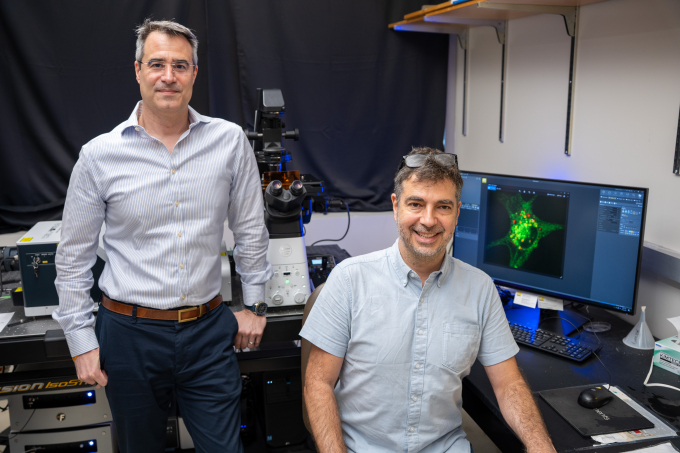
Led by Matthew J. LaVoie, Ph.D., and Adam Mamais, Ph.D., M.Sc., the preclinical study adds to evidence linking mutations in the LRRK2 gene and iron dysregulation in the brain. The findings point the way to identifying new intervention targets
“What we discovered is that mutations in the LRRK2 gene directly change the way cells handle iron,” said LaVoie, director of UF’s Center for Translational Research in Neurodegenerative Disease
LaVoie and Mamais led a team from the McKnight Brain Institute, Norman Fixel Institute and National Institutes of Health in analyzing iron deposits in human stem cells gene-edited to carry the LRRK2 mutation and in stem cells derived from Parkinson’s patients
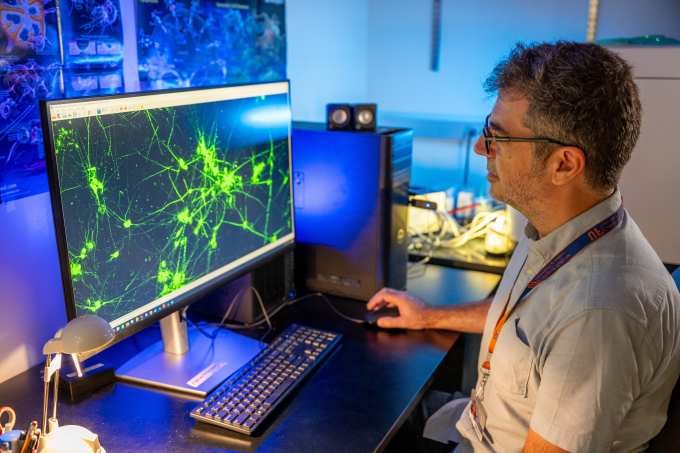
The study, published in Molecular Neurodegeneration, revealed a two-way relationship between iron accumulation and the expression of RAB8a, a protein influenced by the LRRK2 gene
Iron accumulation has long been recognized as a hallmark of spontaneous, or non-genetic, Parkinson’s disease and is associated with severity of motor symptoms, which can include stiffness, slowness and balance issues
“For the longest time, we’ve seen a correlation in living patients between iron deposition in affected regions of the brain and Parkinson’s disease, but we couldn’t understand it,” said Mamais, a research assistant professor of neurology
“What our paper shows is that Parkinson’s disease is beyond aggregated protein,” he said. “We see that mutations in the most common genetic type of late-onset Parkinson’s cause mismanagement of iron in different brain cells.”
Of Parkinson’s cases on the whole, about 10-15% are believed to be familial, or linked to a direct genetic cause
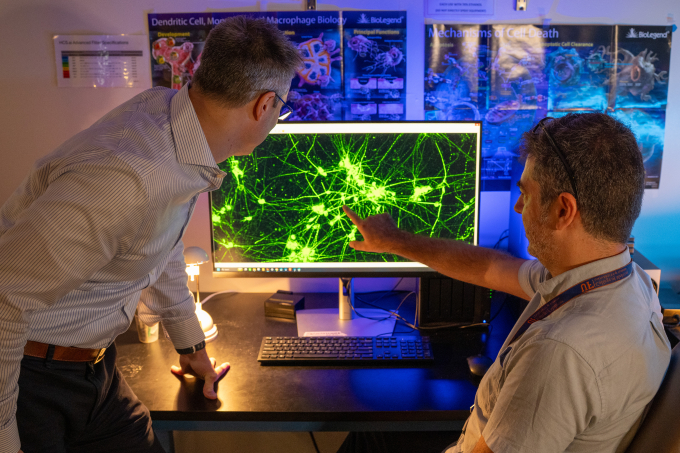
“Our study was the first to provide a genetic and mechanistic bridge between the iron that we see in people to stem cells that we can look at in isolation,” LaVoie said
In addition, the results suggested that MLi-2, an LRRK2 inhibitor akin to experimental drugs in ongoing clinical trials for Parkinson’s, reduces these elevated iron levels
“What we’ve discovered is a mechanism through which iron is dysregulated, and it is corrected by inhibitors of LRRK2, which are under clinical development for treatment of Parkinson’s disease,” LaVoie said
Moreover, the study found that iron dysregulation leads to oxidative stress, in which there are too many harmful, unstable molecules called free radicals and not enough antioxidants. It’s long been known that chronic oxidative stress may influence disease development
