


Press Release•Aug 14, 2026 13:20 UTC
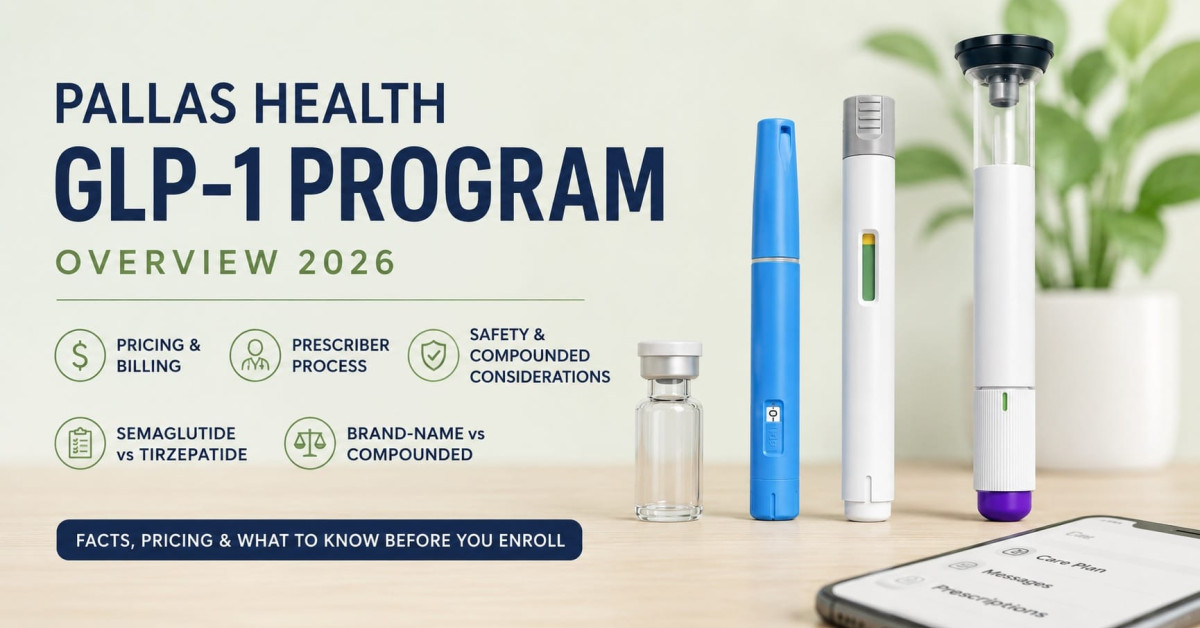
As adults take a more serious look at GLP-1 weight-management care in 2026, this Pallas Health review examines its doctor-led telehealth model, compounded semaglutide and tirzepatide options, FDA-approved brand-name pathways, current pricing, and what consumers should compare before beginning an eligibility evaluation
NEWARK, Del., August 14, 2026 (Newswire.com)
–Quick disclosure before you read further: this is a paid advertorial, and a commission is earned if you purchase through links in this article.Pallas Health is a telehealth platform connecting patients with independently licensed clinicianswho may prescribe FDA-approved brand-name GLP-1 medications or compounded semaglutide and tirzepatide when clinically appropriate – compounded medications aren’t FDA-approved and haven’t been reviewed by the FDA for safety, effectiveness, or quality before marketing, and any prescription requires a licensed clinician’s approval, which isn’t guaranteed. Product claims here are attributed to the brand, not independently verified by this publication. Official site: pallashealth.co. Reviewed August 2026.
Pallas Health GLP-1 Program Overview Consumer Research 2026: Pricing Reviews, Researching Process, Compounded Semaglutide vs Tirzepatide Considerations
Pallas Health connects adults exploring GLP-1 weight management with independently licensed clinicians who may prescribe compounded semaglutide or tirzepatide, or FDA-approved brand-name options (Wegovy®, Zepbound®, Ozempic®, Mounjaro®) – worth knowing upfront, their approved uses actually differ, more on that below. Compounded plans run about $199 or $299 a month on average, billed every 12 weeks; brand-name cash-pay options run $1,069-$1,349 a month. Here’s what this covers: who’s actually doing the prescribing (it’s not Pallas itself), what actually hits your card statement, and a gap between the landing page’s refund promise and the fine print worth knowing before you pay.
You saw an ad for Pallas Health. Maybe it mentioned “doctor-led GLP-1 care,” maybe it was the price tag next to Wegovy or Zepbound’s cash-pay rate, or maybe it was the “As seen in Forbes Health” badge at the top of the landing page. Something caught your attention, and now you’re doing exactly what smart buyers do before spending money on a prescription medication: checking who’s actually behind it, what you’re actually paying for, and what happens if it doesn’t work out
Check your eligibility for Pallas Health’s GLP-1 program before reading further, or keep going for the specifics first
Who Actually Prescribes a Pallas Health GLP-1 Medication? The Three-Entity Structure
“Doctor-led” on a telehealth landing page almost never means one company does everything. Per Pallas Health’s own Terms of Service and its published clinical disclosures page, a prescription filled through Pallas passes through three separate, independently operated entities before anything ships:
Pallas Health, operated by Brentmoor, Inc. – the technology platform. Pallas does not employ medical providers, does not practice medicine, and does not direct clinical decisions, per its own Terms of Service. It runs the intake questionnaire, the mobile app, billing, and shipping coordination
Lion MD – the licensed medical group. According to the brand’s clinical disclosures page, clinical care for Pallas patients is delivered by Lion MD, a nationwide team of U.S.-licensed medical professionals operating through affiliated state-licensed professional corporations, coordinated on the CareValidate clinical-operations platform. Every prescribing clinician is stated to hold an active, unrestricted license in the state where the patient is located at the time of the encounter, and clinicians exercise independent clinical judgment – they may decline to prescribe when treatment isn’t clinically appropriate.
A compounding or dispensing pharmacy – one of six named partners the brand discloses: Belmar Pharmacy, Strive Pharmacy, Epiq Scripts, Casa Pharma Rx, The Pharmacy Hub, and Foothills Pharmacy. Which one fills a given prescription depends on the medication, the patient’s shipping state, and current capacity, per the brand’s clinical disclosures page. Pallas describes this network as including state-licensed 503A compounding pharmacies and FDA-registered 503B outsourcing facilities – not owned or operated by Pallas. The federal rules governing when semaglutide or tirzepatide can legally be compounded differ by facility type and have shifted materially through 2025 and 2026 (more on that below); a facility’s 503A or 503B status by itself isn’t confirmation that every compounded prescription satisfies current federal requirements.
Pallas also names two members of its medical leadership directly on the clinical disclosures page: Dr. Ana Lisa Carr, MD, board-certified in family medicine, obesity medicine, and addiction medicine, and Dr. Kelly Tenbrink, MD, board-certified in emergency medicine. Each is listed with an NPI number linking to the federal NPPES registry, which lets you independently verify the number is active and matches the name shown. The brand states that the complete prescribing-clinician roster – including license numbers, issuing states, and expiration dates – is maintained by Lion MD on the CareValidate platform and is available to any patient, prospective patient, or state medical board on request.
Prescription medication is available only after consultation and approval by a licensed healthcare provider, if clinically appropriate. Approval is not guaranteed
Buyer takeaway: when you read “doctor-led” on the landing page, it’s shorthand for this three-entity structure – not a claim that Pallas Health itself employs the clinician who reviews your case
Who Is the Pallas Health Program Actually Built For?
Pallas is positioned for adults who want access to a GLP-1 weight-loss medication – brand-name or compounded – without first booking an in-person weight-loss clinic visit. Per the brand, the platform accepts patients in all 50 states plus Washington, D.C., so geography generally isn’t a barrier to starting an intake. In most states, a licensed clinician can review a written intake and prescribe without a live video call. Seven states currently require one synchronous video visit before any prescription is issued: Arkansas, Mississippi, New Mexico, North Dakota, Rhode Island, South Dakota, and West Virginia, plus Washington, D.C., per the brand’s clinical disclosures page.
Consumers who require an in-person physical examination, or who specifically need a program that bills insurance directly, should note that Pallas is an online telehealth platform and, per the brand, operates on a private-pay basis without direct insurance billing. HSA and FSA funds may be usable depending on your specific plan administrator, though a Letter of Medical Necessity may be required; that eligibility isn’t independently confirmed by this article and depends on your plan
Buyer takeaway: Pallas currently states it serves all 50 states, but “nationwide” and “no video call required” aren’t the same guarantee – confirm which applies to your specific state before you plan around it
What Does the Pallas Health Program Actually Include?
Per the brand, one plan price is stated to cover the following, with no separate membership fee layered on top:
Your clinician’s intake review and the initial appropriateness determination
Your medication, if a clinician determines it’s clinically appropriate to prescribe
Ongoing dose-adjustment check-ins and follow-up evaluations
Asynchronous care-team messaging through the patient portal
The Pallas mobile app, available for iPhone and Android, plus a web app for patients without a smartphone
Free, discreet shipping from the assigned partner pharmacy
Refills aren’t automatic, per the brand – each renewal involves a clinician reviewing your progress and tolerability before the next shipment goes out, rather than shipping on a fixed timer regardless of how you’re doing on the medication
Buyer takeaway: the “no separate membership fee” claim should be understood as part of the stated plan price, not a bonus on top of it – the check-ins and messaging are baked into the number you already see
Compounded Semaglutide and Tirzepatide vs. FDA-Approved Brand-Name GLP-1s
This is the section worth reading slowly, because Pallas offers both paths, and they are not the same thing legally, medically, or in terms of what’s confirmed about them
FDA-approved brand-name medications – Wegovy® and Ozempic® (semaglutide), Zepbound® and Mounjaro® (tirzepatide) – are manufactured, FDA-approved products, but their FDA-approved indications aren’t identical, and the difference matters:
Wegovy® (semaglutide) – FDA-approved for chronic weight management in eligible adults. $1,349/month, cash-pay
Zepbound® (tirzepatide) – FDA-approved for chronic weight management in eligible adults. $1,069/month, cash-pay
Ozempic® (semaglutide) – FDA-approved for improving blood sugar control in adults with type 2 diabetes, not for chronic weight management as an approved indication. $1,299/month, cash-pay
Mounjaro® (tirzepatide) – FDA-approved for improving blood sugar control in adults with type 2 diabetes, not for chronic weight management as an approved indication. $1,349/month, cash-pay
FDA-approved indications differ by product; any prescribing outside a product’s approved indication is a matter of independent clinical judgment between a licensed clinician and patient, and it isn’t being promoted or recommended by this article. Wegovy® and Ozempic® are registered trademarks of Novo Nordisk A/S; Zepbound® and Mounjaro® are registered trademarks of Eli Lilly and Company. Neither trademark holder is affiliated with, a sponsor of, or an endorser of Pallas Health
Compounded semaglutide and tirzepatide, by contrast, are – per the brand’s own disclosures – not FDA-approved products, not generic versions of the brand-name drugs, and not evaluated by the FDA for safety, effectiveness, or quality before marketing. They’re dispensed only after a licensed clinician documents a patient-specific clinical need; per FDA compounding guidance, pricing alone is never a valid basis for compounding a medication instead of dispensing the approved version. Compounded plans average $199 a month for semaglutide and $299 a month for tirzepatide, after a lower first-month price, per the brand’s pricing table.
FDA’s shortage determinations materially changed the federal compounding landscape for semaglutide and tirzepatide, and it’s worth knowing where things currently stand:
Neither semaglutide nor tirzepatide is currently on FDA’s drug shortage list
Neither currently appears on the separate 503B “bulks list.”
FDA proposed – April 30, 2026 – excluding semaglutide, tirzepatide, and liraglutide from that bulks list entirely, after concluding it hadn’t identified a clinical need supporting their inclusion
Section 503A pharmacies operate under a different statutory framework, including restrictions on regularly compounding products that are essentially copies of commercially available drugs
Whether a particular compounded prescription satisfies applicable federal and state requirements depends on the specific circumstances involved and isn’t independently determined by this article
Neither path is being recommended over the other here. Which one, if either, a clinician actually offers is a clinical decision, made after reviewing your intake – not a pricing decision you make for yourself on the checkout page
Semaglutide and tirzepatide are prescription active ingredients, not a supplement blend, so there’s no Supplement Facts panel to check against marketing claims the way you would with an over-the-counter product. The exact compounded formulation, inactive ingredients, concentration, vial contents, and dosing instructions for any specific prescription come from the dispensing pharmacy’s own label – not from Pallas’s marketing pages – and should be read directly off that label rather than assumed from anything in this article.
Buyer takeaway: “semaglutide” and “tirzepatide” name the active ingredient, not the regulatory status, and not the approved use – always ask which version (compounded or brand-name) and which indication (weight management or diabetes) is actually being discussed before comparing prices or outcomes
Compare compounded and brand-name options at Pallas Health
The Refund Gap Between Pallas Health’s Ad Copy and Its Terms of Service
Here’s a discrepancy worth flagging clearly, because it’s the kind of gap between marketing copy and legal terms that’s easy to miss until you’re the one asking for a refund
What the landing page says: “If a clinician decides treatment isn’t right for you, you’re refunded in full.” This line appears more than once across Pallas’s marketing pages
What the Terms of Service say: that statement checks out – for the specific scenario it describes. Per Section 7 of the brand’s Terms of Service (last updated July 11, 2026), a clinician decline, or any order that’s never fulfilled and shipped, is refunded in full, including any video-visit deposit collected under the charge-on-approval checkout flow described in Section 6
But the Terms of Service also cover a second scenario the landing page doesn’t mention: voluntarily canceling after you’ve already paid, but before medication has shipped. In that case, per Section 7, the refund is the amount you paid minus the third-party payment-processing costs incurred on that payment and a $5 processing fee per refunded payment – not a full refund. This deduction applies to purchases made on or after July 14, 2026, and it never applies to clinician-declined or unfulfilled orders, which stay fully refunded regardless of date. Once a medication has actually been dispensed and shipped, the Terms of Service state the order can’t be returned or refunded at all, except where required by law.
The two statements address different circumstances. A reader who assumes “refunded in full” covers every possible reason for wanting your money back would be working from an incomplete picture. It’s exactly the kind of detail worth confirming at checkout, or with the care team, before your first charge goes through – not after
Buyer takeaway: “refunded in full” is true for a clinical decline; it’s not automatically true for a change of mind after payment. Read Section 7 before you assume otherwise
How the Patient-Provider Relationship Gets Established
A telehealth prescription isn’t just a form submission – there’s a specific legal sequence that has to happen before a clinician can prescribe anything, and per the brand’s clinical disclosures page, here’s what that actually requires on Pallas:
Intake and jurisdiction check: your medical history, current medications, allergies, vitals, and treatment goals are collected, along with your state of residence – which determines whether a synchronous video visit is legally required before a clinician can act
Clinical determination and informed consent: a clinician licensed in your state evaluates clinical appropriateness, documents medical necessity – indication, BMI, comorbidities, and ruling out contraindications – and obtains your informed consent for telehealth care specifically. This is the step that actually forms the patient-provider relationship, not the intake form itself
Prescribing decision: if appropriate, the prescription routes to the assigned pharmacy with patient-specific clinical documentation attached. If not, the brand states you aren’t charged for the evaluation
Ongoing oversight: refills aren’t automatic – each one requires a clinician’s review of your progress and tolerability, with asynchronous messaging available between visits
The $60 Video-Visit Deposit: What It Is and When It Applies
If you’re in one of the seven states (or D.C.) requiring a live video visit, checkout works a little differently than the standard flow. Per Section 6 of the brand’s Terms of Service, checkout collects a $60 visit deposit instead of your full first payment, and saves your payment method on file. That deposit is credited toward your first order. If a licensed clinician approves your plan after the visit, the remaining balance of your first payment is charged to your saved payment method at the time of approval, and your recurring subscription begins from that approval date. If the clinician doesn’t approve your plan, or you cancel before a clinical decision is made, the deposit is refunded in full. If you simply don’t attend or reschedule your required video visit and abandon the intake altogether, the brand states the deposit may be retained.
See current Pallas Health pricing and plan details
Pallas Health Pricing: Compounded Plans vs. Brand-Name Cash-Pay Rates
Pricing below is taken from the brand’s own live pricing table, reviewed in August 2026. Plan pricing can change with notice, so confirm the current numbers at checkout before you commit
Compounded semaglutide: $139 for the first month, then $597 every 12 weeks – a $199-per-month average. Cancel anytime, per the brand
Compounded tirzepatide: $179 for the first month, then $897 every 12 weeks – a $299-per-month average. Cancel anytime, per the brand
Wegovy® (FDA-approved, brand-name): $1,349 a month, cash-pay
Zepbound® (FDA-approved, brand-name): $1,069 a month, cash-pay
Ozempic® (FDA-approved, brand-name): $1,299 a month, cash-pay
Mounjaro® (FDA-approved, brand-name): $1,349 a month, cash-pay
One pricing detail worth noting: Pallas states that its compounded-plan pricing does not increase solely because the prescribed dose increases – you’d pay the same $199 or $299 monthly average whether you’re at your starting dose or a higher maintenance dose, per the brand. A pay-over-time financing option is also available at checkout, per the landing page, though specific interest rates or fees aren’t detailed on the pages reviewed for this article – review those terms directly at checkout before agreeing to them.
None of this pricing is billed to insurance, per the brand. Private pay only. HSA and FSA reimbursement may be possible depending on your specific plan administrator, but that’s not something this article can confirm on your behalf – check with your plan directly, since a Letter of Medical Necessity may be required
Buyer takeaway: compare the average monthly figure, not just the first-month price – the $139 and $179 intro prices are attention-grabbing, but the $199 and $299 averages are what you’ll actually pay most months
What Buyers Are Saying About Pallas Health
Pallas publishes two distinct sets of customer feedback on its landing page:
Weight-loss testimonials – a pair of results, each labeled “Verified Customer” on the brand’s own site
Service-experience quotes – shorter comments on the intake process, shipping speed, and care-team responsiveness, which the brand states are shared with permission and reflect individual service experiences rather than guaranteed treatment outcomes
Both sets are brand-selected marketing material: the review platform, sample size, and any independent audit process behind them aren’t disclosed on the pages reviewed for this article, and neither set was independently verified for this article. This article doesn’t repeat the specific weight-loss figures from those testimonials here, because an unusually strong quantified result needs more than a general “individual results vary” disclosure to give readers an accurate sense of what’s typical – and this article has no independent, substantiated data on what a typical outcome looks like. For readers who want that complaint-pattern research specifically, earlier coverage of Pallas Health’s telehealth program ran that search separately and can be read alongside this overview.
Buyer takeaway: brand-published testimonials (even labeled “verified”) are marketing material, not clinical data – useful for a sense of tone, not for predicting your own results
The Pallas Health Guarantee and Refund Policy, In Plain Terms
Setting aside the landing-page-versus-Terms-of-Service gap covered above, here’s the refund policy in full. This comes from Section 7 of the brand’s current Terms of Service:
Canceling your subscription itself is always free, and takes effect at the end of your current billing period
If a licensed clinician doesn’t approve a prescription, or your order otherwise isn’t fulfilled and shipped, you’re refunded in full – including any video-visit deposit
If you cancel after a qualifying payment but before that medication has been requested from the pharmacy, you’re refunded the amount paid minus payment-processing costs and a $5 processing fee, for purchases made on or after July 14, 2026
Once medication has been dispensed and shipped, the order can’t be returned or refunded, except where required by applicable law
This is a healthcare service, not a manufactured consumer good, so no product warranty in the traditional sense applies here – the refund terms above, as they stand at the time of your purchase, are what governs. The Terms of Service can be updated – the version reviewed for this article was last updated July 11, 2026. It’s worth checking the “Last updated” date at the top of the live page against the date you actually enroll, rather than assuming the terms summarized here stay word-for-word identical months from now.
Who May Want to Evaluate Pallas Health Further?
Consumers comparing Pallas with other telehealth options may want to weigh a few factors:
Whether you prefer an FDA-approved brand-name medication, or are open to discussing a compounded option with a licensed clinician
Whether private-pay pricing fits your budget, since Pallas doesn’t bill insurance directly
Whether the service is currently available under your state’s specific requirements
Whether the program’s provider and pharmacy structure meets your preferences
Medical appropriateness is determined by a licensed clinician, not by this article or by price alone
Buyer takeaway: the useful comparison question isn’t “does Pallas sound good in the ad” – it’s whether a licensed clinician, not a price tag, is the one deciding which medication you’re prescribed
Compounded vs. Brand-Name: The Actual Year-One Cost Difference
At the brand-name cash-pay rates shown on Pallas’s own pricing table – roughly $1,069 to $1,349 a month – a compounded plan averaging $199 to $299 a month is lower, based on Pallas’s own published prices. That price gap comes with a real regulatory trade-off: the compounded medication isn’t FDA-approved, hasn’t been evaluated by the FDA for safety, effectiveness, or quality, and isn’t a generic version of the branded drug. Weighing that trade-off against your own risk tolerance, and against your prescribing clinician’s specific guidance, matters more here than weighing it against marketing copy alone.
It’s also worth pricing out the full year, not just the first month, since the intro pricing on the compounded plans ($139 or $179) only applies once:
Compounded semaglutide (Pallas average): roughly $2,300/year
Ozempic® cash-pay (12 × $1,299): roughly $15,588/year
Wegovy® cash-pay (12 × $1,349): roughly $16,188/year
This article has no Pallas-specific enrollment-mix data showing what share of patients actually choose which path, so this comparison is offered as arithmetic on the brand’s own published prices, not as a claim about typical buyer behavior
Buyer takeaway: do the year-one math against Pallas’s own published prices, not just the sticker-price comparison, and weigh the regulatory trade-off deliberately rather than defaulting to the cheaper option by habit
View today’s Pallas Health pricing for both options
GLP-1 Side Effects and Safety: What to Discuss With Your Clinician
This article doesn’t have access to Pallas-specific adverse-event data, and none is invented here. Semaglutide (used in Wegovy®, Ozempic®, and the compounded semaglutide dispensed through Pallas’s pharmacy network) is a GLP-1 receptor agonist; tirzepatide (used in Zepbound®, Mounjaro®, and the compounded tirzepatide dispensed through that same network) is a dual GIP/GLP-1 receptor agonist – a related but pharmacologically distinct class. FDA-approved semaglutide and tirzepatide products each carry their own product-specific prescribing information describing adverse reactions, contraindications, warnings, and precautions. Gastrointestinal adverse reactions such as nausea, vomiting, diarrhea, and constipation are commonly reported across this drug class. Product labeling also addresses more serious risks, including pancreatitis and gallbladder disease, and carries a boxed warning concerning thyroid C-cell tumors observed in rodent studies, with the relevance to humans not yet determined. The exact warnings, contraindications, adverse-reaction rates, and approved uses differ by medication, so anyone considering treatment should review the FDA-approved prescribing information for the specific product being discussed with their clinician.
Compounded versions are a different case, and FDA has been explicit about why. Compounded drugs don’t go through FDA’s premarket review for safety, effectiveness, or quality the way an approved drug does, and they don’t come with their own FDA-approved prescribing information – a compounded product’s formulation, concentration, and dosing instructions can differ from the branded version of the same active ingredient, and from one compounding pharmacy to the next. FDA has specifically warned about dosing errors associated with compounded injectable semaglutide and tirzepatide, including cases involving patients drawing an incorrect volume from a multidose vial and reports of adverse events, some serious enough to require hospitalization. Adverse-event reports alone don’t establish that a compounded drug caused the reported event, but they’re part of why FDA continues to flag this category for extra caution. FDA has also flagged concerns about compounded products using salt forms of semaglutide that differ from the FDA-approved active ingredient and haven’t been evaluated for safety or effectiveness. None of this means a specific compounded prescription filled through Pallas’s partner pharmacies is unsafe – it means the safety data supporting an FDA-approved product doesn’t automatically carry over to a compounded version of the same active ingredient, and confirming the exact formulation and dosing instructions with your dispensing pharmacy directly matters more than it would with a pre-packaged, FDA-approved pen.
Because compounded versions aren’t FDA-approved, they don’t carry official FDA prescribing information of their own. Per the brand’s clinical disclosures page, a licensed clinician is stated to document medical necessity, review contraindications, and obtain informed consent before prescribing anything through the platform. If you’re on other medications – particularly insulin or sulfonylureas, which can interact with GLP-1 receptor agonists to increase hypoglycemia risk – raise your complete medication list with your assigned clinician directly, along with any personal or family history of medullary thyroid carcinoma or Multiple Endocrine Neoplasia syndrome type 2, before treatment starts. Report side effects to your Pallas clinician or to FDA MedWatch at 1-800-FDA-1088, per the brand’s own clinical disclosures page.
For context on the FDA-approved medications specifically: participants in Wegovy®’s own clinical trials lost an average of roughly 14.9% of body weight at 68 weeks alongside lifestyle intervention, per Novo Nordisk’s published trial data. That figure describes the FDA-approved product’s own clinical trial results under its approved weight-management indication – it doesn’t describe, and shouldn’t be assumed to apply to, the compounded version of the same active ingredient, which hasn’t gone through the same evaluation process, or to Ozempic®, which isn’t FDA-approved for weight management. Any percentage-based weight-loss figures you see referenced in marketing for a compounded product should be read as research or manufacturer-trial references for the active ingredient generally, not as compounded-product-specific data, because compounded versions have not undergone FDA premarket review for safety, effectiveness, and quality and should not be assumed to produce the same outcomes reported for a specific FDA-approved product.
Buyer takeaway: the FDA-approved products come with FDA-reviewed prescribing information specific to that product and that indication; the compounded versions don’t – ask your clinician directly what applies to the specific formulation and dose you’re actually prescribed
Beyond the common gastrointestinal effects, a few things are worth raising proactively during intake, rather than waiting to be asked:
A personal or family history of medullary thyroid carcinoma or Multiple Endocrine Neoplasia syndrome type 2
A history of pancreatitis or gallbladder disease
Current use of insulin, sulfonylureas, or other blood-sugar-lowering medications – FDA-approved prescribing information for semaglutide and tirzepatide products addresses an increased risk of hypoglycemia when used with insulin or insulin secretagogues such as sulfonylureas
These and other aspects of a patient’s medical history can be relevant to a clinician’s assessment of whether a particular GLP-1 medication is appropriate; patients should provide their complete medical history and medication list during intake, and discuss any potential dose adjustments with their prescribing clinician, rather than relying on a general article to determine eligibility or contraindications. None of this is a reason to avoid asking about treatment; it’s the specific information a licensed clinician needs to make that call safely, and it’s the kind of conversation the intake process is designed to surface.
Things to Verify Before You Start
Rather than offering a verdict on whether Pallas Health is “legit,” here’s what’s independently checkable, grouped by what it actually affects – whether you can even start, who’s treating you, and what it costs if things don’t go as planned
Can you actually start without a video call? That depends entirely on your state. The seven-state-plus-D.C. list requiring a synchronous video visit is subject to change as Pallas expands clinical capacity, so confirm your state’s current status directly on the brand’s clinical disclosures page before starting intake – not from this article, and not from the ad
Who’s actually treating you, specifically? Two members of medical leadership are named publicly with NPI numbers, but the full prescribing roster is maintained separately by Lion MD. Before or at the time of prescribing, request your specific treating clinician’s name and license number, and verify it against your state medical board or the federal NPPES registry if you want independent confirmation. Worth asking the same of your dispensing pharmacy: per the brand, which of the six named partners fills your prescription depends on your medication, shipping state, and current capacity.
What does it actually cost if plans change? A clinician decline or an unfulfilled order is refunded in full; a voluntary cancellation after payment but before shipment is refunded minus processing costs and a $5 fee, for purchases made on or after July 14, 2026 – know which one applies to you before you pay. If you’re using the pay-over-time checkout option, the specific rates and fees aren’t detailed on the pages reviewed for this article, so get those in writing at checkout, not after
Confirm your state, your pharmacy, and your price with Pallas Health
How to Read Pallas Health’s Marketing Language
A few phrases from the landing page are worth translating into what they actually mean, and don’t mean, before you rely on them
“Doctor-led GLP-1 care.”cisions are made by clinicians affiliated with Lion MD, an independent licensed medical group, not by Pallas itself. What it doesn’t mean: that Pallas employs its own in-house doctors, or that any specific clinician is guaranteed before you complete intake
“As seen in Forbes Health.”it has appeared in Forbes Health coverage. What it doesn’t mean: an endorsement of clinical efficacy, safety, or value by Forbes Health or by this publication – this article did not independently verify the nature or context of that coverage
“FSA & HSA eligible.”se payment methods can potentially be used. What it doesn’t mean: guaranteed reimbursement – eligibility depends entirely on your specific plan administrator’s rules, and a Letter of Medical Necessity may be required
“Refunded in full.”ate for a clinician decline or an unfulfilled, unshipped order. What it doesn’t mean: a full refund in every cancellation scenario – see the Terms of Service discrepancy detailed above
Buyer takeaway: marketing copy is necessarily abbrerect communication with the care team provide the additional context the landing page doesn’t have room for
Fast Facts
Operating entity: Brentmoor, Inc. (Pallas Health)
Licensed medical group: Lion MD
Clinical-operations platform: CareValidate
Partner pharmacies: six named 503A/503B facilities
States served: all 50, plus Washington, D.C
Video-visit-required states: 7, plus D.C
Compounded semaglutide: $139 first month, then $597 every 12 weeks (~$199/month average)
Compounded tirzepatide: $179 first month, then $897 every 12 weeks (~$299/month average)
Brand-name cash-pay range: $1,069-$1,349/month
Insurance: not billed directly; HSA/FSA may apply depending on your plan
Refund, clinician decline or unfulfilled order: full refund, per the brand
Refund, voluntary cancellation after payment: amount paid minus processing costs and a $5 fee
Video-visit-state deposit: $60, credited or refunded depending on outcome
Certification cited by the brand: LegitScript Healthcare Merchant Certified
Contact: hello@pallashealth.co / +1 (440) 601-3717, Mon-Fri, 9 AM-5 PM ET
Quick Answers
Is Pallas Health a pharmacy? No. Per the brand, Pallas is a technology platform connecting patients with an independent licensed medical group, Lion MD, and independent partner pharmacies. Pallas does not dispense medication itself
Is compounded semaglutide FDA-approved? No. Per the brand’s own disclosures, compounded medications are not FDA-approved and have not been evaluated by the FDA for safety, effectiveness, or quality before marketing
Does Pallas Health accept insurance? No. The brand states it is private-pay only and doesn’t bill insurance directly, though HSA/FSA funds may be usable depending on your plan administrator
Can I cancel my Pallas Health plan anytime? Per the brand, yes – but whether a payment already made is refunded in full depends on whether medication has shipped. See the refund verification item above for the specifics
Start your Pallas Health intake and see your options
Frequently Asked Questions
What states does Pallas Health serve?Per the brand’s clinical disclosures page, Pallas accepts patients in all 50 U.S. states and Washington, D.C., so geography by itself generally isn’t a barrier to starting intake. Most states allow a licensed clinician to review your written intake and prescribe without a live video call. Seven states currently work differently – Arkansas, Mississippi, New Mexico, North Dakota, Rhode Island, South Dakota, and West Virginia – plus Washington, D.C., all of which require a synchronous video visit before any prescription can be issued. State telehealth rules change fairly often as regulations evolve, so confirm your specific state’s current status directly on the brand’s clinical disclosures page before you start an intake, rather than relying on this summary alone. Buyer takeaway: nationwide access doesn’t mean identical access – your state determines whether you’ll need a video visit.
Who actually prescribes the medication through Pallas Health?Per the brand, prescribing is handled by clinicians affiliated with Lion MD, a nationwide medical group operating through affiliated state-licensed professional corporations and coordinated on the CareValidate clinical-operations platform. Pallas Health itself doesn’t employ medical providers, doesn’t practice medicine, and doesn’t direct clinical decisions, according to its own Terms of Service. Two medical leadership figures – Dr. Ana Lisa Carr, MD and Dr. Kelly Tenbrink, MD – are named publicly with NPI numbers linking to the federal registry. The complete prescribing-clinician roster, including license numbers and expiration dates, is available on request through Lion MD.
What’s the actual difference between compounded and brand-name GLP-1 medication on Pallas?Brand-name medications – Wegovy®, Zepbound®, Ozempic®, and Mounjaro® – are manufactured, FDA-approved products offered at the cash-pay prices published by Pallas Health. Compounded semaglutide and tirzepatide, by contrast, are prepared per-patient by a licensed compounding pharmacy only after a clinician documents a specific clinical need (pricing alone is never a valid basis for compounding under FDA guidance). Per the brand, compounded medications are not FDA-approved and are not generic versions of the brand-name drugs. Pricing and regulatory status differ meaningfully between the two paths, and which one a clinician actually offers is a clinical decision made after reviewing your intake – not a preference you simply select at checkout. Buyer takeaway: the price gap reflects a real regulatory gap, not just a marketing discount.
How much does the compounded plan actually cost per month?Per the brand’s pricing table, reviewed in August 2026, compounded semaglutide runs $139 for the first month, then $597 every 12 weeks – about a $199-per-month average. Compounded tirzepatide runs $179 for the first month, then $897 every 12 weeks – about a $299-per-month average. Pallas states that this price does not increase solely because the prescribed dose increases. Provider care, ongoing check-ins, and care-team messaging are included in that price, per the brand, with no separate membership fee layered on top.
What happens if my clinician doesn’t approve treatment?Per the brand’s Terms of Service, if a licensed clinician determines treatment isn’t clinically appropriate for you, or an order otherwise isn’t fulfilled and shipped, your payment – including any video-visit deposit collected under the charge-on-approval checkout flow – is refunded in full. You aren’t charged for a clinical evaluation that doesn’t result in a prescription; the clinician’s independent judgment, not your payment, is what determines whether treatment moves forward. This applies regardless of which medication path, compounded or brand-name, you were being evaluated for.
Is a partial refund possible if I cancel after already paying?Per Section 7 of the brand’s current Terms of Service, canceling your subscription itself is always free and takes effect at the end of your current billing period. But if you’ve already made a qualifying payment – for example, before the pharmacy has been asked to fill your order – the refund is issued minus payment-processing costs and a $5 processing fee per refunded payment. This deduction applies only to purchases made on or after July 14, 2026, and it never applies to clinician-declined or unfulfilled orders, which stay fully refunded regardless of purchase date.
Which pharmacy will actually fill my Pallas Health prescription?Per the brand’s clinical disclosures page, prescriptions are dispensed by one of six named partner pharmacies – Belmar Pharmacy, Strive Pharmacy, Epiq Scripts, Casa Pharma Rx, The Pharmacy Hub, or Foothills Pharmacy – depending on the specific medication, your shipping state, and current capacity at each facility. Pallas states it doesn’t own or operate a pharmacy itself, so the exact dispensing facility can vary from one prescription to the next, even for the same patient reordering the same medication. Buyer takeaway: ask your care team which specific pharmacy is handling your order if that matters to you.
Does Pallas Health accept insurance or FSA/HSA funds?Per the brand, Pallas is private-pay only and isn’t billed to insurance directly under any circumstance. HSA and FSA funds may be usable depending on your individual plan administrator’s own rules, though a Letter of Medical Necessity may be required before those funds apply. This article doesn’t independently confirm HSA or FSA eligibility for any specific plan, since that determination depends entirely on each buyer’s plan administrator and can’t be generalized across providers. If using HSA/FSA funds is important to your decision, call your plan administrator before enrolling rather than after, since some plans exclude compounded medications or weight-management treatment specifically, and that distinction won’t show up anywhere on Pallas’s own site.
How long does it take to receive medication after signing up?The brand’s landing page states medication typically ships within about a week of approval, sent free and discreetly from the assigned U.S.-licensed pharmacy. This article doesn’t independently verify shipping timelines beyond what the brand publishes; treat the one-week window as the brand’s own estimate rather than a guarantee, since actual timing can depend on which pharmacy is assigned, your state, and current fulfillment capacity at that facility. In states requiring a synchronous video visit, add the time needed to schedule and complete that visit before the approval clock (and the roughly one-week shipping estimate) even starts.
Check your state’s eligibility and current Pallas Health pricing
Are the before-and-after weight-loss testimonials on the Pallas Health site independently verified?No. They’re brand-published and labeled “Verified Customer” on the landing page, but the review platform, sample size, and any independent audit process behind that label aren’t disclosed on the pages reviewed for this article. The brand states individual results vary, which is broadly consistent with how GLP-1 medications tend to perform across different people, doses, and adherence levels in the published clinical literature for the FDA-approved products. Buyer takeaway: treat brand testimonials as illustrative examples, not as a predictor of your own outcome.
Is Pallas Health itself FDA-approved?Pallas Health is a technology platform, not a drug or a medical device, so FDA drug approval doesn’t directly apply to the company itself. Some of the medications it can connect patients to – Wegovy®, Zepbound®, Ozempic®, and Mounjaro® – are separately FDA-approved products manufactured by Novo Nordisk A/S and Eli Lilly and Company, respectively. The compounded semaglutide and tirzepatide offered through the same program are a different regulatory category entirely: not FDA-approved, and not evaluated by the FDA for safety, effectiveness, or quality before marketing.
What should I do if I experience side effects on a Pallas Health prescription?Per the brand’s clinical disclosures page, report side effects directly to your assigned Pallas clinician through the patient portal or by emailing hello@pallashealth.co, so your care team can adjust your treatment plan or dosing if needed. You can also report adverse events to FDA MedWatch at 1-800-FDA-1088 or through fda.gov/safety/medwatch, which is the federal reporting channel that exists independent of the brand and covers medications broadly, not just those dispensed through Pallas. For anything that feels severe or urgent – rather than a routine, expected side effect like mild nausea – contacting emergency services directly is more appropriate than waiting on a message reply through the patient portal.
Can I choose whether I get the compounded or the brand-name medication?Not entirely on your own. You can express a preference during intake – for instance, if cost is a driving factor, or if you specifically want the FDA-approved product. But per the brand’s own materials, which medication (if any) a clinician actually prescribes is a clinical decision. It’s based on your health history, your goals, and what’s determined to be clinically appropriate for you. Pricing is one factor in that conversation with your care team, not the deciding one, and a clinician can decline to prescribe either option if it isn’t a fit.
Does Pallas Health guarantee weight-loss results?No, and per the brand’s own disclosures, individual results vary meaningfully by person, dose, and adherence to treatment. The weight-loss testimonials on the landing page are brand-selected examples labeled “Verified Customer” on Pallas’s own site; this article doesn’t repeat their specific figures here or treat them as a representative average, since an unusually strong quantified result needs more than a general disclosure to give readers an accurate sense of what’s typical. GLP-1 medications generally require ongoing use and lifestyle adjustments to sustain results, per the published clinical literature on the FDA-approved products; nothing in Pallas’s marketing or in this article should be read as a promise of a specific outcome for any individual patient.
What is LegitScript Healthcare Merchant Certification, and does Pallas Health have it?Pallas Health states on its own site footer that it is LegitScript Healthcare Merchant Certified, and displays a LegitScript verification badge linking to an independent verification page on LegitScript’s own site. LegitScript is a third-party certification service used by payment processors and platforms to vet healthcare and pharmacy-adjacent merchants; this article did not independently investigate LegitScript’s certification criteria or process. Readers who want to confirm the certification’s current status can use the verification link the brand itself provides rather than relying on the badge alone.
Buyer Verification Checklist
Decide upfront whether you specifically want an FDA-approved brand-name product or are open to a compounded medication – pricing and regulatory status differ substantially between the two, and this decision shapes everything else on this list
Request your treating clinician’s name and license number before or at the time of prescribing, and verify it independently through your state medical board or the federal NPPES registry
Confirm your state’s current requirement – asynchronous intake versus a required video visit – on the brand’s clinical disclosures page before starting intake
Ask your care team which of the six partner pharmacies is filling your specific prescription
Get the specific pay-over-time financing terms in writing at checkout, if you’re using that option, before agreeing to them
Read Section 7 of the current Terms of Service in full before your first payment – not just the “refunded in full” language on the landing page
Call your HSA/FSA plan administrator directly if you’re planning to use those funds, since Pallas doesn’t bill insurance and can’t confirm your plan’s rules for you
See your personalized Pallas Health pricing
The Bottom Line
Pallas Health runs on a three-entity telehealth structure: a technology platform (Brentmoor, Inc.), an independent licensed medical group (Lion MD), and one of six independent compounding or dispensing pharmacies, working together to get a patient evaluated and, if a clinician determines it’s appropriate, prescribed a GLP-1 medication. The brand currently publishes compounded-plan averages of roughly $199 to $299 a month against brand-name cash-pay prices of $1,069 to $1,349 a month. Those figures were checked against Pallas Health’s own published pricing materials as of August 2026, but weren’t independently validated against completed transactions, and pricing can change with notice.
The material reviewed for this overview was generally consistent regarding pricing, provider structure, and the stated refund policy, with one specific exception worth remembering: “refunded in full” on the landing page is accurate for a clinician decline, but a voluntary cancellation after payment carries a processing-cost-and-fee deduction under the current Terms of Service. That’s worth reading before your first charge, not after it
Prescription medication is available only after consultation and approval by a licensed healthcare provider, if clinically appropriate. Approval is not guaranteed. Before you start an intake, confirm current pricing, your state’s specific requirements, and the full Terms of Service directly with Pallas – a few minutes spent now can save a surprise later
Pallas Health Contact Information
General support and care-team questions:hello@pallashealth.co
Compliance, licensure verification, and LegitScript inquiries:support@pallashealth.co
Phone: +1 (440) 601-3717, Monday-Friday, 9 AM-5 PM Eastern
Mailing address: 131 Continental Dr, Suite 305, Newark, DE 19713
Operating entity: Brentmoor, Inc
Begin your Pallas Health eligibility check today
Disclosure and Compliance Information
This content is promotional in nature and is intended for consumer education regarding a commercially available product
Material Limitations. This article is based on Pallas Health’s own website, Terms of Service, Privacy Policy, and clinical disclosures page, reviewed in August 2026, along with the brand’s published pricing table. No independent testing of any medication, clinical outcome, or pharmacy operation was conducted for this article. Brand claims – including testimonials, pricing averages, certifications, and shipping timelines – are attributed to the brand throughout and are not independently verified. Financing terms for the pay-over-time checkout option weren’t detailed in the materials reviewed and should be confirmed directly at checkout. Title phrases and framing in this article reflect brand materials reviewed for this overview; readers seeking further verification should contact the brand directly at the addresses above.
Third-Party Feedback Platforms. The accuracy of third-party review platforms, if referenced by the brand elsewhere, is not endorsed here; readers are encouraged to evaluate any such platforms critically and independently
Forward-Looking Statements. This article reflects information available as of August 2026. Pricing, state availability, video-visit requirements, partner pharmacies, and policies may change. Rely on Pallas Health’s official site and direct communication with its care team for current information before enrolling or paying
Marketing Language Notice. Attribution language throughout this article – “per the brand,” “the brand states,” and similar phrasing – identifies claims originating in Pallas Health’s own marketing and disclosure materials. These are brand-asserted statements, not independent rankings, lab-verified claims, or clinical endorsements by this publication
Compounded Medication and FDA Notice. Compounded semaglutide and tirzepatide are not FDA-approved and are not reviewed by the FDA for safety, effectiveness, or quality before marketing, and are not generic versions of any FDA-approved drug. Approval to receive a prescription through Pallas Health is a clinical decision made by an independently licensed provider and is never guaranteed by this article, by Pallas Health, or by any affiliate link
Insurance and Coverage Notice. Insurance coverage, if any, depends on the buyer’s specific plan and is not confirmed by this article. Pallas Health states it does not bill insurance directly; HSA/FSA eligibility depends on each buyer’s individual plan administrator
Geographic and Jurisdictional Notice. Service availability, video-visit requirements, and applicable state telehealth regulations vary by state and are subject to change. Confirm current availability and requirements for your specific state directly with the brand before starting intake
Trademark Acknowledgment. Wegovy® and Ozempic® are registered trademarks of Novo Nordisk A/S. Zepbound® and Mounjaro® are registered trademarks of Eli Lilly and Company. Neither trademark holder is affiliated with, a sponsor of, or an endorser of Pallas Health, Brentmoor, Inc., or this article
Publisher Responsibility Limitation. Product claims are attributed to the brand and are not independently endorsed. A commission is earned if a purchase is made through affiliate links in this article. This article does not constitute medical advice; consult a licensed healthcare provider to determine whether a GLP-1 medication, compounded or brand-name, is appropriate for you
SOURCE: Pallas Health
Source: Pallas Health
