


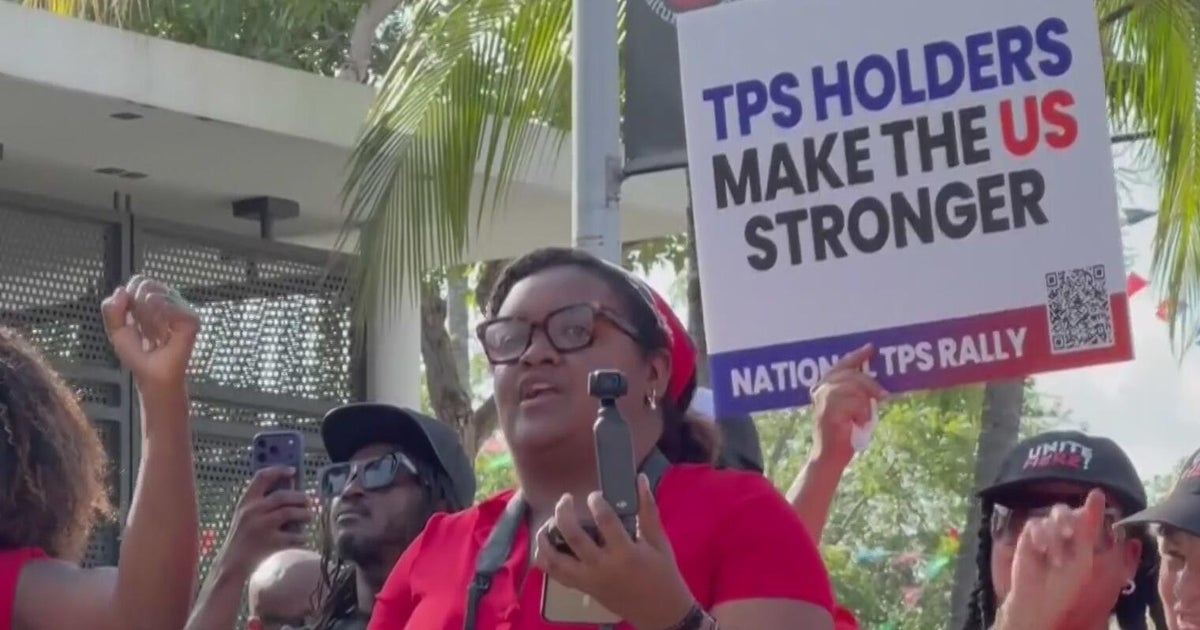
CE) has made plans to ramp up operations to arrest and deport Haitian migrants.
This comes as more than 300,000 Haitians prepare to lose deportation protections and work permits under the Temporary Protected Status program, TPS.
For 90-year-old Allyn McKinney, the issue is deeply personal
McKinney relies on a Haitian caregiver who has cared for his family for more than a decade. CBS News is not identifying the caregiver because her immigration status could be affected by upcoming changes to TPS
He said the prospect of losing his caregiver would be difficult, but he worries even more about what deportation could mean for her future
“It would be tough,” McKinney said. “But it would be tougher on her. And that bothers me more than me.”
McKinney’s caregiver has lived in the United States for more than a decade. Haiti, the country she could be forced to return to, remains under a Level 4 travel advisory from the U.S. State Department, which warns Americans not to travel there because of crime, kidnapping and civil unrest
As uncertainty over TPS continues, McKinney has sought legal help from immigration attorney Emmanuella Telfort
Telfort said many Haitian TPS holders have spent years building lives, careers and families in the United States, but lack a clear pathway to permanent legal status
“If temporary, that term temporary is the sticking point,” Telfort said. “Let’s take out the temporary word and let’s establish a more permanent pathway for these individuals that is humane. That is the right thing to do.”
Telfort said some immigration pathways can take decades to complete, while TPS protections for Haitians have existed since the program was first extended following Haiti’s devastating 2010 earthquake
Last month, a court decision allowed the administration to move forward with ending certain TPS protections for Haitians. Administration officials have argued that the designation was never intended to be permanent
McKinney, a military veteran, said he believes the country should do more to protect immigrants who have become integral members of their communities
“I’m embarrassed for our country,” McKinney said. “As a veteran. As an American citizen. I’m embarrassed. This is not the country I grew up in.”
In a statement to CBS News, the Department of Homeland Security said individuals who lose their legal status should voluntarily depart the United States
