


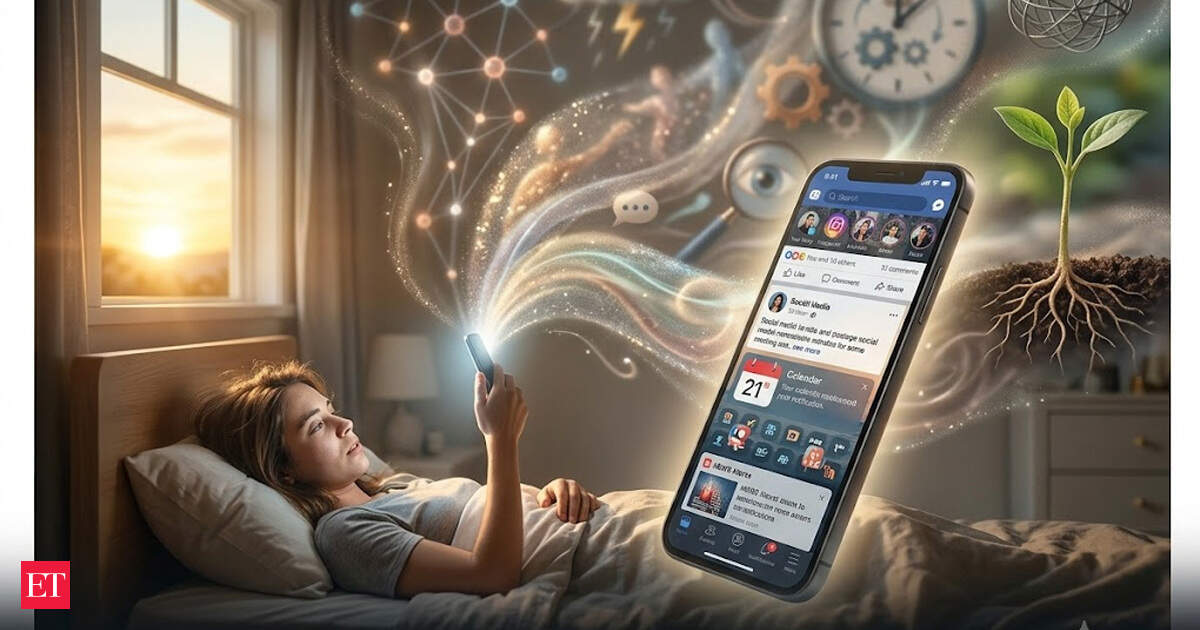
As soon as you wake up, your hand reaches for your phone before you even get out of bed. For many people, checking messages, social media, email, or the news has become an automatic part of their morning routine. But what looks like a simple habit may reveal something about how a person responds to uncertainty, stimulation and connection. Research does not suggest that everyone who checks a phone after waking has the same personality or psychological issue. Instead, scientists point to several possible reasons behind the behavior, including habit, curiosity, social connection and the desire to know what happened while they were asleep. Recent research also suggests that the timing and type of phone use may matter.May Reflect a Strong Habit LoopReaching for a phone immediately after waking can become an automatic behavior rather than a conscious decision. Researchers Maxi Heitmayer and Saadi Lahlou, who studied smartphone behavior in real-life settings, found that many phone interactions were initiated by users themselves rather than notifications. Their research suggested that smartphone use is strongly shaped by learned routines and habits. That means the morning check may happen simply because the brain has learned to associate waking up with reaching for the device.Can Be About Curiosity and ConnectionA phone provides instant access to messages, social media, news and information. For some people, checking it first thing may satisfy curiosity or create a quick feeling of connection with the outside world. A 2022 study by researchers – Kyue Taek Oh and his colleagues – examining morning behavior found that 60% of participants said they usually checked their smartphones after waking. Among those users, social networking and messaging were common activities, followed by checking the time and reading online news. The behavior, therefore, is not necessarily about addiction. It can also reflect a desire to reconnect, stay informed or reduce uncertainty.Notifications Can Quickly Capture AttentionThe first few minutes of the day can also become mentally crowded when a phone immediately delivers alerts, messages and headlines. Researchers found that notifications alone could disrupt attention and trigger task-irrelevant thoughts, even when participants did not actively use their phones. More recent research by Hippolyte Fournier and colleagues, published in ‘Computers in Human Behavior’ in 2026, similarly found that social-media notifications produced a temporary slowdown in cognitive processing. The effect was stronger among people who interacted with their smartphones more frequently.The Morning Check May Reveal a Need for StimulationSome people simply enjoy beginning the day with information and activity. Others may find quiet moments uncomfortable and instinctively reach for stimulation. A 2026 study by Li Min Wang, Andrea Montanari, Noam Gal and colleagues examined the timing of smartphone engagement and mental-health symptoms. The researchers found that the relationship varied depending on the type and timing of phone use. Higher overall phone exposure in the morning was associated with reported anxiety, while some forms of morning social and process-related use showed different patterns. This is an important distinction: checking a phone in the morning does not automatically mean someone is anxious, addicted or unhealthy. The content, frequency, motivation and overall pattern matter.Checking your phone immediately after waking up may seem like a harmless modern ritual, but psychology and behavioral research suggest that the habit can reflect several different motivations. It may be driven by routine, curiosity, social connection, the desire for information or simply the brain’s learned attraction to digital stimulation.Research by Heitmayer and Lahlou highlights how strongly smartphone behavior can become habitual, while studies of notifications show that digital alerts can compete for attention. More recent research also suggests that morning phone use may have different psychological associations depending on what people are doing on their devices.The key takeaway is not that checking your phone makes you a certain type of person. Instead, it may be worth asking why you reach for it first. If the answer is habit, creating a few phone-free minutes after waking may help you start the day more intentionally.Add 
as a Reliable and Trusted News Source

Add Now!
(You can now subscribe to our Economic Times WhatsApp channel)
Read More News on
Psychology of checking phone after waking uppsychology and smartphone usemorning smartphone routinesocial media habitsdigital stimulation in the morningimpact of notifications on attentionmorning habits and anxietychecking phone after waking up
(Catch all the US News, UK News, Canada News, International Breaking News Events, and Latest News Updates on The Economic Times.)
Download The Economic Times News App to get Daily International News Updates
…moreless
(You can now subscribe to our Economic Times WhatsApp channel)
Read More News on
Psychology of checking phone after waking uppsychology and smartphone usemorning smartphone routinesocial media habitsdigital stimulation in the morningimpact of notifications on attentionmorning habits and anxietychecking phone after waking up
(Catch all the US News, UK News, Canada News, International Breaking News Events, and Latest News Updates on The Economic Times.)
Download The Economic Times News App to get Daily International News Updates
…moreless
