


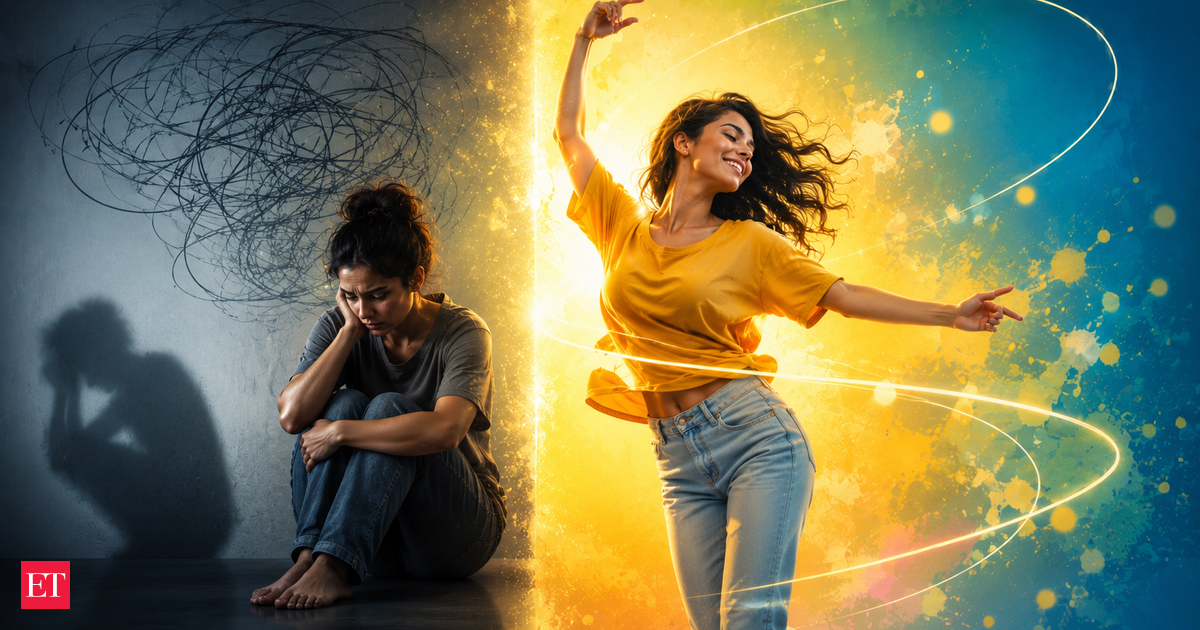

At weddings, parties, and concerts, you’ll often notice two groups of people. One group happily dances without worrying about what others think. The other stays seated, insisting, “I can’t dance.”Psychology says that believing you can’t dance doesn’t automatically mean you lack rhythm or coordination. In many cases, psychological factors play just as important a role as physical ability. Researchers have found that confidence, body awareness, previous experiences, and fear of judgment can strongly influence whether someone steps onto the dance floor.
Low self-efficacy can reduce confidence
One of the strongest explanations comes from psychologist Albert Bandura’s Self-Efficacy Theory. It refers to a person’s belief in their ability to perform a specific task.Someone who believes they’re a “bad dancer” may avoid dancing even if they have enough physical ability to learn. For example, a person who was laughed at during a school dance performance may continue believing they’re incapable of dancing years later.According to Bandura, these beliefs often become self-fulfilling because people avoid opportunities to improve.You Might Also Like:

Psychology says people with exceptionally good handwriting may share these productive habits, not personality traits
Fear of negative evaluation keeps many people off the dance floor
Psychologists studying Social Anxiety have found that many people worry about how others will judge them.Instead of focusing on enjoying the music, they may think:
- “Everyone is watching me.”
- “I’ll look embarrassing.”
- “People will laugh.”
For example, someone may dance comfortably alone at home but refuse to dance at a wedding because the social setting feels intimidating. Often, the fear of judgment is stronger than the challenge of dancing itself.
Rhythm perception varies from person to person
Research in music psychology shows that people differ in how easily they perceive and synchronize with rhythm. Some individuals naturally recognize musical beats quickly, while others require more practice.You Might Also Like:

Psychology says employers who repeatedly pay salaries late aren’t just damaging trust, they may also lack leadership skills
For example, beginners may struggle to clap in time with music, but regular exposure and practice often improve rhythmic accuracy. Difficulty keeping rhythm is usually a skill difference, not a personality trait.
Body awareness influences movement
Another explanation involves proprioception, sometimes called body awareness. Proprioception allows the brain to understand where different body parts are without constantly looking at them.People with stronger body awareness often find it easier to coordinate complex movements. For example, athletes, gymnasts, and musicians frequently develop excellent body awareness through repeated practice, which can also make dancing easier.
Practice changes the brain
Psychologist K. Anders Ericsson’s Deliberate Practice Theory suggests that complex skills improve through focused, repeated practice. Few people become skilled dancers naturally.Professional dancers spend thousands of hours practicing movement, timing, posture, and coordination. Someone who has never danced before may simply lack experience, not ability. Psychology consistently shows that practice changes performance.
Growth mindset encourages improvement
Psychologist Carol Dweck’s Growth Mindset Theory suggests that people who believe abilities can improve through effort are more likely to continue learning. Someone with a fixed mindset may say: “I’m just not a dancer.”Someone with a growth mindset is more likely to say: “I’m not good yet, but I can improve.” This difference in thinking often determines whether people continue practicing or give up.
Dancing is also an emotional experience
Research on Embodied Cognition suggests that movement and emotion influence one another. People who feel relaxed, joyful, and emotionally safe often move more naturally.For example, someone dancing with close friends at home may feel comfortable expressing themselves, while the same person may become stiff in front of strangers. The emotional environment often affects movement just as much as physical coordination.
Is dancing a natural talent or a learned skill?
Research suggests that while people differ in rhythm perception and coordination, dancing is largely a learnable skill that improves with practice.
Why do some people feel embarrassed while dancing?
Fear of negative evaluation and social anxiety can make people worry about being judged, even in friendly social settings.Add 
as a Reliable and Trusted News Source

Add Now!
(You can now subscribe to our Economic Times WhatsApp channel)
Read More News on
psychology of dance confidencepractice in dance skillsfear of negative evaluationsocial anxiety and dancinggrowth mindset
(Catch all the US News, UK News, Canada News, International Breaking News Events, and Latest News Updates on The Economic Times.)
Download The Economic Times News App to get Daily International News Updates
…moreless
(You can now subscribe to our Economic Times WhatsApp channel)
Read More News on
psychology of dance confidencepractice in dance skillsfear of negative evaluationsocial anxiety and dancinggrowth mindset
(Catch all the US News, UK News, Canada News, International Breaking News Events, and Latest News Updates on The Economic Times.)
Download The Economic Times News App to get Daily International News Updates
…moreless
