


Abstract
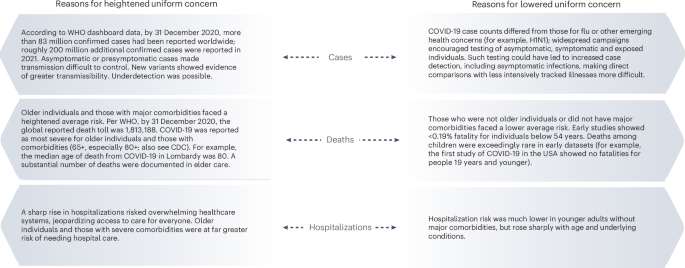
With the acute stage of COVID-19 behind us, reflection can inform future preparedness. During the pandemic, behavioural and social sciences often studied human behaviour through the lens of alignment with public health recommendations, implicitly treating concern and compliance as desirable and rational. While understandable, this emphasis was relatively narrow. Uncertainty, uneven risk distribution and competing values could have led to heterogeneous appraisals of risk and intervention benefit, even with the evidence available at the time. We show that engaging with the possibility that people could have been heterogeneously rational can broaden understanding of behaviour during COVID-19. Our aim is not to revisit the legitimacy of the response but to encourage reflection on the role of behavioural and social sciences in knowledge generation and highlight opportunities to examine pandemic salience and risk calibration. We outline research directions to guide the field and strengthen decision-making, trust and adaptability in future crises, promoting short-term compliance and long-term trust.
This is a preview of subscription content, access
Access options
Access through your institution
- Purchase on SpringerLink
- Instant access to the full article PDF.
39,95 €
Prices may be subject to local taxes which are calculated during checkout
Subjects
- Human behaviour
References
Van Bavel, J. J. et al. Using social and behavioural science to support COVID-19 pandemic response. Nat. Hum. Behav.4, 460–471 (2020)
West, R., Michie, S., Rubin, G. J. & Amlôt, R. Applying principles of behaviour change to reduce SARS-CoV-2 transmission. Nat. Hum. Behav.4, 451–459 (2020)
Hunter, C. M., Chou, W.-Y. S. & Hooper, M. W. Behavioral and social science in support of SARS-CoV-2 vaccination: National Institutes of Health initiatives. Transl. Behav. Med.11, 1354–1358 (2021)
Gray, K. & Kubin, E. in Advances in Experimental Social Psychology vol. 70 (ed. Gawronski, B.) 137–220 (Academic Press, 2024)
Douglas, M. K. Antecedents and consequences of science-related conspiracy beliefs. Curr. Opin. Psychol.67, 102191 (2026)
Pärnamets, P., Alfano, M., Ross, R. M. & Van Bavel, J. J. Open-mindedness predicts support for public health measures and disbelief in conspiracy theories during the COVID-19 pandemic across 68 countries. Judgm. Decis. Mak.21, e8 (2026)
Cologna, V. et al. Trust in scientists and their role in society across 68 countries. Nat. Hum. Behav. https://doi.org/10.1038/s41562-024-02090-5 (2025)
Van Bavel, J. J., Gadarian, S. K., Knowles, E. & Ruggeri, K. Political polarization and health. Nat. Med.30, 3085–3093 (2024)
Nicomedes, C. J. C. & Avila, R. M. A. An analysis on the panic during COVID-19 pandemic through an online form. J. Affect Disord.276, 14–22 (2020)
Kniffin, M. K. et al. COVID-19 and the workplace: implications, issues, and insights for future research and action. Am. Psychol.76, 63–77 (2021)
Karantzas, C. G. & Simpson, A. J. Separation, social isolation, and loss in the context of COVID-19 and beyond. Curr. Opin. Psychol.47, 101400 (2022)
Albarracin, D., Oyserman, D. & Schwarz, N. Health communication and behavioral change during the COVID-19 pandemic. Perspect. Psychol. Sci.19, 612–623 (2024)
Ratcliff, C. L., Wicke, R. & Harvill, B. Communicating uncertainty to the public during the COVID-19 pandemic: a scoping review of the literature. Ann. Int. Commun. Assoc.46, 260–289 (2022)
Lewis, A. N. & Wai, J. Communicating what we know and what isn’t so: science communication in psychology. Perspect. Psychol. Sci.16, 1242–1254 (2021)
Clark, C., Davila, A., Regis, M. & Kraus, S. Predictors of COVID-19 voluntary compliance behaviors: an international investigation. Glob. Transit.2, 76–82 (2020)
Ruggeri, K. et al. A synthesis of evidence for policy from behavioural science during COVID-19. Nature625, 134–147 (2024)
Mills, R. et al. The prosocial phenotype and co-operative health protective behaviors: insights from COVID-19. Health Psychol.https://doi.org/10.1037/hea0001561 (2025)
Butterworth, J., Smerdon, D., Baumeister, R. & von Hippel, W. Cooperation in the time of COVID. Perspect. Psychol. Sci.19, 640–651 (2024)
Miller, M. M. The Social Science of the COVID-19 Pandemic (Oxford Univ. Press, 2023)
Habersaat, K. B. et al. Ten considerations for effectively managing the COVID-19 transition. Nat. Hum. Behav.4, 677–687 (2020)
Triberti, S., Durosini, I. & Pravettoni, G. Social distancing is the right thing to do: Dark Triad behavioral correlates in the COVID-19 quarantine. Pers. Individ. Dif.170, 110453 (2021)
Madsen, K. J. et al. Behavioral science should start by assuming people are reasonable. Trends Cogn. Sci.28, 583–585 (2024)
Imhoff, R. & Lamberty, P. A bioweapon or a hoax? The link between distinct conspiracy beliefs about the coronavirus disease (COVID-19) outbreak and pandemic behavior. Soc. Psychol. Pers. Sci.11, 1110–1118 (2020)
Fauci, A. S., Lane, C. H. & Redfield, R. R. COVID-19—navigating the uncharted. N. Engl. J. Med.382, 1268–1269 (2020)
Perlman, S. & Peiris, M. Coronavirus research: knowledge gaps and research priorities. Nat. Rev. Microbiol.21, 125–126 (2023)
Sunstein, C. R. Averting Catastrophe: Decision Theory for COVID-19, Climate Change, and Potential Disasters of All Kinds (NYU Press, 2021)
Sunstein, C. R. Risk and Reason: Safety, Law, and the Environment (Cambridge Univ. Press, 2002)
Norheim, O. F. et al. Difficult trade-offs in response to COVID-19: the case for open and inclusive decision making. Nat. Med.27, 10–13 (2021)
Spiegelhalter, D. The Art of Uncertainty: How to Navigate Chance, Ignorance, Risk and Luck (Pelican Books, 2024)
Coronavirus Disease 2019 (COVID-19) Situation Report 51. WHOhttps://www.who.int/docs/default-pdf?sfvrsn=1ba62e57_10 (2020)
Coronavirus Disease 2019 (COVID-19): Situation Report 50. WHOhttps://www.who.int/docs/default-pdf? (2020)
Alwan, N. A. et al. Scientific consensus on the COVID-19 pandemic: we need to act now. Lancethttps://doi.org/10.1016/S0140-6736(20)32153-X (2020)
Manson, J. H. Right-wing authoritarianism, left-wing authoritarianism, and pandemic-mitigation authoritarianism. Pers. Individ. Dif.167, 110251 (2020)
Bor, A., Jørgensen, F. & Petersen, M. B. Discriminatory attitudes against unvaccinated people during the pandemic. Nature613, 704–711 (2023)
Nogrady, B. ‘I hope you die’: how the COVID pandemic unleashed attacks on scientists. Nature598, 250–253 (2021)
Hotez, P. J. The Deadly Rise of Anti-Science (Johns Hopkins, 2025)
Michie, S. et al. Reducing SARS-CoV-2 transmission in the UK: a behavioural science approach to identifying options for increasing adherence to social distancing and shielding vulnerable people. Br. J. Health Psychol.25, 945–956 (2020)
Chater, A. et al. Health psychology, behavioural science and COVID-19 disease prevention. Health Psychol. Update29, 3–9 (2020)
Jørgensen, F., Bor, A. & Petersen, M. B. Compliance without fear: individual-level protective behaviour during the first wave of the COVID-19 pandemic. Br. J. Health Psychol.26, 679–696 (2021)
Mertens, G., Engelhard, I. M., Novacek, D. M. & McNally, R. J. Managing fear during pandemics: risks and opportunities. Perspect. Psychol. Sci.19, 652–659 (2024)
Stolow, J. A., Moses, L. M., Lederer, A. M. & Carter, R. How fear appeal approaches in COVID-19 health communication may be harming the global community. Health Educ. Behav.47, 531–535 (2020)
Lammers, J., Crusius, J. & Gast, A. Correcting misperceptions of exponential coronavirus growth increases support for social distancing. Proc. Natl Acad. Sci. USA117, 16264–16266 (2020)
Teichman, D. & Zamir, E. Exponential growth bias and the law: why do we save too little, borrow too much, and fail to react on time to deadly pandemics and climate change. Vand. Law Rev.75, 1345–1400 (2023)
Orte, C., Sánchez-Prieto, L., Domínguez, C. D. & Barrientos-Báez, A. Evaluation of distress and risk perception associated with COVID-19 in vulnerable groups. Int. J. Environ. Res. Public Health17, 9207 (2020)
Winter, T., Riordan, B. C., Scarf, D. & Jose, P. E. Conspiracy beliefs and distrust of science predict reluctance to vaccine uptake among politically right-wing citizens. Vaccine40, 1896–1903 (2022)
Stecula, D. A. & Pickup, M. How populism and conservative media fuel conspiracy beliefs about COVID-19 and what it means for COVID-19 behaviors. Res. Polit.8, 2053168021993979 (2021)
Roozenbeek, J. et al. Susceptibility to misinformation about COVID-19 around the world. R. Soc. Open Sci.7, 201199 (2020)
Romer, D. & Jamieson, K. H. Conspiracy theories as barriers to controlling the spread of COVID-19 in the U.S. Soc. Sci. Med.263, 113356 (2020)
Suthaharan, P. et al. Paranoia and belief updating during the COVID-19 crisis. Nat. Hum. Behav.5, 1190–1202 (2021)
Bierwiaczonek, K., Gundersen, A. B. & Kunst, J. R. The role of conspiracy beliefs for COVID-19 health responses: a meta-analysis. Curr. Opin. Psychol.46, 101346 (2022)
Brashier, N. M. Fighting misinformation among the most vulnerable users. Curr. Opin. Psychol.57, 101813 (2024)
Prooijen, J.-W. & Böhm, N. Do conspiracy theories shape or rationalize vaccination hesitancy over time? Soc. Psychol. Pers. Sci.15, 421–429 (2024)
Jamison, M. A. et al. Not just conspiracy theories: vaccine opponents and proponents add to the COVID-19 ‘infodemic’ on Twitter. Harv. Kennedy Sch. Misinf. Rev.https://doi.org/10.37016/mr-2020-38 (2020)
Southwell, B. G. et al. Misinformation as a misunderstood challenge to public health. Am. J. Prev. Med.57, 282–285 (2019)
Allen, J., Watts, J. D. & Rand, G. D. Quantifying the impact of misinformation and vaccine-skeptical content on Facebook. Sciencehttps://doi.org/10.1126/science.adk3451 (2024)
Van Bavel, J. J. et al. The costs of polarizing a pandemic: antecedents, consequences, and lessons. Perspect. Psychol. Sci. https://doi.org/10.1177/17456916231190395 (2023)
Inglesby, T. V., Nuzzo, B. J., O’Toole, T. & Henderson, A. D. Disease mitigation measures in the control of pandemic influenza. Biosecur. Bioterror.4, 366–375 (2006)
Raffle, E. A., Pollock, M. A. & Harding-Edgar, L. COVID-19 mass testing programmes. BMJhttps://doi.org/10.1136/bmj.m3262 (2020)
Mercer, T. R. & Salit, M. Testing at scale during the COVID-19 pandemic. Nat. Rev. Gen.22, 415–426 (2021)
Basoulis, D. et al. Deaths ‘due to’ COVID-19 and deaths ‘with’ COVID-19 during the Omicron variant surge, among hospitalized patients in seven tertiary-care hospitals, Athens, Greece. Sci. Rep. https://doi.org/10.1038/s41598-025-98834-y (2025)
Gill, R. J. & DeJoseph, E. M. The importance of proper death certification during the COVID-19 pandemic. JAMA324, 27–28 (2020)
Søreide, K. et al. Immediate and long-term impact of the COVID-19 pandemic on delivery of surgical services. Br. J. Surg.107, 1250–1261 (2020)
Raza, M., Giri, P. & Basu, S. Surveillance and return to work of healthcare workers following SARS-CoV-2 omicron variant infection, Sheffield, England, 17 January to 7 February 2022. Eurosurveillancehttps://doi.org/10.2807/1560-7917.ES.2022.27.11.2200164 (2022)
Davis, H. E., McCorkell, L., Vogel, J. M. & Topol, E. J. Long COVID: major findings, mechanisms and recommendations. Nat. Rev. Microbiol.21, 133–146 (2023)
Høeg, T. B., Ladhani, S. & Prasad, V. How methodological pitfalls have created widespread misunderstanding about long COVID. BMJ Evid. Based Med.29, 142–146 (2024)
Haslam, A., Olivier, T. & Prasad, V. The definition of long COVID used in interventional studies. Eur. J. Clin. Invest. https://doi.org/10.1111/eci.13989 (2023)
Rao, S. et al. Post-acute sequelae of SARS-CoV-2 in children. Pediatrics153, e2023062570 (2024)
O’Mahoney, L. L. et al. The prevalence and long-term health effects of long COVID among hospitalised and non-hospitalised populations: a systematic review and meta-analysis. EClinicalMedicine55, 101762 (2023)
Badker, R. et al. Challenges in reported COVID-19 data: best practices and recommendations for future epidemics. BMJ Glob. Health6, e005542 (2021)
Cauchemez, S., Bosetti, P. & Cowling, J. B. Managing
Boccia, S., Ricciardi, W. & Ioannidis, J. P. A. What other countries can learn from Italy during the COVID-19 pandemic? JAMA Intern. Med.180, 927–928 (2020)
Ioannidis, J. P. A., Axfors, C. & Contopoulos-Ioannidis, D. G. Population-level COVID-19 mortality risk for non-elderly individuals overall and for non-elderly individuals without underlying diseases in pandemic epicenters. Environ. Res.188, 109890 (2020)
Giubilini, A. The Ethics of Vaccination (Palgrave Pivot Cham, 2019)
Harring, N., Jagers, S. C. & Löfgren, Å. COVID-19: large-scale collective action, government intervention, and the importance of trust. World Dev.138, 105236 (2021)
Jamrozik, E., Handfield, T. & Selgelid, J. M. Victims, vectors and villains: are those who opt out of vaccination morally responsible for the deaths of others? J. Med. Ethics42, 762–768 (2016)
Savulescu, J. & Wilkinson, D. (eds) Pandemic Ethics: From COVID-19 to Disease X (Oxford University Press, 2023)
Savulescu, J., Pugh, J. & Wilkinson, D. Balancing incentives and disincentives for vaccination in a pandemic. Nat. Med.27, 1500–1503 (2021)
Cullity, G. The Moral Demands of Affluence (Oxford Univ. Press, 2004)
Paul, E., Brown, G. W., Ridde, V. & Sturmberg, J. P. Who is ‘anti-science’? Public Health Pract.7, 100493 (2024)
Jordan, J. J., Yoeli, E. & Rand, G. D. Don’t get it or don’t spread it: comparing self-interested versus prosocial motivations for COVID-19 prevention behaviors. Sci. Rep. https://doi.org/10.1038/s41598-021-97617-5 (2021)
Prasad, V. & Haslam, A. COVID-19 vaccines: history of the pandemic’s great scientific success and flawed policy implementation. Monash Bioeth. Rev.42, 28–54 (2024)
Bardosh, K. et al. COVID-19 vaccine boosters for young adults: a risk–benefit assessment and ethical analysis of mandate policies at universities. J. Med. Ethics50, 126–138 (2024)
Kass, N. E. An ethics framework for public health. Am. J. Public Health.91, 1776–1782 (2001)
Baral, S. D., Mishra, S., Diouf, D., Phanuphak, N. & Dowdy, D. The public health response to COVID-19: balancing precaution and unintended consequences. Ann. Epidemiol.46, 12–13 (2020)
Savulescu, J. & Cameron, J. Why lockdown of the elderly is not ageist and why levelling down equality is wrong. J. Med. Ethics46, 717–721 (2020)
Angelici, M., Berta, P., Costa-Font, J. & Turati, G. Divided we survive? Multilevel governance during the COVID-19 pandemic in Italy and Spain. Publius53, 227–250 (2023)
Rehfuess, A. E. et al. Public health and social measures during health emergencies such as the COVID-19 pandemic: an initial framework to conceptualize and classify measures. Influenza Other Respir. Viruseshttps://doi.org/10.1111/irv.13110 (2023)
Suryanarayanan, P. et al. AI-assisted tracking of worldwide non-pharmaceutical interventions for COVID-19. Sci. Datahttps://doi.org/10.1038/s41597-021-00878-y (2021)
Baral, S. et al. Leveraging epidemiological principles to evaluate Sweden’s COVID-19 response. Ann. Epidemiol.54, 21–26 (2021)
Block, J. Vaccinating people who have had COVID-19: why doesn’t natural immunity count in the US? BMJhttps://doi.org/10.1136/bmj.n2101 (2021)
Rubin, R. The CDC no longer recommends COVID-19 shots during pregnancy—now what? JAMA334, 469–472 (2025)
Flaxman, S. et al. Assessment of COVID-19 as the underlying cause of death among children and young people aged 0 to 19 years in the US. JAMA Netw. Open6, e2253590 (2023)
Dagan, N. et al. BNT162b2 mRNA COVID-19 vaccine in a nationwide mass vaccination setting. N. Engl. J. Med.384, 1412–1423 (2021)
Ferreira, M., Cheong, M., Klein, C. & Alfano, M. A tragic coalition of the rational and irrational: a threat to collective responses to COVID-19. Phil. Psychol.36, 1062–1079 (2023)
Schoemaker, P. J. H. & Tetlock, P. E. Taboo scenarios: how to think about the unthinkable. Calif. Manage. Rev.54, 5–24 (2012)
Tetlock, P. E., Kristel, O. V., Elson, S. B., Green, M. C. & Lerner, J. S. The psychology of the unthinkable: taboo trade-offs, forbidden base rates, and heretical counterfactuals. J. Pers. Soc. Psychol.75, 853–870 (2000)
Kuran, T. & Sunstein, C. R. Availability cascades and risk regulation. Stanford Law Rev.51, 683–768 (1999)
Foss, J. N. Behavioral strategy and the COVID-19 disruption. J. Manage.46, 1322–1329 (2020)
Oxman, D. A. et al. Health communication in and out of public health emergencies: to persuade or to inform? Health Res. Policy Syst. https://doi.org/10.1186/s12961-022-00828-z (2022)
Biana, H. T. & Joaquin, J. J. B. The ethics of scare: COVID-19 and the Philippines’ fear appeals. Public Health183, 2–3 (2020)
Kepp, K. P. et al. Zero-COVID advocacy during the COVID-19 pandemic: a case study of views on Twitter/X. Monash Bioeth. Rev.42, 169–199 (2024)
Woolf, S. H., Chapman, D. A. & Lee, J. H. COVID-19 as the leading cause of death in the United States. JAMA325, 123–124 (2021)
Council, P. Demographic data on the victims of the September 11, 2001 terror attack on the World Trade Center, New York City. Popul. Dev. Rev.28, 586–588 (2002)
Torjesen, I. COVID-19: Sweden vows greater protection for academics as researcher quits after aggressive social media attack. BMJ372, n489 (2021)
Graso, M., Chen, F. X. & Reynolds, T. Moralization of COVID-19 health response: asymmetry in tolerance for human costs. J. Exp. Soc. Psychol.93, 104084 (2021)
Tetlock, P. E. Thinking the unthinkable: sacred values and taboo cognitions. Trends Cogn. Sci.7, 320–324 (2003)
Skitka, L. J., Hanson, B. E., Morgan, G. S. & Wisneski, D. C. The psychology of moral conviction. Annu. Rev. Psychol.72, 347–366 (2021)
Clark, C. J. et al. Prosocial motives underlie scientific censorship by scientists: a perspective and research agenda. Proc. Natl Acad. Sci. USA120, e2301642120 (2023)
Attema, A. E., L’Haridon, O., Raude, J. & Seror, V. Beliefs and risk perceptions about COVID-19: evidence from two successive French representative surveys during lockdown. Front. Psychol.12, 619145 (2021)
Ladapo, J. A., Rothwell, J. T. & Ramirez, C. M. Misperceptions of COVID-19 illness risk and preferences for business and school closures in the United States. Prev. Med. Rep.27, 101780 (2022)
Bruine de Bruin, W., Saw, H.-W. & Goldman, D. P. Political polarization in US residents’ COVID-19 risk perceptions, policy preferences, and protective behaviors. J. Risk. Uncertain.61, 177–194 (2020)
Bobba, G. & Hube, N. Populism and the Politicization of the COVID-19 Crisis in Europe (Palgrave Macmillan, 2021)
Fayaz-Farkhad, B. & Jung, H. Do COVID-19 vaccination policies backfire? The effects of mandates, vaccination passports, and financial incentives on COVID-19 vaccination. Perspect. Psychol. Sci.19, 660–674 (2023)
Rosenfeld, L. D. et al. Psychological science in the wake of COVID-19: social, methodological, and metascientific considerations. Perspect. Psychol. Sci.17, 311–333 (2022)
Cheek, N. N., Reutskaja, E. & Schwartz, B. Balancing the freedom–security trade-off during crises and disasters. Perspect. Psychol. Sci.17, 1024–1049 (2022)
Jefferson, T. et al. Physical interventions to interrupt or reduce the spread of respiratory viruses. Cochrane Database Syst. Rev. https://doi.org/10.1002/14651858.CD006207.pub6 (2023)
Graso, M., Henwood, A., Aquino, K., Dolan, P. & Chen, F. X. The dark side of belief in COVID-19 scientists and scientific evidence. Pers. Individ. Dif.193, 111594 (2022)
Escandón, K. et al. COVID-19 false dichotomies and a comprehensive review of the evidence regarding public health, COVID-19 symptomatology, SARS-CoV-2 transmission, mask wearing, and reinfection. BMC Infect. Dis. https://doi.org/10.1186/s12879-021-06357-4 (2021)
Siegrist, M. & Bearth, A. Worldviews, trust, and risk perceptions shape public acceptance of COVID-19 public health measures. Proc. Natl Acad. Sci. USA118, e2100411118 (2021)
Allington, D., McAndrew, S., Moxham-Hall, V. & Duffy, B. Coronavirus conspiracy suspicions, general vaccine attitudes, trust and coronavirus information the COVID-19 pandemic. Psychol. Med.53, 236–247 (2023)
Hornsey, M. J. Reasons why people may refuse COVID-19 vaccination (and what can be done about it). World Psychiatry21, 217–218 (2022)
Saccardo, S. et al. Field testing the transferability of behavioural science knowledge on promoting vaccinations. Nat. Hum. Behav.8, 878–890 (2024)
Munzert, S., Selb, P., Gohdes, A., Stoetzer, F. L. & Lowe, W. Tracking and promoting the usage of a COVID-19 contact tracing app. Nat. Hum. Behav.5, 247–255 (2021)
Schmid, P. et al. Vaccination mandates and their alternatives and complements. Nat. Rev. Psychol.3, 789–803 (2024)
Savulescu, J. Good reasons to vaccinate: mandatory or payment for risk? J. Med. Ethics47, 78–85 (2021)
Eichenbaum, M., Matos, D. G. M., Lima, F., Rebelo, S. & Trabandt, M. Expectations, infections, and economic activity. J. Pol. Econ.132, 2571–2611 (2024)
Savulescu, J., Gyngell, C. & Kahane, G. Collective reflective equilibrium in practice (CREP) and controversial novel technologies. Bioethics35, 652–663 (2021)
Savulescu, J., Kahane, G. & Gyngell, C. From public preferences to ethical policy. Nat. Hum. Behav.3, 1241–1243 (2019)
Fediuk, T. A., Pace, K. M. & Botero, I. C. in The Handbook of Crisis Communication (eds Coombs, W. T. & Holladay, S. J.) Ch. 10 (Wiley-Blackwell, 2010)
Stanton, N. A., Margaryan, A. & Littlejohn, A. Editorial: learning from incidents. Saf. Sci.99, 1–4 (2017)
Chetty, R. et al. The economic impacts of COVID-19: evidence from a new public database built using private sector data. Q. J. Econ.139, 829–889 (2024)
Bardosh, K., Lacour, M., Pronin, K., Aste, C. N. & Koppl, R. How many democratic countries have conducted COVID-19 public inquiries? An exploratory study of government-led postpandemic reviews (2020–2024). BMJ Public Health3, e002567 (2025)
Conley, D. & Johnson, T. Past is future for the era of COVID-19 research in the social sciences. Proc. Natl Acad. Sci. USA118, e2104155118 (2021)
Ijzerman, H. et al. Use caution when applying behavioural science to policy. Nat. Hum. Behav.4, 1092–1094 (2020)
Marcoci, A. et al. Predicting the replicability of social and behavioural science claims in COVID-19 preprints. Nat. Hum. Behav.9, 287–304 (2025)
Collins, H. Are We All Scientific Experts Now? (Polity, 2014)
Dryhurst, S. et al. Risk perceptions of COVID-19 around the world. J. Risk Res.23, 994–1006 (2020)
Maitlis, S. The social processes of organizational sensemaking. Acad. Manage. J.48, 21–49 (2005)
Bryan, J. C., Tipton, E. & Yeager, S. D. Behavioural science is unlikely to change the world without a heterogeneity revolution. Nat. Hum. Behav.5, 980–989 (2021)
Tetlock, P. E., Mellers, B. A., Rohrbaugh, N. & Chen, E. Forecasting tournaments. Curr. Dir. Psychol. Sci.23, 290–295 (2014)
Levari, D. E. et al. Prevalence-induced concept change in human judgment. Science360, 1465–1467 (2018)
Hoekstra, R. & Vazire, S. Aspiring to greater intellectual humility in science. Nat. Hum. Behav.5, 1602–1607 (2021)
Lewis, A. N. What counts as good science? How the battle for methodological legitimacy affects public psychology. Am. Psychol.76, 1323–1333 (2021)
Hallsworth, M. A manifesto for applying behavioural science. Nat. Hum. Behav.7, 310–322 (2023)
Strydhorst, N., Morales-Riech, J. & Landrum, R. A. Exploring partisans’ biased and unreliable media consumption and their misinformed health-related beliefs. Harv. Kennedy Sch. Misinf. Rev. https://doi.org/10.37016/mr-2020-125 (2023)
Voelkel, G. J. et al. Megastudy testing 25 treatments to reduce antidemocratic attitudes and partisan animosity. Sciencehttps://doi.org/10.1126/science.adh4764 (2024)
Isch, C., Tetlock, P. E. & Clark, C. J. Reflections on adversarial collaboration from the adversaries: was it worth it? Theory Soc. https://doi.org/10.1007/s11186-025-09634-2 (2025)
Epidemiology Working Group for NCIP Epidemic Response, Chinese Center for Disease Control and Prevention. The epidemiological characteristics of an outbreak of 2019 novel coronavirus diseases (COVID-19) in China. Zhonghua Liu Xing Bing Xue Za Zhi41, 145–151 (2020)
Wu, Z. & McGoogan, M. J. Characteristics of and important lessons from the coronavirus disease 2019 (COVID-19) outbreak in China. JAMA323, 1239–1242 (2020)
Chowdhury, D. S. & Oommen, M. A. Epidemiology of COVID-19. J. Dig. Endosc.11, 3–7 (2020)
Bialek, S. et al. Severe outcomes among patients with coronavirus disease 2019 (COVID-19)—United States, February 12–March 16, 2020. MMWR Morb. Mortal. Wkly Rep.69, 343–346 (2020)
Li, Q. et al. Early transmission dynamics in Wuhan, China, of novel coronavirus-infected pneumonia. N. Engl. J. Med.382, 1199–1207 (2020)
Wu, T. J., Leung, K. & Leung, M. G. Nowcasting and forecasting the potential domestic and international spread of the 2019-nCoV outbreak originating in Wuhan, China: a modelling study. Lancet395, 689–697 (2020)
Flaxman, S. et al. Estimating the effects of non-pharmaceutical interventions on COVID-19 in Europe. Nature584, 257–261 (2020)
Neil, F. et al. Report 9: Impact of Non-pharmaceutical Interventions (NPIs) to Reduce COVID19 Mortality and Healthcare Demand (Imperial College London, 2020)
Grasselli, G., Pesenti, A. & Cecconi, M. Critical care utilization for the COVID-19 outbreak in Lombardy, Italy: early experience and forecast during an emergency response. JAMA323, 1545–1546 (2020)
Chan, J.F.W. et al. A familial cluster of pneumonia associated with the 2019 novel coronavirus indicating person-to-person transmission: a study of a family cluster. Lancet395, 514–523 (2020)
Lukić, P. & Žeželj, I. Ideological neglect of unwarranted trust in science. Theor. Soc.55, 2 (2026)
Rosenfeld, L. D. & Tomiyama, J. A. Moral judgments of COVID-19 social distancing violations: the roles of perceived harm and impurity. Pers. Soc. Psychol. Bull.48, 766–781 (2022)
Lantz, B. & Wenger, R. M. Anti-Asian xenophobia, hate crime victimization, and fear of victimization during the COVID-19 pandemic. J. Interpers. Violence38, 1088–1116 (2023)
Motta, M., Stecula, D. & Farhart, C. How right-leaning media coverage of COVID-19 facilitated the spread of misinformation in the early stages of the pandemic in the U.S. Can. J. Polit. Sci.53, 335–342 (2020)
Conway, L. G., Woodard, S. R., Zubrod, A. & Chan, L. Why are conservatives less concerned about the coronavirus (COVID-19) than liberals? Comparing political, experiential, and partisan messaging explanations. Pers. Individ. Dif.183, 111124 (2021)
Gao, W., Lv, J., Pang, Y. & Li, L.-M. Role of asymptomatic and pre-symptomatic infections in the COVID-19 pandemic. BMJ375, n2342 (2021)
Nielsen, B. F., Sneppen, K. & Simonsen, L. The counterintuitive implications of superspreading diseases. Nat. Commun.14, 6954 (2023)
Davies, N. G. et al. Increased mortality in community-tested cases of SARS-CoV-2 lineage B.1.1.7. Nature593, 270–274 (2021)
Shankar, A. G. et al. Contact tracing for influenza A(H1N1)pdm09 virus-infected passenger on international flight. Emerg. Infect. Dis.20, 118–120 (2014)
Ioannidis, J. P. A., Axfors, C. & Contopoulos-Ioannidis, D. G. Second versus first wave of COVID-19 deaths: shifts in age distribution and in nursing home fatalities. Environ. Res.195, 110856 (2021)
Cousins, S. Experts criticise Australia’s aged care failings over COVID-19. Lancet396, 1322–1323 (2020)
Mahajan, S. et al. SARS-CoV-2 infection hospitalization rate and infection fatality rate among the non-congregate population in Connecticut. Am. J. Med.134, 812–816.e812 (2021)
Kokudo, N. & Sugiyama, H. Hospital capacity during the COVID-19 pandemic. Glob. Health Med.3, 56–59 (2021)
Dashti, H., Roche, E. C., Bates, D. W., Mora, S. & Demler, O. SARS2 simplified scores to estimate risk of hospitalization and death among patients with COVID-19. Sci. Rep.11, 4945 (2021)
Kompaniyets, L. et al. Body mass index and risk for COVID-19-related hospitalization, intensive care unit admission, invasive mechanical ventilation, and death—United States, March–December 2020. MMWR Morb. Mortal. Wkly Rep.70, 355–361 (2021)
Piroth, L. et al. Comparison of the characteristics, morbidity, and mortality of COVID-19 and seasonal influenza: a nationwide, population-based retrospective cohort study. Lancet Respir. Med.9, 251–259 (2021)
Polack, F. P. et al. Safety and efficacy of the BNT162b2 mRNA COVID-19 vaccine. N. Engl. J. Med.383, 2603–2615 (2020)
Baden, R. L. et al. Efficacy and safety of the mRNA-1273 SARS-CoV-2 vaccine. N. Engl. J. Med.384, 403–416 (2021)
Olliaro, P., Torreele, E. & Vaillant, M. COVID-19 vaccine efficacy and effectiveness—the elephant (not) in the room. Lancet Microbe2, e279–e280 (2021)
Voysey, M. et al. Single-dose administration and the influence of the timing of the booster dose on immunogenicity and efficacy of ChAdOx1 nCoV-19 (AZD1222) vaccine: a pooled analysis of four randomised trials. Lancet397, 881–891 (2021)
Marcelin, J. R. et al. COVID-19 vaccines and SARS-CoV-2 transmission in the era of new variants: a review and perspective. Open Forum Infect. Dis.9, ofac124 (2022)
Anato, J. L. F. et al. Impact of a vaccine passport on first-dose SARS-CoV-2 vaccine coverage by age and area-level social determinants of health in the Canadian provinces of Quebec and Ontario: an interrupted time series analysis. CMAJ Open11, E995 (2023)
Bardosh, K. et al. The unintended consequences of COVID-19 vaccine policy: why mandates, passports and restrictions may cause more harm than good. BMJ Glob. Health7, e008684 (2022)
Andrejko, K. L. et al. Effectiveness of face mask or respirator use in indoor public settings for prevention of SARS-CoV-2 infection—California, February–December 2021. MMWR Morb. Mortal. Wkly Rep.71, 212–216 (2022)
Abaluck, J. et al. Impact of community masking on COVID-19: a cluster-randomized trial in Bangladesh. Science375, eabi9069 (2021)
Chikina, M., Pegden, W. & Recht, B. Re-analysis on the statistical sampling biases of a mask promotion trial in Bangladesh: a statistical replication. Trials23, 786 (2022)
Cowger, T. L. et al. Lifting universal masking in schools—COVID-19 incidence among students and staff. N. Engl. J. Med.387, 1935–1946 (2022)
Russell, F. M., Curtis, N. & Carlin, J. Lifting universal school masking—COVID-19 incidence among students and staff. N. Engl. J. Med.389, 578–580 (2023)
Gurbaxani, B. M., Hill, A. N. & Patel, P. Unpacking Cochrane’s update on masks and COVID-19. Am. J. Public Health113, 1075–1078 (2023)
Author information
Authors and Affiliations
Organisational Psychology, Faculty of Behavioural and Social Sciences, University of Groningen, Groningen, the Netherlands
Maja Grašo, Kyriaki Fousiani & Claudia C. Kitz
Sauder School of Business, University of British Columbia, Vancouver, British Columbia, Canada
Karl Aquino
Department of Epidemiology, Johns Hopkins School of Public Health, Baltimore, MD, USA
Stefan Baral
Department of Economics, University of Otago, Dunedin, New Zealand
Nathan Berg
Division of Social Sciences, New College of Florida, Sarasota, FL, USA
Cory J. Clark
Department of Psychology, Grove City College, Grove City, PA, USA
Lucian Gideon Conway III
Department of Psychological and Behavioural Science, London School of Economics and Political Science, London, UK
Paul Dolan & Dario Krpan
Department of Management, Macquarie University, Sydney, New South Wales, Australia
Steven Grover
Authors
- Maja GrašoView author publications
Search author on:PubMed Google Scholar
- Karl AquinoView author publications
Search author on:PubMed Google Scholar
- Stefan BaralView author publications
Search author on:PubMed Google Scholar
- Nathan BergView author publications
Search author on:PubMed Google Scholar
- Cory J. ClarkView author publications
Search author on:PubMed Google Scholar
- Lucian Gideon Conway IIIView author publications
Search author on:PubMed Google Scholar
- Paul DolanView author publications
Search author on:PubMed Google Scholar
- Steven GroverView author publications
Search author on:PubMed Google Scholar
- Kyriaki FousianiView author publications
Search author on:PubMed Google Scholar
- Claudia C. KitzView author publications
Search author on:PubMed Google Scholar
- Dario KrpanView author publications
Search author on:PubMed Google Scholar
Contributions
M.G. conceived the manuscript, and led all aspects of argument development, data integration, writing and revision. Through a constructive adversarial collaboration, all authors contributed through feedback, discussion, writing, editing, and efforts to ensure accuracy, balance and overall quality. All authors approved the final version
Ethics declarations
Competing interests
The authors declare no competing interests
Peer review
Peer review information
Nature Human Behaviour thanks Julian Savulescu, Guillaume Fontaine and the other, anonymous, reviewer(s) for their contribution to the peer review of this work
Additional information
Publisher’s note Springer Nature remains neutral with regard to jurisdictional claims in published maps and institutional affiliations
Supplementary information
Supplementary Information (download PDF )
Supplementary Tables 1 and 2
Rights and permissions
Springer Nature or its licensor (e.g. a society or other partner) holds exclusive rights to this article under a publishing agreement with the author(s) or other rightsholder(s); author self-archiving of the accepted manuscript version of this article is solely governed by the terms of such publishing agreement and applicable law
About this article
Cite this article
Grašo, M., Aquino, K., Baral, S. et al. Refining the role of behavioural and social sciences in pandemic response post-COVID-19.
Nat Hum Behav (2026). https://doi.org/10.1038/s41562-026-02506-4
Received:22 February 2025
Accepted:22 May 2026
Published:25 August 2026
Version of record:25 August 2026
DOI
:https://doi.org/10.1038/s41562-026-02506-4
