


This story is part of the WHYY News Climate Desk, bringing you news and solutions for our changing region
From the Poconos to the Jersey Shore to the mouth of the Delaware Bay, what do you want to know about climate change? What would you like us to cover? Get in touch
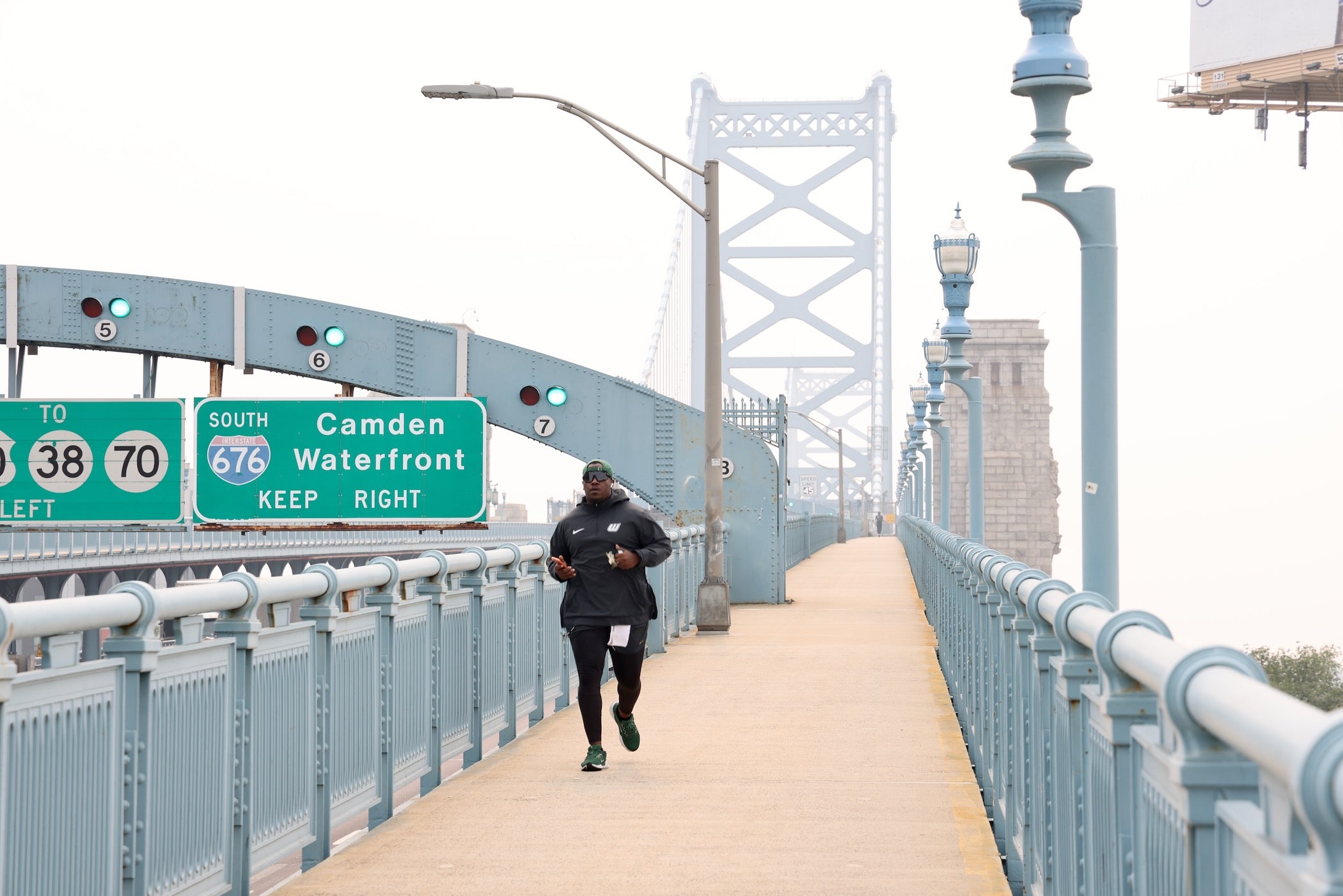
The Philadelphia region could get a reprieve from unhealthy levels of air pollution this weekend as smoke from hundreds of wildfires in Canada and northern Minnesota is expected to make its way out of the area
Meteorologists say Saturday morning rain will cleanse the atmosphere, and a change in wind direction will push the bad air out of the region by Sunday
“You may notice a little bit of an improvement as today goes on, but it will be minimal,” said Jon Nese, a meteorologist and teaching professor at Pennsylvania State University. “The big change comes starting tomorrow morning. You will notice, and it will happen rather quickly, that the pollution will begin to move off to the north.”
The Pennsylvania Department of Environmental Protection has issued a Code Orange Air Quality Alert for Philadelphia and its surrounding counties on Saturday, meaning the air quality will be acceptable for most people. Sensitive groups such as those with asthma could still be impacted by particulate matter. The rest of the state will experience more moderate air quality, according to the DEP
Air quality was at unhealthy levels on Friday, as the Philadelphia area was under a Code Purple Alert, meaning levels of particulate matter were “very unhealthy” and threatened to impact everyone. Health officials urged residents to remain indoors and keep their windows closed
“I’m hopeful that we will be out of the danger zone sometime on Saturday, but that’s up to the wind, not me,” said Philadelphia Health Commissioner Dr. Palak Raval-Nelson
As of Friday afternoon, the air quality index was hovering above 200
“If you’re breathing air with an air quality index of 200 for 24 hours, that would be equivalent to smoking six to seven cigarettes,” Nese said
Air quality index levels can vary by zip code and change throughout the day. People are encouraged to check the air quality in their neighborhood at AirNow
People with health conditions, including respiratory and cardiovascular problems, as well as children and the elderly should take extra precautions, health experts said
Raval-Nelson advised people to stay indoors if possible, and if they need to go outside, take frequent breaks, consider wearing a KN95 or N95 mask and stay aware of changing air quality levels
“It’s not time to put your guard down,” she said. “We all need to stay alert.”
If Philadelphia’s air worsens into the “very unhealthy” or purple range again and you need to go outside, Raval-Nelson said, limit your time to 90 minutes
“That’s not a bad metric for Code Red either,” she said
People with cardiovascular and respiratory conditions are more likely to experience worsened symptoms, and are more prone to develop infections like pneumonia. People who are otherwise healthy could be impacted by the smoke, health experts said
The tiny air particles from the smoke that are less than 2.5 microns in diameter, known as PM 2.5, are 30 times smaller than the width of human hair, and are easily inhalable. The particles can settle deep in the lungs and enter the bloodstream
DEP said as air conditions improve Saturday, people should continue to limit their time spent outdoors. People with health conditions, the elderly and children should still stay inside, the agency said
Meteorologists said winds could shift to the northwest periodically in the next week or two, so smoky skies may not disappear completely. There are a number of factors that could determine whether the Philadelphia region is hit with another wave of bad air quality
“The wind direction plays a role in where the smoke is coming from, but also it will depend on are the fires still burning, has there been rainfall that’s been helping control them and where the smoke is actually coming from,” said Amanda Lee, a meteorologist at the National Weather Service in Mount Holly, New Jersey
Scientists say climate change could cause an increased number of wildfires, as regions further north like Canada become hotter. Higher temperatures can also dry out trees and plants, increasing the risk of forest fires. Trapped stagnant air can make these conditions and air pollution worse

Get daily updates from WHYY News!
The free WHYY News Daily newsletter delivers the most important local stories to your inbox
WHYY is yournprofit organization, we rely on financial support from readers like you. Please give today
