


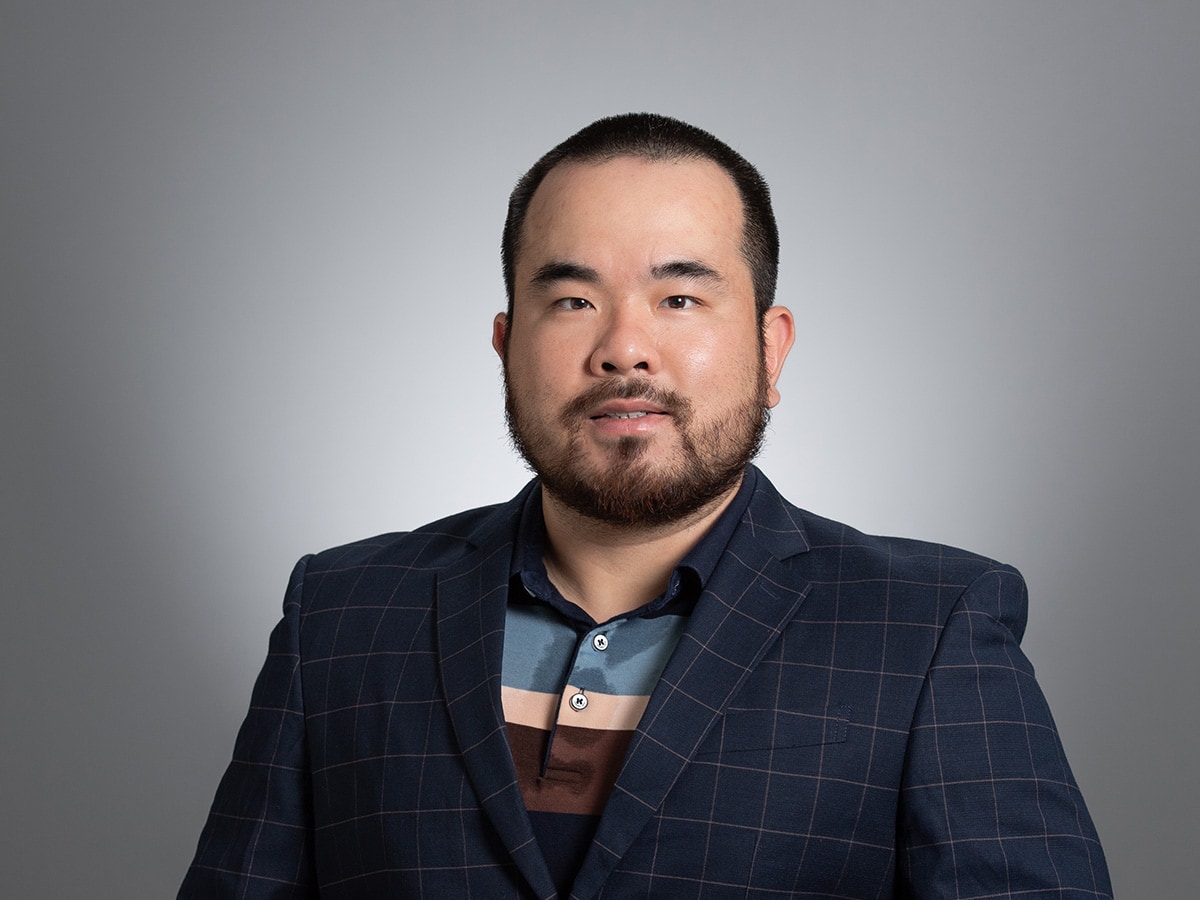
Truong Son Hy, Ph.D.As the usage and understanding of artificial intelligence grows, researchers at the University of Alabama at Birminghamare taking advantage of technological advances to help solve an issue surrounding complex diseases.
Serious complex illnesses like cancer and neurodegenerative diseases are not caused by one biological system’s breaking down, but by multiple systems’ breaking down at the same time.
To treat these issues, doctors prescribe patients multiple drugs at once, known as polypharmacy. This treatment is not always the best and most effective option because polypharmacy can cause side effect risks, toxicity and drug interference.
UAB Department of Computer Science assistant professor Truong-Son Hy, Ph.D., and his team of Ph.D. students, Viet Thanh Duy Nguyen and Phuc Pham, have built an artificial intelligence framework known as EVOSYNTH to help solve this treatment challenge.
The framework was created to design drugs to treat complex diseases that can target multiple problems at once to safely treat patients.
According to the team’s publication in Nature’s Communications Chemistry, “Enabling Multi-Target Drug Discovery through latent Evolutionary Optimization and Synthesis-Aware Prioritization (EVOSYNTH),” EVOSYNTH combines latent evolution and synthesis-aware prioritization to generate and prioritize candidates with high translational potential.
What makes EVOSYNTH stand out among other AI drug designing frameworks is its ability to determine how realistic it is for chemists to develop the drug in a lab. The framework is also able to determine the effectiveness, cost-efficiency and reliability of the drug.
“EVOSYNTH works somewhat like guided evolution inside a computer,” Hy said. “It begins with a known biologically active molecule, creates many new molecular variations, evaluates them and repeatedly selects the most promising candidates for further improvement.”
To test the framework, the team applied two serious, real and complex medical issues that have a history of being tough to treat, Alzheimer’s disease and ovarian cancer.
They tasked EVOSYNTH to design drug molecules that could simultaneously target more than one of the broken-down systems causing the two diseases. The framework produced drug candidates that had strong predicted effectiveness to treat multiple targets and could easily be manufactured.
“For Alzheimer’s disease, the system searched for molecules predicted to interact with two proteins involved in the disease, JNK3 and GSK3β. For ovarian cancer, it focused on the proteins PI3K and PARP1.”
“At the same time, EVOSYNTH screened the molecules for important drug-like properties and examined possible synthesis routes, including their reliability and estimated cost,” Hy said.
The team analyzed the framework’s effectiveness by comparing it with a similar framework known as MolSculptor. MolSculptor was created to target issues similar to EVOSYNTH’s but has faced limitations. The comparison allowed the team to gauge the benefits and success of the discovery of the dual-target drugs.
According to Hy, EVOSYNTH is currently a computational proof of concept.
The molecules identified in the study are early-stage candidates and not approved treatments. Before they become approved treatments, chemical synthesis and experimental validations are necessary before conclusions can be made about therapeutic effectiveness.
“The future of AI drug discovery should be about more than generating large numbers of novel molecules. AI systems must help researchers identify candidates that balance biological activity, safety-related properties, chemical diversity, synthesizability and cost,” Hy said. “This could help researchers explore chemical space more efficiently and focus laboratory re
EVOSYNTH was developed completely at UAB by HySonLab members. Theucted are available to the public on GitHub to aid further research
“EVOSYNTH represents an important step toward making AI-generated drug candidates more scientifically meaningful and practically useful,” Hy said.
