


Residents were told the air around Lineage was not dangerous. A new report found health concerns
By Alejandra Molina | Boyle Heights Beat
Published Aug 19, 2026 9:30 AM
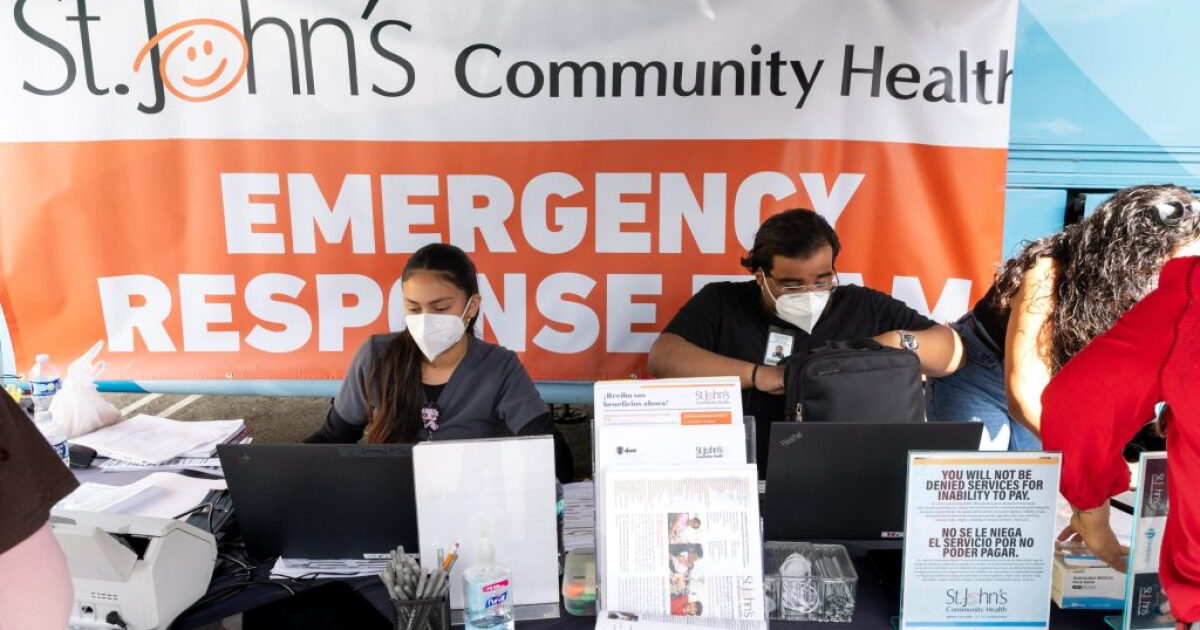
St. John’s Community Health staff providing assistance outside InnerCity Struggle in Boyle Heights on June 26, 2026.
(Courtesy of St. John’s Community Health
)
One year ago, Congress defunded public media. Now that we’re 100% community funded, please become a sustaining member or increase your existing membership today
Thisstoryfirst appeared onThe LA Local
Two months after the Lineage warehouse fire, Maria Mendez is still having trouble sleeping. The 68-year-old Boyle Heights resident has dealt with nausea, respiratory and eye problems, as well as anxiety attacks, since the June 17 blaze
And she’s not alone. A new report from St. John’s Community Health found that nearly 36% of 1,306 patients seen at its mobile clinics between June 17 and July 31 had serious health problems the organization attributed to exposure to smoke and toxic chemicals
The findings come weeks after Mayor Karen Bass faced criticism for saying the air was “not dangerous” in the early days of the fire. Bass later apologizedfor the confusion, saying “all smoke under all circumstances is harmful.”
The report offers an early look at the physical and mental health toll of the fire on residents of Boyle Heights and East Los Angeles.
The health problems identified included acute upper respiratory infections, eye disorders and conjunctivitis, persistent cough and asthma exacerbation
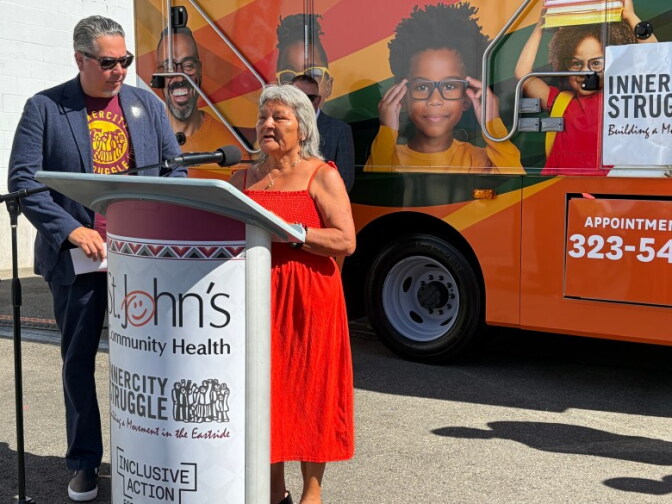
Maria Mendez of Boyle Heights talks about the symptoms she has experienced since the Lineage fire at a press conference outside InnerCity Struggle on Tuesday, Aug. 18.
(Alejandra Molina
/
Boyle Heights Beat
)
Sponsored message
“Our community, my friends, my neighbors have suffered in the past two months,” Mendez said, detailing the putrid odors and rat and fly infestation they’ve encountered as Lineage works to clean the food waste left behind by the fire.
Jim Mangia, president and CEO of St. John’s Community Health, outlined the results at a press conference Tuesday at InnerCity Struggle in Boyle Heights. Among those there were residents, including Mendez, and community leaders Henry Perez, executive director of InnerCity Struggle, and Rudy Espinoza, executive director of Inclusive Action for the City
Patients were largely Latino (91.7%), female (64.4%) and 50 or older (63.5%). The report found that 26.6% were diagnosed with toxic smoke exposure and 24.5% received hazardous substance diagnoses.
Dozens of patients were prescribed anxiety and/or sleep medication to treat acute stress after the fire, which, according to St. John’s, was related to the following: environmental exposure, sleep disruption and insomnia, housing instability, lease termination requests, relocation concerns, ongoing uncertainty regarding environmental safety, and psychosocial distress associated with displacement and recovery.
“What we’re seeing now are the acute impacts, but what we’re not seeing yet are the long term impacts, and that’s where you’re going to see the most damage,” Mangia said.
“You’re going to see a significant increase in asthma rates in Boyle Heights. You’re going to see an increase in cardiac issues. You’re going to see an increase in mental health issues,” he added
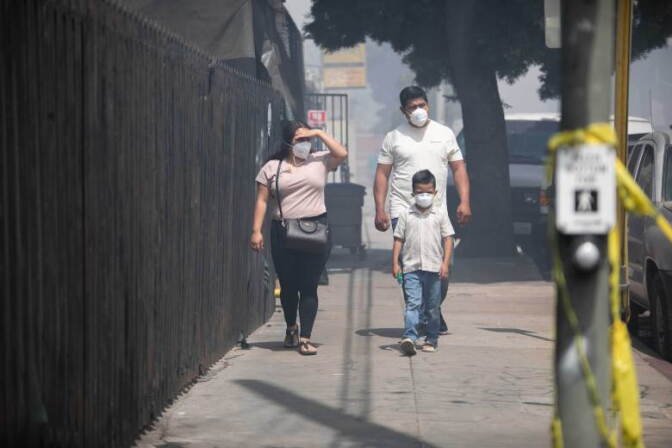
Cristian Morales walks from his nearby home to watch the fire with his five-year-old son Cristian Morales Jr. He’s lived in the neighborhood for five years.
(Steve Saldivar
/
The LA Local
)
Sponsored message
In the report, St. John’s noted that in one case, a patient with asthma arrived at a mobile clinic with “worsening shortness of breath.” Providers administered an urgent breathing treatment onsite and supplied inhaler medications to help manage ongoing symptoms, according to the report.
Providers documented providing hydroxyzine therapy and discussing coping strategies with a patient experiencing anxiety, sleep disruption and environmental stress related to ongoing fire exposure concerns.
Mangia also pushed back against South Coast AQMD and Lineage for stating that measured ammonia levels do not exceed the state threshold requiring action to protect public health
“That’s a direct contradiction with what we’re seeing on the ground by serving and providing health care. We’re seeing the health impacts of this fire,” he said. “To claim that it’s not at toxic levels, it’s not at emergency levels, that’s all doublespeak.”
Mangia said they are seeing eye infections “that we can’t get rid of” and asthma attacks in children
“We always track the health conditions of the people we serve. We tracked it before the fire, and we saw a complete difference in the health conditions from before and now. So, that’s public proof,” Mangia said.
One year ago, Congress voted to defund public media, eliminating a critical $1.7 million from our budget every year going forward. But they couldn’t silence us, and we’re not going anywhere. LAist is now 100% community funded and that means we’re taking our future into our own hands and turning to you to keep local reporting strong.You come to LAist because you want independent reporting and trustworthy local information. Our nonprofit newsroom doesn’t answer to shareholders looking to turn a profit. Instead, we answer to you and our communities. We are free to follow facts wherever they lead and to hold power to account without fear or favor. Our only loyalty is to our readers and listeners and our mission: to inform, engage, and strengthen Southern California’s communities.If this story helped you, please become a monthly member today to help sustain this mission. It just takes 1 minute to donate below.
