



SAMCRO: Lifestyle Intervention Improves Angina-Related Health Status in ANOCA
Print
Font Size
A
A
A
In patients with invasively confirmed angina with no obstructive coronary artery disease (ANOCA), adding a structured multidomain lifestyle intervention to medical therapy tailored to each patient’s ANOCA endotype led to clinically meaningful improvements in patient-reported health status, according to results from the prospective SAMCRO trial published July 27 in JACC: Cardiovascular Interventions
The investigator-initiated, prospective, open-label study with blinded endpoint assessment included patients with angina and invasive evidence of coronary microvascular dysfunction and/or coronary vasomotor disorder. Patients were randomized to endotype-guided therapy plus a structured multidomain lifestyle intervention (intervention group, n=62) or endotype-guided therapy alone (control group, n=61). The intervention consisted of Mediterranean dietary counseling, exercise training and psychological support.
Participants had a mean age of 66 years, about half were women, and more than half had Canadian Cardiovascular Society class III or IV angina
Serena Caglioni, MD, et al., defined the primary endpoint as the change in Seattle Angina Questionnaire (SAQ) summary score at 12 months. Secondary endpoints included individual SAQ domains; health-related quality of life assessed by the EuroQol 5-Dimension 5-Level questionnaire (EQ-5D-5L); depressive symptoms analyzed using the Beck Depression Inventory (BDI); adherence to the intervention protocol; and clinical outcomes, including all-cause mortality, cardiovascular mortality and all-cause hospitalizations.
The study was conducted at two centers in Italy from October 2023 to February 2025, and coronary functional testing was performed in all patients in the left anterior descending artery using a standardized protocol
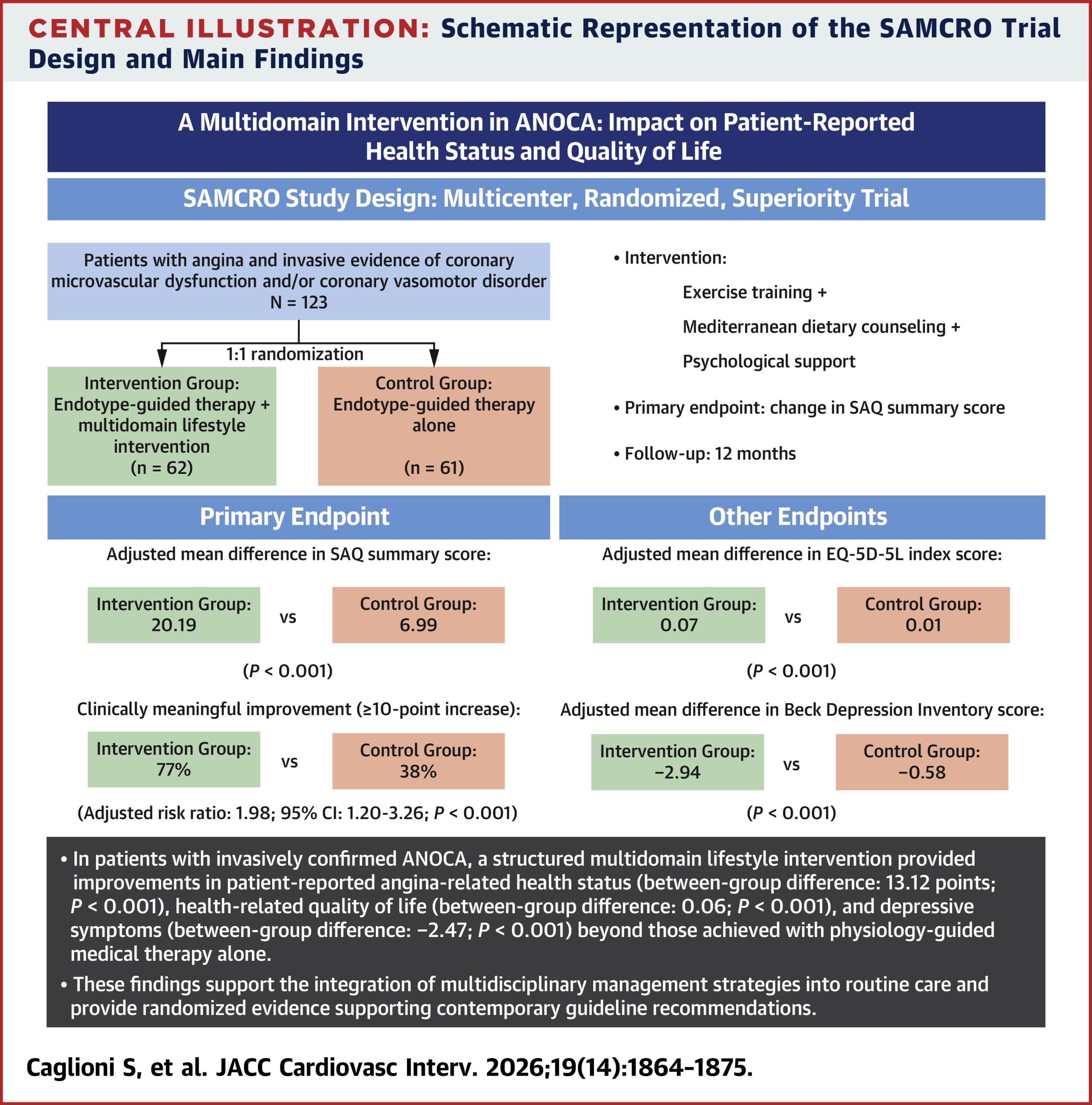
Study results showed that improvement in the SAQ summary score, a measure of angina-related health status, was significantly greater in the intervention group (adjusted between-group difference: 13.12 points). A clinically meaningful improvement (≥10-point increase) occurred in 48 vs. 23 patients, respectively (adjusted risk ratio, 1.98). Significant improvements were also observed in EQ-5D-5L and BDI scores
“These findings support the integration of multidisciplinary management strategies into routine care and provide randomized evidence supporting contemporary guideline recommendations,” write Caglioni and colleagues
In an accompanying editorial, Carl J. Lavie Jr., MD, FACC; Fabian Sanchis-Gomar, MD, PhD; and Leandro Nicolas Slipczuk Bustamante, MD, PhD, FACC, note that the SAMCRO trial carries a “practical message” for interventional cardiologists. For patients with invasively confirmed ANOCA, they write, “…the angiogram is not the end of the story; it may be the start of a more precise, [structured cardiac rehabilitation] and [exercise training], and patient-centered therapeutic lifestyle pathway.”
Citation:
Clinical Topics:Diabetes and Cardiometabolic Disease,Prevention,Diet
Keywords:Risk Factors,Interventional Cardiology,Diet, Mediterranean
