


Published August 6, 2026 03:54AM
Sometimes, thanks to work travel or a kids’ soccer game or some other conflict, I have to do my weekly tempo run alone. Most Saturday mornings for the last two decades, I’ve met up with a group of friends to perform this ritual. We chat and banter for a mile or two, then we lock in: an amoeba-like entity with 8 or 12 or 16 legs, united in purpose and moving as a single unit. What has always amazed me, on the days when I go through the same motions by myself, is how much harder it is to hit the usual pace.
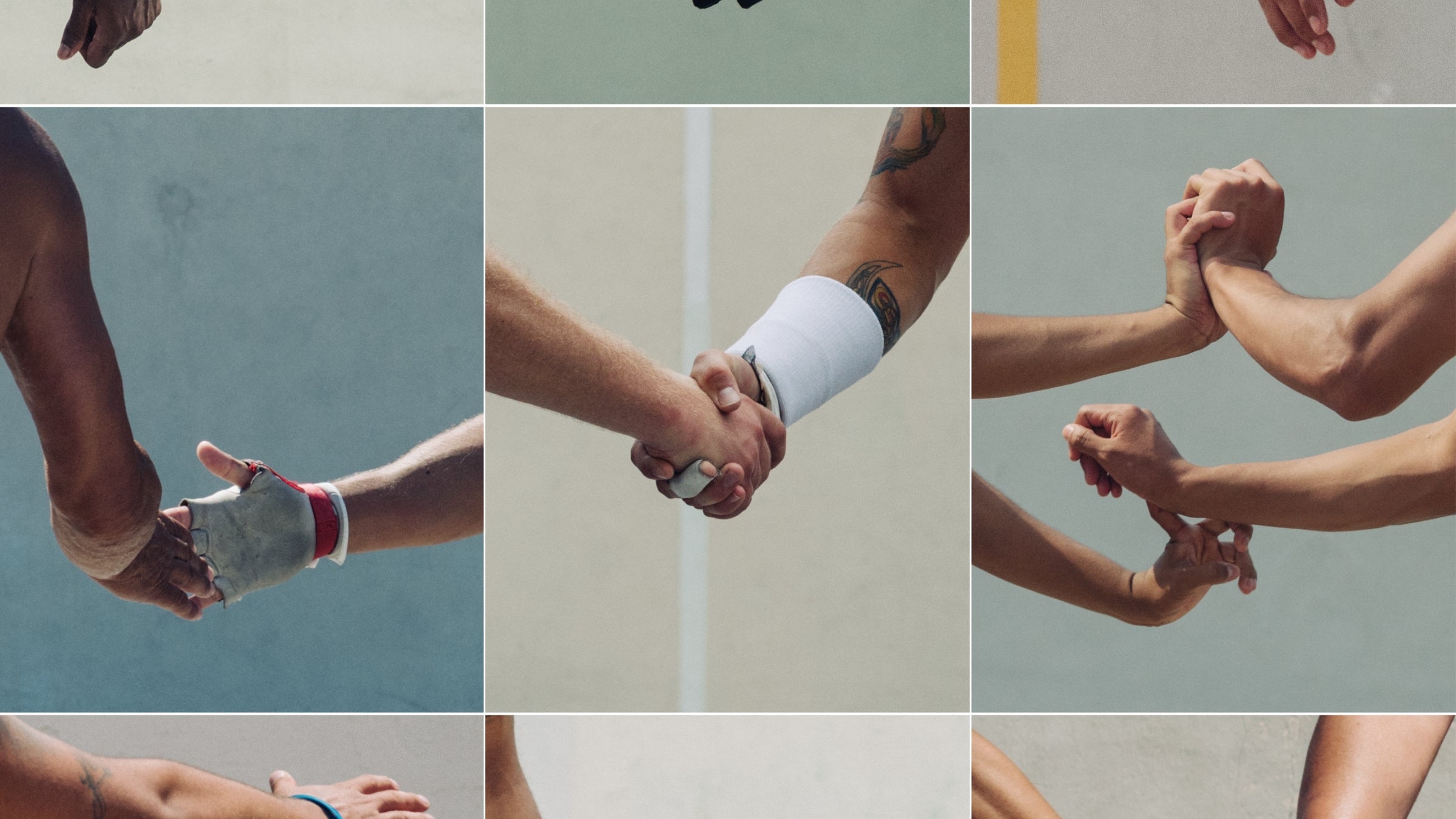
Some of the benefits of my Saturday morning routine, and of group exercise more generally, are fairly obvious: accountability (I can’t leave my friends hanging if they’re expecting me to show up), distraction, someone else to share the pace and block the wind, and so on. But some scientists believe there’s also something deeper going on—an idea sitting at the intersection of physiology, anthropology, and cognitive science that ties group workouts to ancient practices like music-making, dancing, and even religious rites. They call this emerging concept “social energetics.”
Sweat Science 101
Sign Up Now
The Power of Synchrony
The first clue to social energetics came in a study published back in 2009, when Oxford University anthropologist Emma Cohen was assigned a new graduate student who happened to be captain of the university’s fabled rowing team. She and her student decided to test a theory that social bonding is related to the production of endorphins in the brain—the same euphoria-inducing neurochemicals thought to contribute to “runner’s high” during exercise
They put Oxford’s rowers through a hard workout on a rowing machine, testing their pain threshold before and after. As expected, exercise boosted pain threshold, presumably thanks to the pain-blocking effect of endorphins. But when the rowers repeated exactly the same workout alongside their teammates rather than alone in the room, their pain threshold increased twice as much. There was something about the act of communal exercise that altered the brain’s perception of discomfort
For rowers, this feeling grows out of the sense that they’re part of a larger whole moving in perfect synchrony. Cohen cites Daniel James Brown’s epic rowing book, The Boys in the Boat, which describes the magic of sixteen arms sliding back and forth together, oars entering and leaving the water at exactly the same instant: “Only then will it feel as if the boat is a part of each of them,” Brown writes. “Only then does pain entirely give way to exultation.”
A few years later, Cohen supervised another elite student-athlete, this one captain of Oxford’s rugby team, which gave her an opportunity to test this idea more explicitly. They measured the team’s performance in a challenging running test after doing their warm-up routine alone, together, or together in synch with each other. Sure enough, the athletes performed best in the synchronized condition—an evolutionary relic, perhaps, of long-ago group hunts on the savanna
With a Little Help from Your Friends
There are times, during my tempo runs, when my friends and I find that our strides have unconsciously synchronized. Indeed, research suggests that this happens more than you would expect from chance alone. But there’s more to the feel of a group run or ride than physical synchrony. Cohen studied participants in Parkrun, a free weekly 5K event held at locations around the world that is notably friendly and welcoming. Runners who felt a greater sense of social connection at the event also reported feeling more energetic, which in turn was associated with faster running times without any increase in effort.
Most recently, a yet-to-be-published study from Cohen and her colleagues, led by Arran Davis, had competitive rowers row to exhaustion while viewing photos of either a stranger or a friend or family member. Remarkably, the rowers lasted 24 percent longer when viewing the supportive photo—even though their perception of effort was the same in both cases. There’s no synchrony here, since the other person was present only in the form of a digital photo, so something else must be happening
Cohen’s theory, which she has been developing alongside other scientists, including Chris Beedie, an expert in the placebo effect, and Herman Pontzer, an expert in human metabolism, is what they’ve dubbed social energetics. The basic idea is that the way you budget your body’s energy expenditure is influenced by your connections (or lack thereof) with the people around you. The feeling of fatigue is designed to keep us safe, to prevent us from pushing so hard that we collapse. When we’re surrounded by friends, we feel safer: we don’t need to hold as much energy in reserve to defend or take care of ourselves. Evolution has hardwired this instinct into our brains, so that cues that make us feel closer to others—synchronized movement, or even just a photo—alter the sensations that guide how we budget our precious energy stores.
The original “rower’s high” study in 2009 assumed that these signals were mediated by endorphins, the body’s internal version of opioids. Cohen now thinks endocannabinoids, the body’s internal cannabis, are also involved. And there may well be other mechanisms. A recent stream of research, for example, suggests that the most famous social bonding hormone of all, oxytocin, is released during exercise and is responsible for at least some of exercise’s mental health benefits
The social energetics hypothesis and its associated neurochemistry helps explain why my tempo runs feel so much easier in a group. They also suggest an intriguing flip side: that these runs are, in turn, making my friendships better, thanks to the stew of social bond–promoting brain chemicals produced
I’m a big believer in the power of group workouts, and I’ve spent a lot of effort to maintain my Saturday morning ritual through the years: early wakeups, long commutes, a rotating cast of babysitters. I like being ten seconds per mile faster without trying harder—but my real motivation, now that I think about it, is that I love sharing the experience with my friends
This article is from the Summer 2026 issue of Outside magazine. To receive the print magazine,become an Outside+ member here
For more Sweat Science, sign up for theemail newsletterand check out my new bookThe Explorer’s Gene: Why We Seek Big Challenges, New Flavors, and the Blank Spots on the Map
