


Getting your Trinity Audio player ready…
Sonoma County supervisors took action this week to advance a bold new project – the term most frequently used was “moonshot” – to address glaring needs in the county’s system of treating people with mental health and substance abuse disorders
In a unanimous vote Tuesday, July 7, board agreed to continue pursuing funds to build new 88-bed inpatient care campus that would in part replace a behavioral health wing once envisioned but never built at the county jail
The $135 million initiative, gets its unwieldy name, the Behavioral Health Continuum Infrastructure Program (BHCIP) — or “B-chip” — from a state grant awarded to the county’s Health Services department two years ago
Those funds are meant to go toward the construction of two mental health rehabilitation centers, each with 16 beds, along with a 56-bed substance use disorder treatment facility
While a potential game changer, the proposal is also an admitted long shot – a “Hail Mary” county staff wouldn’t normally bring to the board given the challenges, Assistant County Administrator Jennifer Solito said, if not also a “once in a generation opportunity.”
Due to rising construction costs and other factors, the BHCIP’s cost had nearly tripled in the two years since the $66.7 million award was granted. Even after scaling the project down from 104 treatment beds (projected cost: $160.2 million) to 88 treatment beds ($135.5 million) and a reduced state funding offer of $54.6 million, the county is still looking a shortfall of $49.9 million
To help cobble together funds to close the funding gap, supervisors also voted Tuesday to return a different state grant and kill a zombie project that never came to fruition at the jail, a much-touted 72-bed mental health wing to house detainees in need of more advanced supervision
The jail project, also a moonshot of sorts when it was approved by the board in 2015 – “heralded as this program that was going to save us,” Supervisor James Gore recalled Tuesday – could serve as a cautionary tale as much as a last-ditch funding source
Abandoning that wing would mean relinquishing a $40 million state grant, but $27 million set aside so far by the county to build and operate the specialized jail unit could be reallocated to shrink the new project’s funding gap
If the county continues to reserve an annual $6.6 million envisioned for future operating costs, officials could squirrel away an additional nearly $20 million by the time the new complex is envisioned to open
Nolan Sullivan, the county’s health services director, said the need for the BHCIP’s 32 mental health rehab center beds – locked, “high-intensity, high-needs inpatient mental health facilities” – is especially urgent today
At this time, he said, no such beds exist in the county, which as a result must often send those patients to “very expensive private facilities.”
On average, he said at Tuesday’s meeting, his department annually “serves about 200 conserved clients” – high-needs patients requiring such advanced care. Of those, around 60% are sent out of the county, “because we don’t have local beds.”
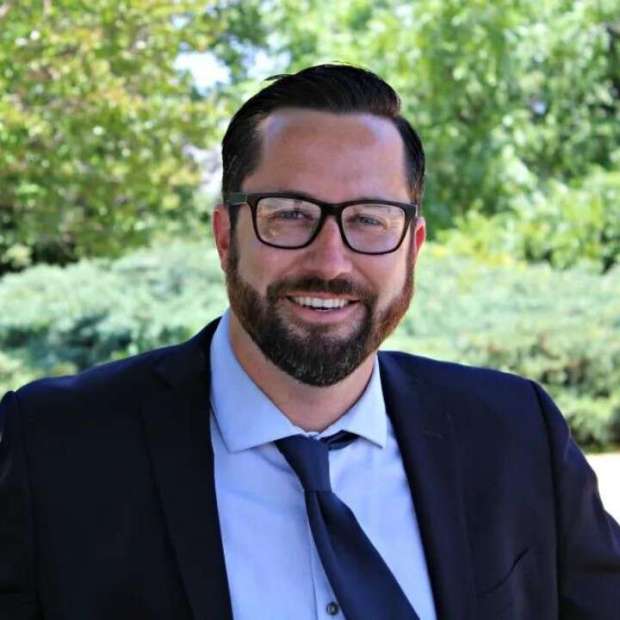
Sonoma County spent $6.8 million in the fiscal year that just ended to house those patients “in out-of-county facilities that are often for profit” because state-funded sites are “completely full,” he said
Sullivan said the county also pays “the additional labor cost of transport, travel, getting folks back and forth.”
Building a pair of mental health recovery centers would “significantly reduce” the county’s ongoing expenditures. Adding those beds would also create the opportunity for Sonoma to partner with surrounding counties “that maybe don’t have access to the number of beds or facilities,” Sullivan said
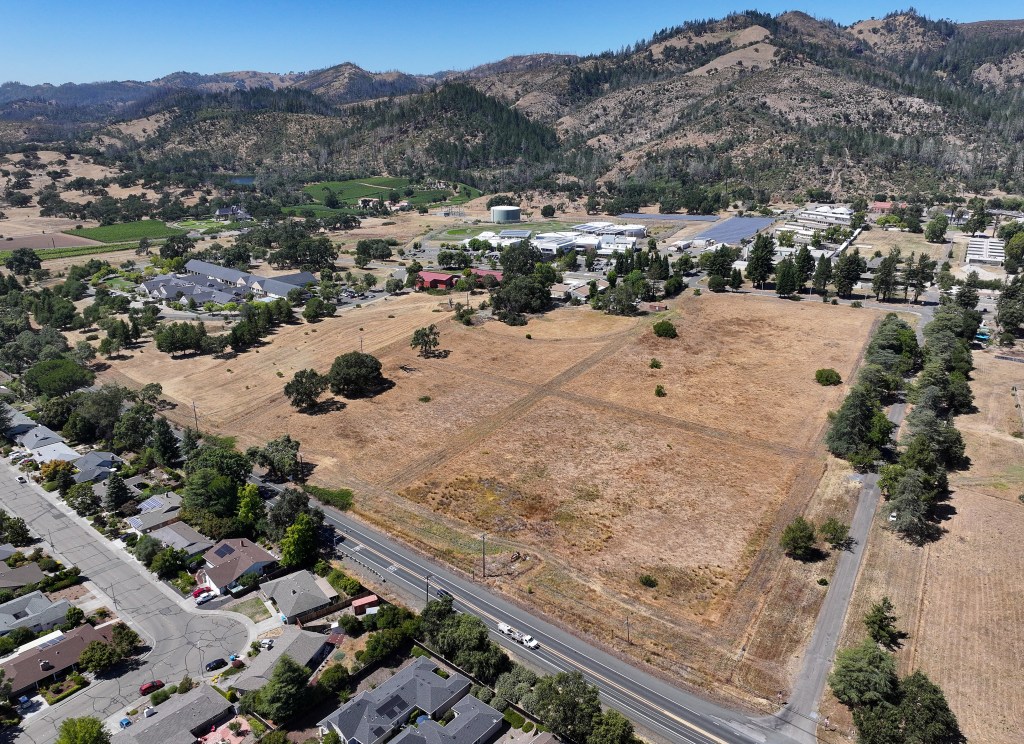
In its original plans for the new project, the county envisioned building both the mental health facility and substance use treatment site at the Orenda Center, its existing Santa Rosa drug treatment center near Farmers Lane
But further inspections revealed that the Neotomas Avenue site presents “substantial grading, slope stabilization, and infrastructure challenges,” according to a county report, that increased the cost of the project by $20 to $25 million

The county is now considering two options
In the first scenario, all three facilities — the two mental health rehab centers, and the 56-bed substance use disorder treatment center — will be built at the county’s 200-acre Los Guilicos campus just east of Santa Rosa on Highway 12 across from Oakmont
In the second scenario, the current Orenda Center will be demolished, followed by the construction of a new, 56-bed substance use treatment facility
In this split scenario, the two 16-bed mental health rehab centers would be built at Los Guilicos
To further narrow the funding gap faced by the project, the county intends to take $3.8 million from its pool of state opioid settlement funds
Several speakers criticized that plan during a public comment period. Funneling all available opioid settlement funds into the BHCIP project, they fear, diminishes the possibility that a sober living house proposed for Forestville will ever get built
That Forestville facility would be the fourth such sober living house to result from a public-private partnership between Sonoma County, Santa Rosa-based Poppy Bank, and Buckelew Programs, a nonprofit provider of mental health and substance use services
But that project hinges on the county’s willingness to contribute $1.4 million of opioid settlement funds — which would be matched by Buckelew, using a low interest loan from Poppy Bank, whose founder and chairman is Bill Gallaher
With Sullivan laser focused on making the BHCIP project happen, that $1.4 million award seemed like a longshot Tuesday
Sullivan confirmed last week, the new project takes precedence over additional sober living homes, crucial as they may be
He went on to say that he would welcome collaboration “with Poppy Bank and other community partners to help make this once-in-a-generation investment” – BHCIP – “a reality.”
If the project comes in under budget, any savings could be put back into other important initiatives, like recovery, Sullivan told The Press Democrat Tuesday
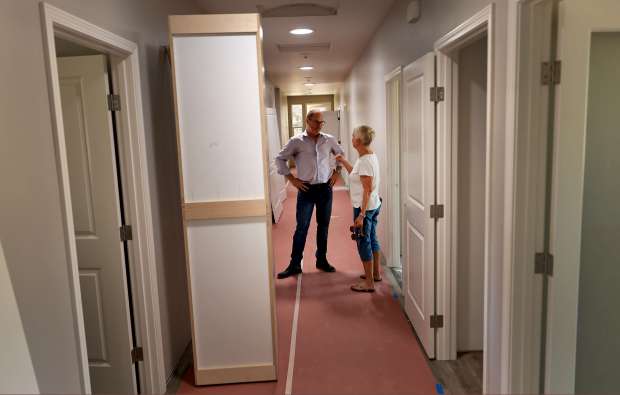
Cindy Gallaher, co-founder of the Windor-based Gallaher Companies, which is building three Santa Rosa sober living houses at cost, was present for part of Tuesday’s Board of Supervisors meeting. Asked if the Gallahers’ construction company might bid on some part of the BHCIP project, she didn’t rule it out
While the 32 high-security mental health recovery facilities are not in their wheelhouse, she said, the 56 treatment beds probably are
A new proposal built on an old one
In 2015, the Press Democrat reported on the state’s approval of a $40 million grant to build a behavioral health wing at the Sonoma County jail, located just Highway 101 in north Santa Rosa. The $48 million project envisioned 72 beds and a slate of mental health and substance abuse services
It was billed as a desperately needed response to a jail ill-equipped to serve a growing number of inmates with mental health conditions that had made the facility the county’s largest de facto psychiatric facility in the county. The new wing was slated to open as early as 2020

Chad Surmick / The Press Democrat file
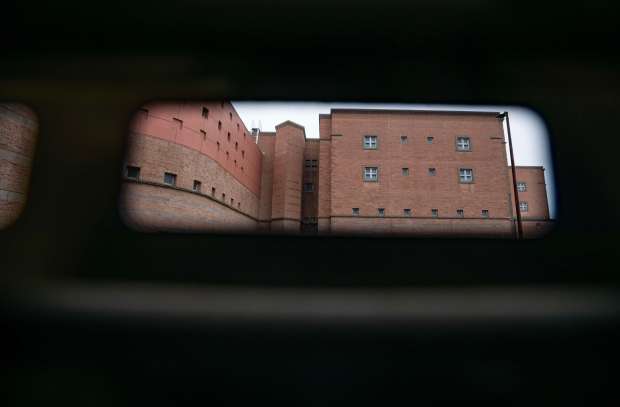
The view from the gated intake sally port of the Sonoma County jail in Santa Rosa. Short staffing at the Sonoma County jail has greatly reduced inmates’ out-of-cell time and burdened deputies with crippling workloads and overtime hours. Photo taken Wednesday, Dec. 27, 2023. (Chad Surmick / The Press Democrat file)
Chad Surmick / The Press Democrat file
1 of 2
The view from the gated intake sally port of the Sonoma County jail in Santa Rosa. Short staffing at the Sonoma County jail has greatly reduced inmates’ out-of-cell time and burdened deputies with crippling workloads and overtime hours. Photo taken Wednesday, Dec. 27, 2023. (Chad Surmick / The Press Democrat file)
Expand
But more than a decade later, construction remained on hold
At the Tuesday meeting, Solito cited ballooning construction and operating costs that had created an insurmountable funding gap. “Further, the design of the project is over a decade old and would have to be redone if we want to proceed with the project, which would further drive up additional costs and time constraints,” she told the board
According to a last update in October 2024, construction costs were estimated at $69.5 million, with a $15.5 million funding gap. Projections for operating expenses had risen sharply, too, to $11 million annually, up from the $6.62 million the county had been setting aside each year for that purpose
Cost estimates would likely be substantially higher now, Solito told The Press Democrat
In the intervening years, the county had to navigate a series of now-familiar setbacks, from devastating wildfires to the Covid-19 pandemic. Later, staffing shortages at the jail created concerns that even existing facilities could be maintained. Meanwhile, construction costs continued to rise
In that same period since 2015, the county has spent at least $4.6 million on the project, including $2.8 million on design as well various legal, environmental and project management costs, according to county records
“It is hard to get things built for what one would want to assume is a reasonable price. So many things work against you,” said Supervisor David Rabbitt, who was chair of the board when the project was first dreamed up
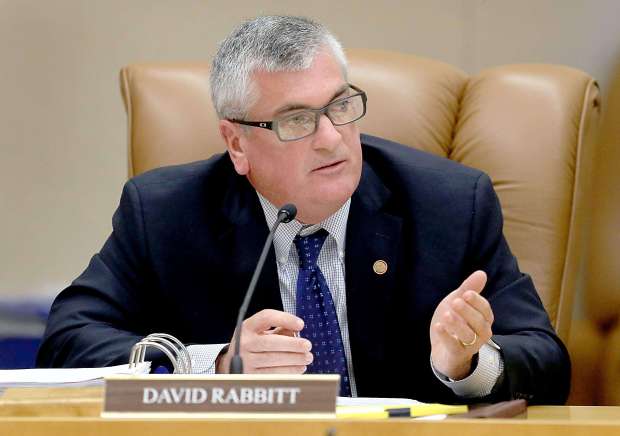
$40 million seems like a lot, and it is, Rabbitt said. At the time, the concern was more focused on the operational costs, and “every year you wait, construction costs go up.”
The county was also navigating bureaucratic hurdles and requirements tied to the state funds, and Rabbitt noted that when applying for grants, wiggle room, related to extra costs and delays, isn’t always accounted for. The legitimate intent of the project, “at the end of the day” over a decade later, Rabbitt said — “we haven’t achieved that because of the inflexibility and maybe our own exuberance in thinking we could bring it in for that amount of money.”
The similarities — in need, intent and pitfalls — between the old and new projects aren’t lost on Sullivan
“We’d applied for the $67 million based on a quote from a professional scoping company, and by the time this award came back, the costs almost doubled,” Sullivan said, citing a variety of issues like tariffs and the limited pool of specialized contracting options
Applying for the new grant, the county didn’t learn from its past lesson and should have added 30% to its estimated costs for that latest proposal, he said
The difference, this time, is “it’s a much shorter do or die. It’s not going to linger for years and years,” Sullivan said. “We’re really stretching here to see if we can make it work. A big piece of that will be if we get a bunch of quotes in that are astronomical, the project’s dead.”
Solicitations for competitive bids would need to out by the end of July, followed by “a very short turnaround time” for the county to share its plans with the state’s health department, “September at the very latest,” said Ricardo Goodridge, special project director in the county health department
The project then needs to finished by June 2030, he said
Longstanding need
While one ambitious undertaking has given way to another, the need that existed a decade ago for mental health support in and outside the jail remains today
The county tried various avenues to combine the two projects and their funding – meeting with state officials with the help of state Sen. Mike McGuire, trying to pass legislation – to no avail
The new complex won’t serve as many inmates, but there will be some overlap that can hopefully alleelping to divert some people away from jail in the first place, Sullivan said
“Jails are the largest mental health care provider in almost every county in the state,” Sullivan said. “Part of the problem, in my opinion, really is the tale of” the twin projects — representing the criminal justice and behavioral health departments working with the same population from two different sides. “We need to all sync up and work together,” he said

Kent Porter / The Press Democrat
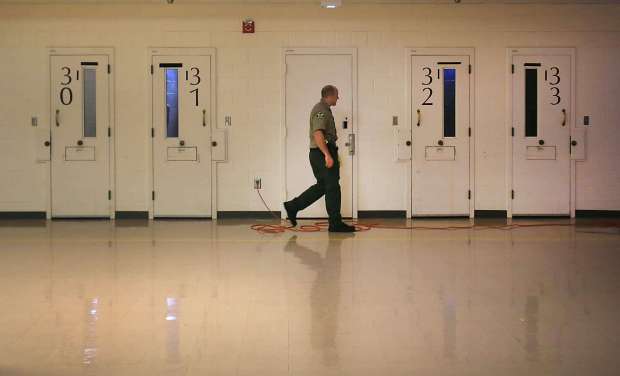
Sonoma County sheriff corrections officer checks jail cells in the mental health wing at the Sonoma County Main Adult Detention Facility in Santa Rosa in November. In 2016, the Sonoma County Jail held an average of 429 inmates daily with mental illness, ranging from mild depression to severe schizophrenia, up from 228 in 2008. (Kent Porter / The Press Democrat)
Kent Porter / The Press Democrat
1 of 3
Sonoma County sheriff corrections officer checks jail cells in the mental health wing at the Sonoma County Main Adult Detention Facility in Santa Rosa in November. In 2016, the Sonoma County Jail held an average of 429 inmates daily with mental illness, ranging from mild depression to severe schizophrenia, up from 228 in 2008. (Kent Porter / The Press Democrat)
Expand
Sonoma County Sheriff Eddie Engram, who previously oversaw the jail and was shepherding the jail project since taking office in 2023, was unavailable for an interview, but a department spokesperson indicated the Sheriff’s Office is supportive of the new project
“There are always lessons to be learned,” Rabbitt said
Just because funding’s available, “doesn’t mean it will always be a fit,” he said. “If you go after something, understand the full consequences of it.”
But, the promise of BHCIP, if it comes together, could be “a generational kick for the county to get this number of beds we desperately need,” Rabbitt said
“We need to exhaust all the avenues before we turn around and say, ‘OK, that’s not going to work for us.”
You can reach senior reporter Marisa Endicott at 707-521-5470 or marisa.endicott@pressdemocrat.com. On X @marisaendicott and Facebook @InYourCornerTPD
You can reach Staff Writer Austin Murphy at austin.murphy@pressdemocrat.com or on Twitter @ausmurph88
