


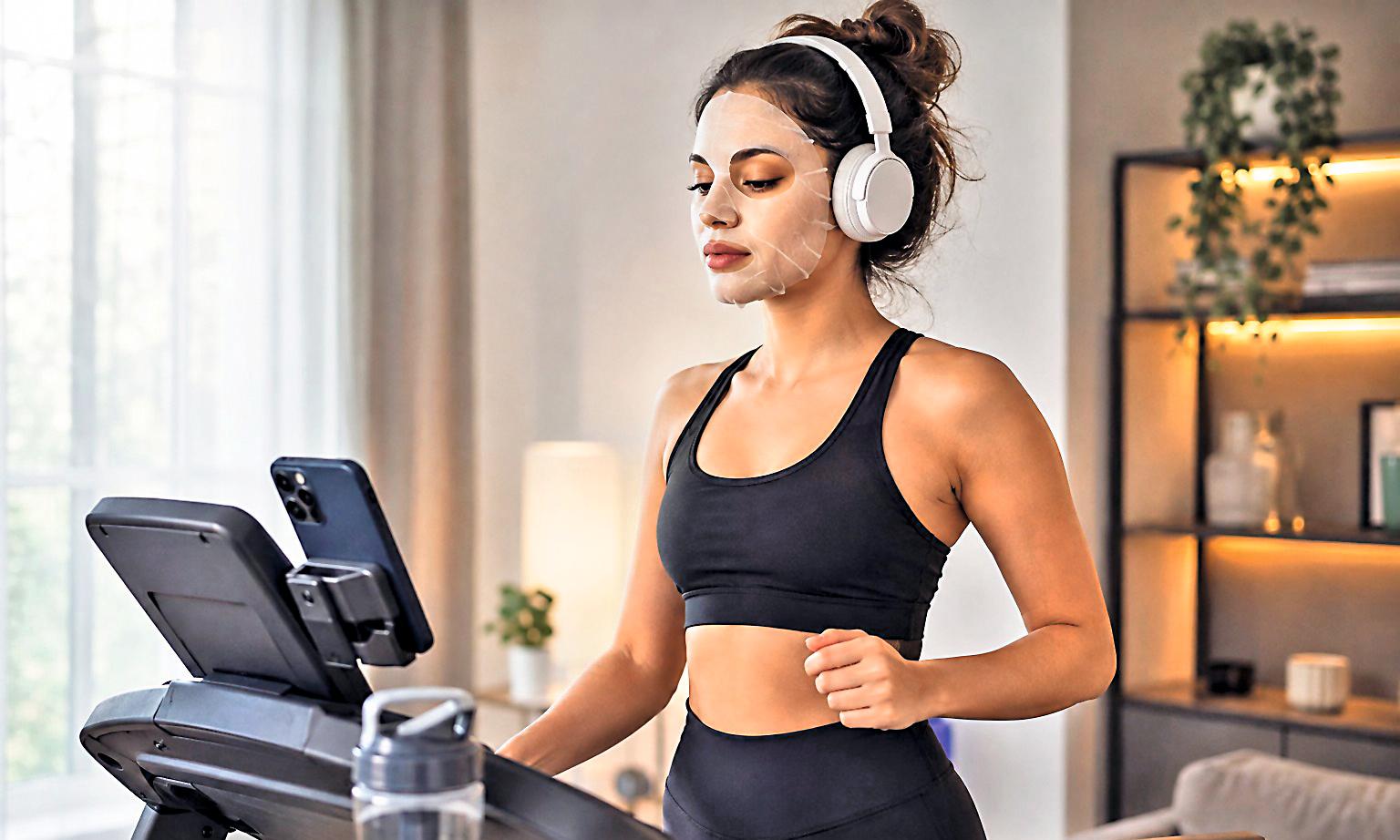
On social media, “maxxing” is increasingly starting to look like a competitive sport — and its players may not realise they’ve entered another rat race. It is no longer unusual to see people layering multiple self-care activities at once: meditating while walking on a treadmill, wearing a sheet mask, listening to a productivity podcast and checking sleep scores on a smart ring. IV drips, expensive <a href="https://healthylife7.com/a-bitter-pill-are-you-wasting-your-money-on-supplements/” title=”A bitter pill: are you wasting your money on supplements?”>supplements, continuous health trackers and habit-stacking routines are being sold not merely as tools for health, but as shortcuts to a superior version of the self.
Among the most visible trends is looksmaxxing — the pursuit of an “optimised” appearance through skincare, grooming and style. The danger lies in turning self-care into constant correction. Beauty should feel empowering, not exhausting
“Wellness isn’t about becoming perfect; it’s about building sustainable habits that help you feel healthier, happier and more connected to yourself. Looking after your skin or appearance can be a form of self-respect, but only when it comes from care, not insecurity,” says Aparna Kakrania, Co-founder of Beyond Beyond Skincare
The line is crossed when routines create guilt instead of joy, or when rest starts to feel unproductive. Skincare should support long-term skin health, not chase flawless perfection
The protein race
If beauty is one battlefield, food is another. Proteinmaxxing and fibermaxxing have transformed nutrition into a numbers game. Influencers now compare protein counts the way previous generations compared calories, while fibre supplements and gut-health hacks flood social feeds
Parul Sharma, Co-founder and CEO of Gladful, believes the obsession misses the point. Protein and fibre are important, but individual requirements vary depending on age, activity levels and overall diet. Overdoing any one nutrient can also lead to nutritional imbalance or digestive discomfort
Her advice is refreshingly ordinary: improve familiar foods rather than chase extreme targets. “Increased awareness about nutrition on social channels creates an impression that more is always better. Social media often rewards extremes, so trends like proteinmaxxing or fibermaxxing have naturally gained attention. But healthy eating should be sustainable, not obsessive. Real change comes from making everyday meals like breakfast and tiffin meals a little more nutritious, whether that’s adding meaningful protein, using sprouted ingredients for better digestibility, or replacing ultra-processed ingredients with cleaner alternatives,” Sharma says.
Fitness burnout
The same pattern appears in gymmaxxing: more training, more lifting, more cardio and more discipline. But the body does not improve endlessly under pressure. Missing a workout or de. But once a routine dictates your mood or self-worth, it can tip into obsession, says Rahull Raghuvanshii, MD of Jetts Fitness
“Excessive exercise can be harmful. Muscles grow during recovery, not training. Skip rest consistently and you undermine your own progress. Overtraining can cause fatigue, weakened immunity, hormonal imbalance and injuries such as stress fractures, alongside mental effects like irritability and anxiety,” he cautions
Habit-stacking
What makes the current moment different is that wellness is increasingly public. Sleep scores are shared, workout streaks displayed, supplement stacks photographed and morning routines filmed like mini-documentaries. But wellness is most impactful when it is sustainable rather than performative, believes Abhishek Trehan, Executive Director at Trehan Iris, who sees this as part of a broader cultural shift
“True wellness is about creating balance between physical health, mental well-being and everyday living. The built environment has an important role to play in supporting this balance
When homes and communities are designed to encourage movement, access to nature, social interaction and restorative experiences, healthier choices become effortless rather than obligatory. The future of wellness lies not in doing more, but in designing environments that help people live better,” he says
The psychology of “enough”
In an endless scroll of perfected bodies, flawless skin and hyper-productive lives, optimisation promises control. But mental health practitioner and author Shai C. believes we may have confused wellness with perfection. “I think we’ve confused wellness with perfection. We live in a world that celebrates extremes, where happiness must be constant, productivity never stops, and even self-care becomes another performance. But toxic positivity is no healthier than toxic negativity,” she says.
“Instead of chasing perfection, build psychological flexibility and the ability to adapt, make room for discomfort and keep moving forward
Mental well-being isn’t about feeling good all the time. It’s about staying emotionally flexible through all of it.”
I think we’ve confused wellness with perfection. We live in a world that celebrates extremes, where happiness must be constant, productivity never stops, and even self-care becomes another performance. Instead of chasing perfection, build psychological flexibility and the ability to adapt, make room for discomfort and keep moving forward. Mental well-being isn’t about feeling good all the time. It’s about staying emotionally flexible through all of it.”
Shai C, mental health practitioner and author
“Increased awareness about nutrition on social channels creates an impression that more is always better. Social media often rewards extremes, so trends like proteinmaxxing or fibermaxxing have naturally gained attention. But healthy eating should be sustainable, not obsessive.”
Parul Sharma,
Co-founder and CEO of Gladful
“Excessive exercise can be harmful. Muscles grow during recovery, not training. Skip rest consistently and you undermine your own progress. Overtraining can cause fatigue, weakened immunity, hormonal imbalance and injuries such as stress fractures, alongside mental effects like irritability and anxiety”
Rahull Raghuvanshii, MD of Jetts Fitness
“Looksmaxxing becomes unhealthy when every trend convinces you there’s something new to ‘fix’. Social media often blurs the line between real skin and filtered perfection, fuelling unnecessary comparison. The goal isn’t to erase every imperfection; it’s to build a healthier relationship with your skin, where confidence comes from consistency, not constant correction
Aparna Kakrania, Co-founder of Beyond Beyond Skincare
