


<img src="https://healthylife7.com/wp-content/uploads/2026/09/aol_parade_744.png” alt=”Parade”>Laura Beck
Mon, August 31, 2026 at 6:54 PM UTC
Parade aims to feature only the best products and services. If you buy something
The conversation aroundGLP-1 medications and rapid weight loss usually covers everything except one thing: what happens to your skin. Which is a little ironic, because your skin is keeping score
When fat disappears quickly, the skin doesn’t always have time to catch up, and what you’re left with can be skin laxity, crepiness and possibly a gaunt look to the face
This is a very good reason to take your skincare seriously during the process rather than waiting until afterward. The dermatologists and skincare experts who work with rapid weight loss patients—both surgical and GLP-1-related—are nearly unanimous on this: start skincare early, stay consistent and treat this like the preventive measure it is
To build the most useful routine possible, we talked to five experts—Beverly Hills plastic surgeons Dr. Brian Shafa and Dr. Michelle Lee of PERK; Dr. Dmitriy Schwarzburg, board-certified cosmetic physician and founder of Skinly Aesthetics in New York City; Paula Brezavscek, PA-C, founder of Azala Skin Clinic in Miami and Dr. Elizabeth Kream, board-certified dermatologist at Aesthetx in Los Gatos, California
How Does Rapid Weight Loss Affect Your Skin Elasticity and Collagen?
Dr. Kream has a helpful analogy: “Imagine a tablecloth stretched smoothly over a table,” she tells Parade. “If the table suddenly shrinks, the tablecloth begins to wrinkle and sag.”
When underlying fat volume decreases quickly, the skin that was once taut simply doesn’t have enough time or collagen and elastin to contract and snap back. The faster and greater the weight loss, the more noticeable this becomes—particularly in the face, neck, abdomen and arms
Dr. Shafa adds that rapid weight loss doesn’t just reduce volume—the collagen and elastin fibers in the skin actually become thinner and more poorly organized. As Dr. Schwarzburg says, when fat disappears, so does the support system beneath the skin
Dehydration compounds things further, as does a lesser-known effect: GLP-1s decrease the oil-producing cells in skin, which helps with acne but makes dryness worse. Dry skin appears crepey and dull. But, there are ways to address these issues
What Skincare Ingredients Are Most Important To Prevent Sagging During Weight Loss?
No topical product can prevent loose skin from major volume loss—every expert says this clearly. What the right ingredients can do is support collagen production, protect what you already have and keep skin quality as healthy as possible throughout the process
Retinoids are the consistent first recommendation among the experts. Dr. Schwarzburg calls them the cornerstone of the evening routine for their collagen remodeling evidence. “Creams with retinoids are vital for everyone, but even more so in weight loss patients,” Dr. Shafa agrees
Vitamin C follows closely—it supports collagen synthesis and provides antioxidant protection against the oxidative stress that accelerates collagen breakdown. Dr. Schwarzburg recommends pairing it with a peptide
Dr. Kream calls peptides “signaling molecules that encourage the skin to produce more collagen and elastin.”
Barrier support and hydration are more important than ever during weight loss when skin is often drier than usual, so ceramides and hyaluronic acid are important to incorporate into the routine
Dr. Brezavscek adds urea and lactic acid for the body, which is an area often overlooked, despite being that can have dramatic crepiness
Dr. Shafa specifically recommends the Alastin Restorative Skin Complex for its TriHex technology, which he describes as clearing away poor-quality collagen to make space for new collagen deposition—paired with ingredients that support volume formation to counterbalance some of the fat loss effects in the face. He often pairs it with Sente Dermal Repair Cream for additional collagen stimulation
Related:11 Best Skin-Tightening Moisturizers, According to Celebrity Derms
The Best Skincare Routine During Rapid Weight Loss, According to Dermatologists
So, should you proactively change your skincare routine if you are losing weight?
“Absolutely patients should proactively protect their skin and hair during rapid planned weight loss,” Dr. Shafa says
Dr. Brezavscek shares that consistency with a retinoid, antioxidant, moisturizer and sunscreen “can go a long way toward maintaining healthy skin throughout the process,” and importantly, this doesn’t require a complicated 10-step routine
Dr. Kream recommends adding a peptide serum if you’re not already using one and switching to a richer moisturizer than you’re currently using—for both face and body. Neck, abdomen, arms and above the knees: the crepiness complaint she sees in her office affects all of it
Related:Does PDRN Skincare *Actually* Have Salmon Sperm In It? Here’s What a K-Beauty Expert Says
Advertisement
The best morning skincare routine for rapid weight loss support
Dr. Schwarzburg’s morning framework: gentle cleanser, vitamin C serum, moisturizer with ceramides or hyaluronic acid if needed and broad-spectrum SPF 30 or higher
“Sun exposure is one of the biggest contributors to collagen breakdown,” he explains, making sunscreen the most important anti-aging product in any routine—and especially in one designed to protect skin during weight loss
Dr. Brezavscek adds that a hydrating serum can go between the antioxidant and moisturizer if skin is feeling particularly dry, which is common during weight loss for the reasons Dr. Kream outlined around GLP-1 effects on oil production
Related:The One Thing Women Over 50 Don’t Realize About SPF, According to a Pro Makeup Artist
The best evening skincare routine to prevent crepey skin
Every expert here builds the evening routine around a retinoid—applied after cleansing, followed by a nourishing moisturizer with ceramides, glycerin or hyaluronic acid to support the skin barrier and offset retinoid dryness
Dr. Kream layers peptide before moisturizer, then retinoid, then another layer of moisturizer if skin feels dry, and adds an eye cream, recommending Colorescience Total Eye specifically
For anyone whose skin is particularly dry, she suggests applying hyaluronic acid to slightly damp skin immediately after cleansing, before any other products. Dr. Schwarzburg says to add something as simple as Aquaphor as an overnight mask since the occlusive barrier it creates supports everything you’ve layered underneath
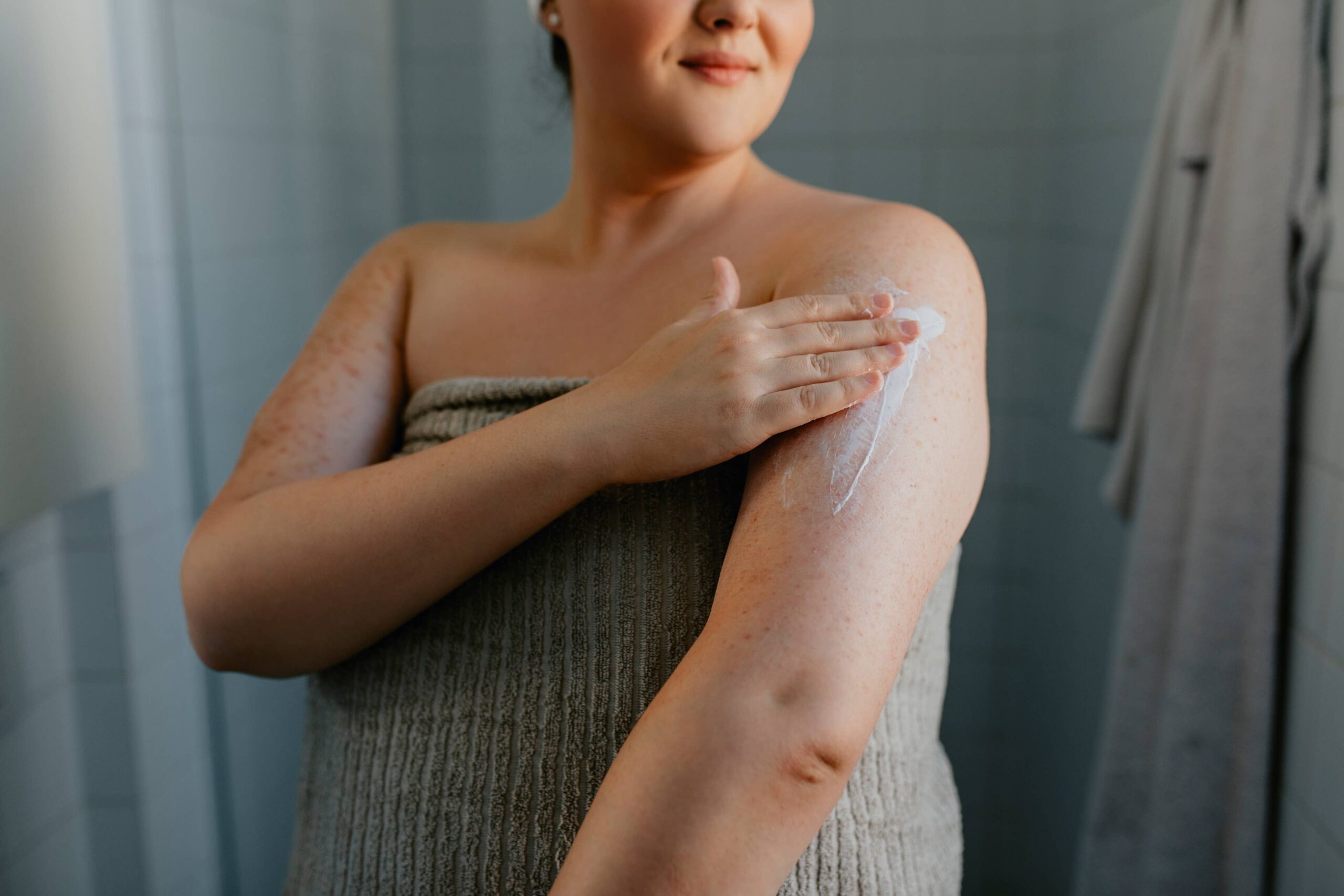
Dr. Brezavscek includes the body in the evening routine, not just the face—a richer moisturizer for neck, chest, arms and abdomen, where crepey skin from weight loss is just as common and often less addressed
Related:12 Body Lotions That Actually Work for Crepey Skin, According to Dermatologists

In-Office Treatments That Can Help Tighten Skin
In-office treatments to help with loose skin should start before the weight loss is complete—not after, the experts say.
A procedure called XERF earns a top spot for skin tightening, because it works at two separate depths simultaneously—structurally tightening and lifting in the deeper layers while heating the skin surface to stimulate collagen deposition and skin thickening
“Xerf is currently the king of skin tightening and lifting while providing some thickening and textural improvements,” Dr. Shafa says
Microneedling is Dr. Lee’s go-to for improving skin quality and stimulating the body’s own collagen and elastin production during and after weight loss. “By creating controlled micro-injuries in the skin, it activates the natural wound-healing response, gradually improving skin texture, firmness and resilience over a series of treatments,” she explains
Beyond those two, the experts point to several other options worth discussing with a provider depending on degree of laxity and goals.
Dr. Kream sees patients referred from weight loss clinics at the beginning of their GLP-1 journey specifically to get ahead of the skin changes. “I love to combine injectable biostimulatory agents such as Sculptra or Radiesse with energy-based tightening devices,” she explains, treating not just the face but the neck, chest, arms, abdomen and legs where laxity accumulates
Resurfacing lasers like CO2 and Mosaic3D can help with skin thickening and textural improvement for fine lines and wrinkles that develop with laxity, Dr. Shafa says
The consensus across every expert is that in-office treatment works best as a continuous strategy throughout the weight loss process that is tailored to the patient’s individual needs
Up Next:
Related: My 60-Year-Old Mom Struggled With Dry, Crepey Skin—This Body Cream Completely Changed It
Sources:
Dr. Brian Shafa, Beverly Hills plastic surgeon
Dr. Michelle Lee, Beverly Hills plastic surgeon
Dr. Dmitriy Schwarzburg, board-certified cosmetic physician and founder of Skinly Aesthetics
Paula Brezavscek, PA-C, founder of Azala Skin Clinic
Dr. Elizabeth Kream, board-certified dermatologist, Aesthetx
This story was originally published byParadeon Aug 31, 2026, where it first appeared in theBeautysection. Add Parade as aPreferred
